Social Justice & Community
Collaborating to support youth leadership and voice
2026 Youth & Adult Partnership Summit promotes strategies for working effectively with youth, supported by UC Santa Cruz, United Way, and All Children Thrive.
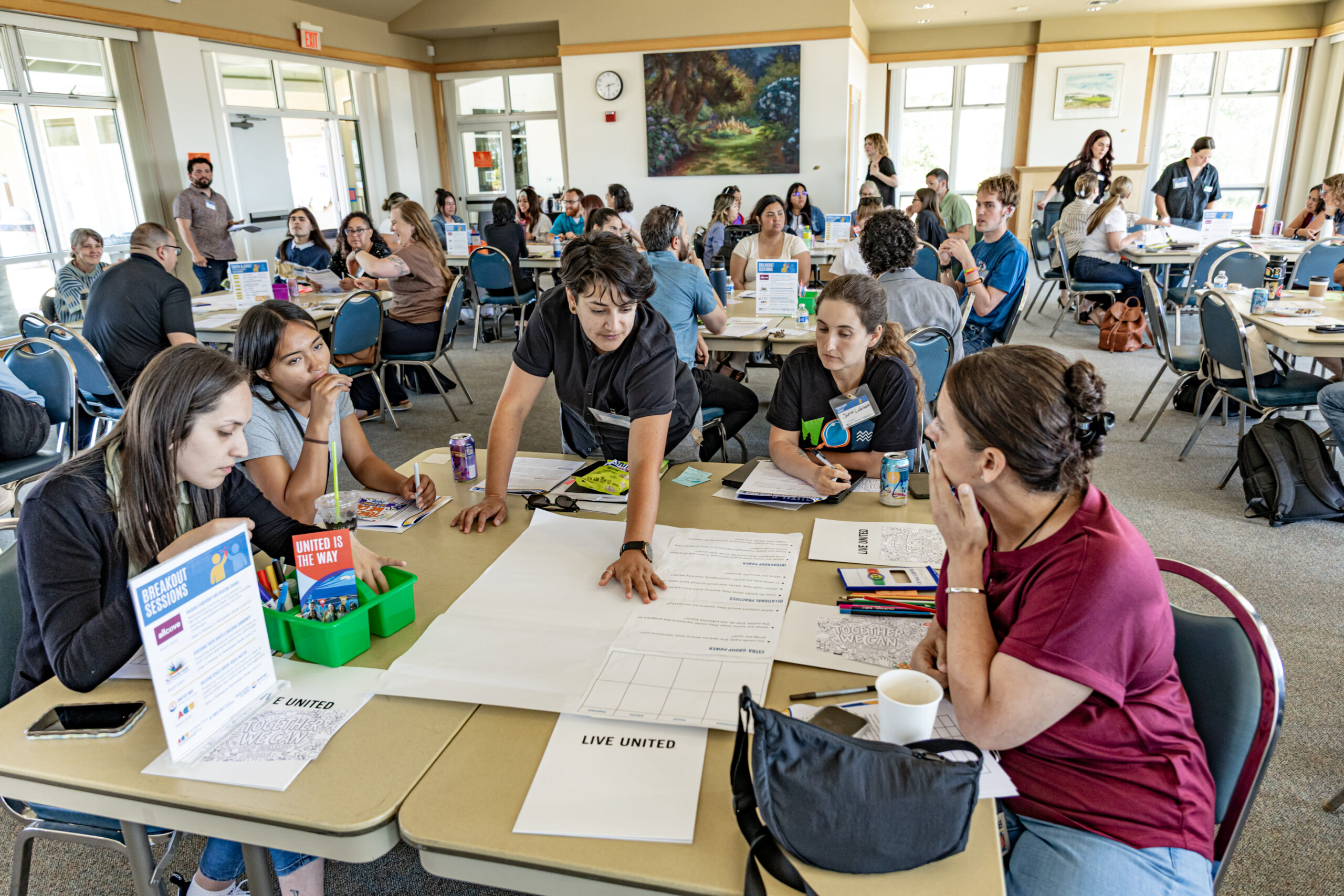
This past June, more than 60 youth leaders, educators, nonprofit professionals, public officials, and community partners gathered at Cabrillo College for the 2026 Youth & Adult Partnership Summit, hosted by United Way Santa Cruz County, UC Santa Cruz Campus + Community, and All Children Thrive.
The one-day event was dedicated to strengthening collaboration between young people and adults and advancing meaningful youth participation in decision-making across Santa Cruz County. UC Santa Cruz Sociology Professor Rebecca London, faculty director of Campus + Community, gave opening remarks for the summit. She has been working with United Way for the past five years to support youth leadership programs in the community.
“Youth and adults working together in partnership, meaningfully engaged in shared effort, skill building and having fun are the kinds of positive relationships that are key to supporting positive youth development outcomes – the social, emotional, intellectual and physical outcomes we hope to see for all youth,” she said in her speech.
Pamela Velazquez Janusz, director of community impact for United Way Santa Cruz County, added that effectively empowering youth benefits not only youth themselves, but also the broader community.
“This summit moves us beyond simply engaging youth to creating systems where their voices help inform programs, policies, and community decisions,” she said. “That directly aligns with our organization’s mission of building a healthier, more equitable Santa Cruz County, where every young person has the opportunity to thrive.”

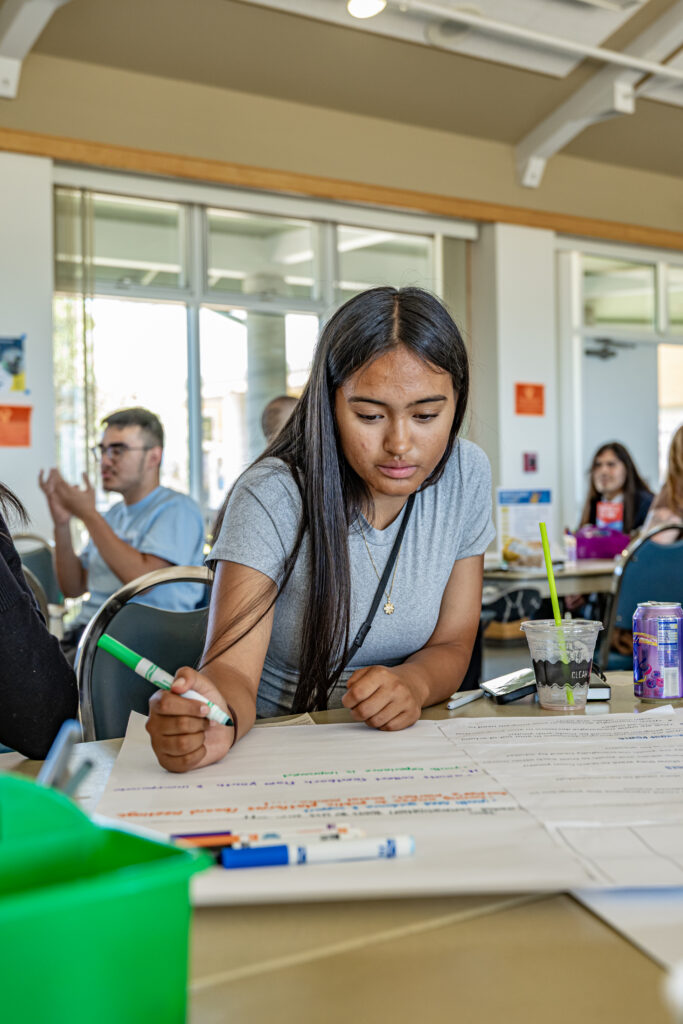

Youth and adult attendees at the summit participated in workshops to learn practical strategies for sharing power and leadership as they work together to address community issues. For adults, that includes building strong listening skills and learning how to create supportive environments. These conditions are essential to successful youth programs.
“Youth know what youth want,” explained Giovanni Melgoza, a youth participant and leader with United Way Santa Cruz County. “So if [adults] work together [with youth], then they’ll appeal to more youth.”
The summit invited participants to examine the challenges and successes of a specific case study of youth-adult partnership: the implementation of student participation in Santa Cruz County School Boards. Latin American and Latino Studies Professor Jessica Taft shared her findings on that effort from a prior 2023 study supported by UC Santa Cruz students.
The researchers had found that student representatives engaged meaningfully in school board meetings when given opportunities. But those opportunities were few and far between, and youth comments were addressed less meaningfully than those offered by adults. Current youth engagement efforts in the county can learn from those areas for improvement.
Toward that end, UC Santa Cruz Psychology Professor Regina Langhout and psychology graduate student Betsy Centeno shared findings from the Countywide 2026 Youth & Adult Partnership Survey. Among 72 youth program participants surveyed from Santa Cruz and Monterey counties, 83.4% of youth agreed that youth and adult program staff respect each other, 69.4% agreed that they have a say in planning programs, and 57.8% agreed that community leaders listen to them.
While many of these values are encouraging, neither youth nor adult perceptions of partnership effectiveness have shown improvement since an initial pilot version of the survey that was conducted three years ago.
“Cultural change is hard, and we would expect it to take some time,” Langhout said. “There may be other indicators of this cultural shift happening that we are not assessing in the survey. But as the only UN-member nation that has not ratified and implemented the UN Convention on the Rights of the Child, we are swimming upstream as a county to think in more concrete ways about ensuring youth have some power in decision-making about policies and practices that affect them.”
Gatherings like the Youth & Adult Partnership Summit are a step in the right direction.
“Here in the US, we do not have youth voice baked into our institutions, and so we have to be intentional about creating those spaces,” London told attendees during the summit. “In our county, we are learning to make space for youth voice, and preparing youth for opportunities like sitting on a school board is very important. Equally important is preparing adults to accept and embrace youth expertise.”