Social Justice & Community
They escaped the slave trade to an island in the middle of the ocean. Almost two centuries later, science is revealing their life histories.
The origin stories of Saint Helena’s Liberated Africans come into focus in a new study combining historical methods, computer modeling, and biogeochemical and DNA analysis.
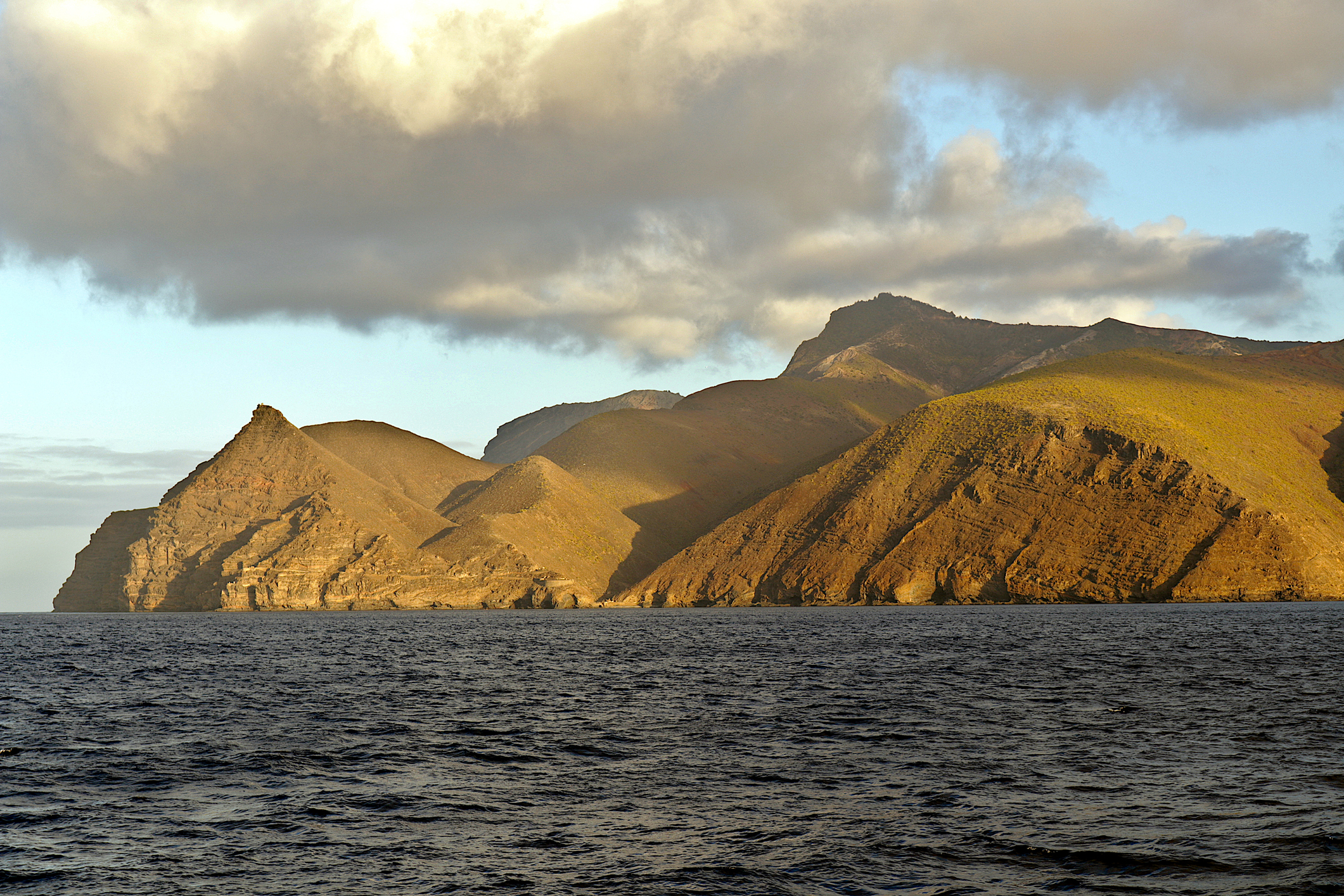
Saint Helena is a tiny volcanic island more than 1,000 miles off the coast of Africa. Between 1840 and 1863, the British Royal Navy brought nearly 27,000 Africans from captured illegal slave ships to a “Liberated African Establishment” on Saint Helena. UC Santa Cruz researchers helped shed new light on the likely origins within Africa of some of those people who died and were buried on the island.
A new interdisciplinary study, published in Science this week, has reconstructed the likely childhood origins of 152 Africans who were “liberated” from illegal slave ships and brought to the island of Saint Helena in the mid-19th century.
Saint Helena is a tiny volcanic island more than 1,000 miles off the coast of Africa that is part of the British Overseas Territories. Between 1840 and 1863, the British Royal Navy captured 450 slave ships bound for the Americas and brought nearly 27,000 Africans from those ships to a “Liberated African Establishment” on Saint Helena. Tragically, about 8,000 of those people died shortly after their liberation, often from diseases that had spread aboard the slave ships.
Two unmarked mass graves holding their remains were uncovered during archaeological excavations between 2007 and 2008, in connection with construction work for Saint Helena’s new airport. Since that time, a community-led effort on Saint Helena has been working to restore knowledge of the lives and experiences of the Liberated Africans. The new study supports those efforts.

Combining archival records, strontium isotope analysis, geographic modelling, and ancient DNA, researchers show that many individuals likely came from coastal or near-coastal western Central Africa, while others originated far inland — suggesting that some captives were forced to travel hundreds or even thousands of kilometers before reaching the coast.
“The strength of this study lies in bringing together evidence that speaks to different parts of a person’s life history,” said UC Santa Cruz Anthropology Professor Vicky Oelze, a corresponding and senior author of the study. “Isotopes tell us about childhood environment, ancient DNA about deeper ancestry, and historical records about the ships and ports involved. Together, they allow us to narrow uncertainty in ways none could do alone.”
Combining research methods to offer new insights
Hannes Schroeder, an associate professor at the University of Copenhagen’s Globe Institute, led the study. Schroeder brought DNA analysis expertise to the project through his background in ancient genomics, and he recruited an international team of researchers with complementary skillsets.
“Historical records often identify the coastal ports from which slave ships departed, but they rarely tell us where people were taken from inland,” he said. “By combining different lines of evidence and working closely with the community on Saint Helena, we were able to recover fragments of these life histories, including where people came from and when they were displaced.”
To help investigate geographic origins, Schroeder reached out to Professor Oelze and her then-postdoctoral researcher at UC Santa Cruz, Xueye Wang, both of whom have extensive expertise in strontium isotope analysis.
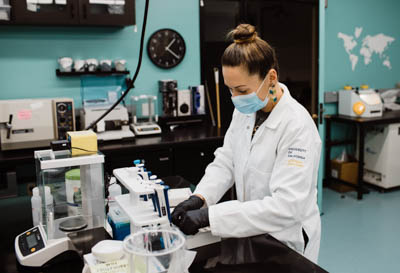
Wang and Oelze analyzed the data obtained from strontium isotope analysis that had been conducted in the dental enamel of individuals buried on Saint Helena. Strontium isotope ratios are like chemical signatures that reflect the geology of particular locations around the globe. These chemical signatures are incorporated via diet into people’s tooth enamel as it forms during their childhood.
UC Santa Cruz researchers were able to compare the isotope values they found in dental enamel from the graves on Saint Helena against a strontium isotope “isoscape” map they had previously created of Sub-Saharan Africa. This allowed them to help identify each person’s most likely regions of origin within Africa.
“One challenge with isotope analysis is that the same chemical signature can occur in many different places,” said Wang, who is now a research associate at Sichuan University, China, and is first author of the study. “By combining isoscapes with probabilistic spatial modelling, we can turn those signatures into maps of likely origin and identify the regions that best match each individual.”
Mapping origins and movements across Africa
The research team’s analysis showed that all individuals had isotope values far above the local Saint Helena baseline, confirming that they were not born on the island. The wide range of values indicates highly diverse African origins.
Most individuals’ isotope signatures align with regions in western Central Africa — consistent with archival data showing that the majority of ships intercepted and brought to Saint Helena embarked from ports in what is now Angola and the Congo region. However, a substantial minority display highly radiogenic isotope signatures that point to origins far inland, including interior Angola and parts of southeastern Africa. These findings suggest that some captives experienced long-distance forced displacement within Africa before embarkation.
The researchers also examined paired samples from early- and late-forming teeth in 41 individuals to assess whether they moved during childhood. Most showed consistent isotope values, suggesting that they remained in broadly similar geological regions through early adolescence. However, several individuals exhibited marked differences between teeth — and in some cases even within a single tooth — providing direct evidence of relocation during childhood. These findings indicate that for some individuals, forced displacement may have begun years before embarkation across the Atlantic.
From the outset, the research was embedded in local consultation. Following the initial discoveries of the mass graves on Saint Helena, the current Liberated African Advisory Committee (LAAC) was established under the auspices of the Saint Helena National Trust to guide decisions about research, commemoration, and eventual reburial.

Science, memory, and community
“This project has always been about more than scientific analysis,” said Helena Bennett, Director of the Saint Helena National Trust and co-author of the study. “It is about restoring dignity and acknowledging the lives of those who suffered here. The research has helped us better understand where they came from, but it has also highlighted the diversity of their origins. That diversity shaped our discussions about how best to commemorate them, and ultimately informed the decision to respectfully reinter the remains on Saint Helena in 2022.”
The study underscores both the potential and the limits of scientific provenance. While isotopic and genetic analyses can narrow likely homelands, the diversity of origins — often spanning widely separated regions — complicates efforts to identify a single destination for repatriation.
“Science cannot undo the violence of the past,” Schroeder said. “But it can contribute evidence that supports informed, ethically grounded decisions about remembrance, stewardship, and commemoration.”
This story was adapted from a press release by the Globe Institute at the University of Copenhagen.
This research was funded in part by our donors at the Webster Foundation. Your support for the Anthropology Lab Development Fund can help train the next generation of archaeologists to ethically apply state of the art techniques in service of communities.
Learn more about how we’re supporting breakthrough research through our Inspiring Change fundraising campaign.