Social Justice & Community
Status quo solutions won’t solve the Monterey Bay area’s housing crisis. But these big ideas just might.
A new report explains how building permanently affordable housing on public land could address workforce housing issues and unlock the region’s economic potential.
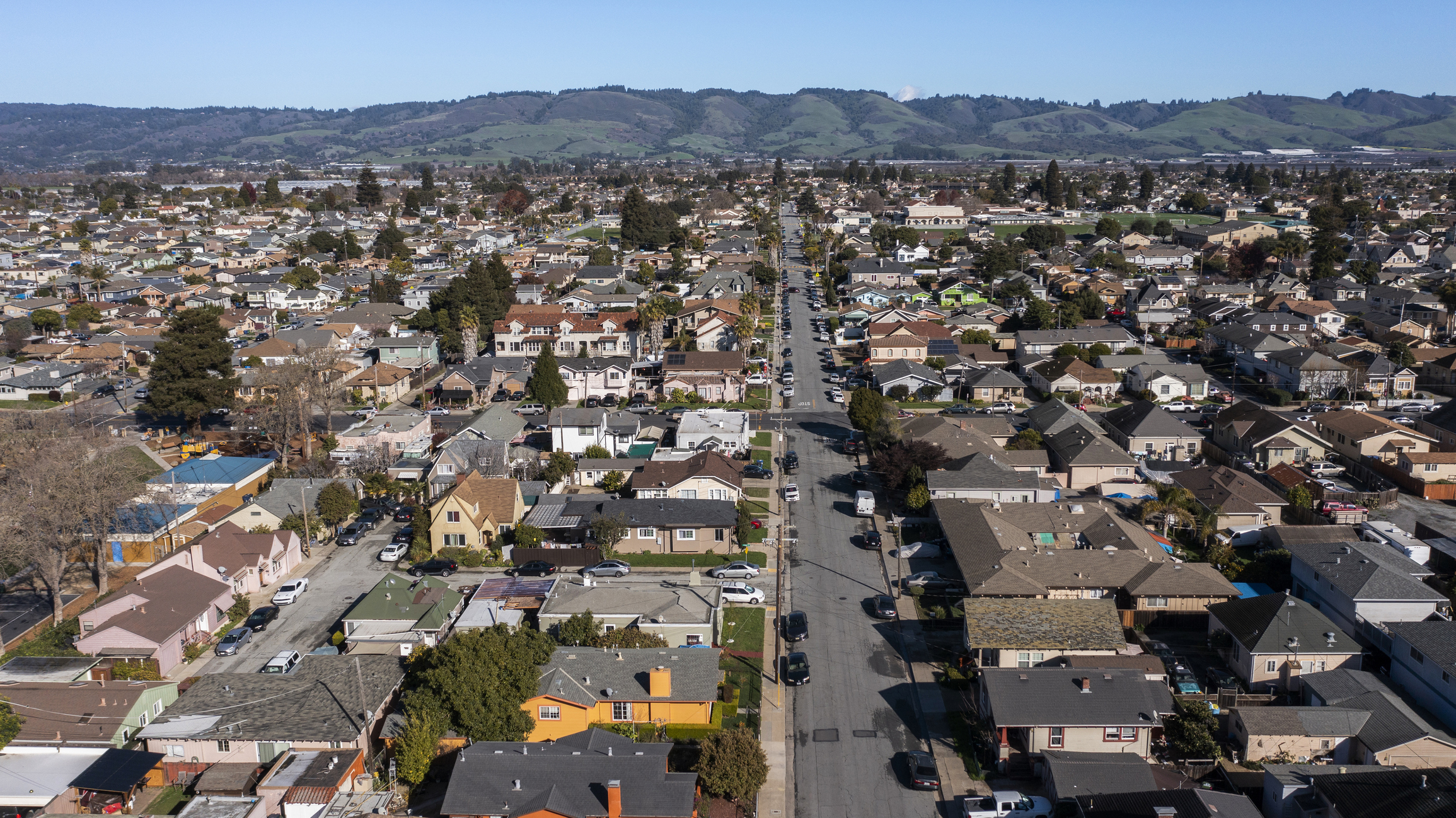
There are many benefits that come with living along the beautiful Monterey Bay. Unfortunately, affordability is not currently among them.
Santa Cruz County has repeatedly been named the most expensive rental market in the nation. Roughly a quarter of Monterey and Santa Cruz County renters spend over half their income on housing. This capital outflow depresses local business spending, limits family savings, and drives population declines that shrink the labor pool and stifle regional economic growth.
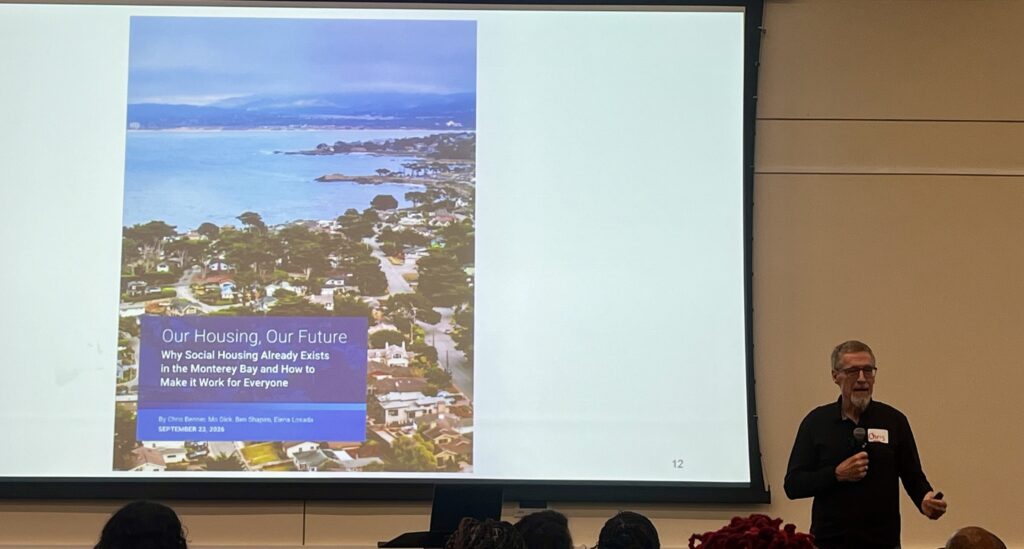
But a very different kind of housing future may be within reach. That’s the conclusion from a bold new report by UC Santa Cruz Sociology Professor Chris Benner and researchers with the Institute for Social Transformation. In the report, the team outlines the unique challenges of our regional housing crisis and explains why they believe market-based affordable housing initiatives have thus far failed to move the needle. They argue it’s time for a radically different approach: investing in permanently affordable housing as public infrastructure.
“Worforce housing in a region like ours is not a simple market commodity,” Benner explained. “It’s actually economic infrastructure that is just as essential as roads, electricity, and sewage. These are all things that the public sector produces because we recognize that the market won’t do it alone, and we need these services for our economy to function.”
According to the team, many of the resources and tools that our communities would need in order to actually build publicly-owned affordable housing for our region’s workforce are already at our disposal. That includes enough vacant, underutilized public land to support development of up to 152,600 new homes—a roughly 55% potential expansion in regional housing stock. The report shares these findings, along with practical recommendations for managing and funding new workforce housing.
Taking a new approach to affordable housing
The report argues that free-market solutions alone cannot solve the region’s housing crisis. In a land-constrained, high-cost market, private development rarely produces housing that working families can afford. Meanwhile, market-based incentives like subsidies, tax credits, and zoning tweaks are complex, costly, and provide only temporary affordability that eventually requires further subsidies.
An alternative is investing in workforce housing as public infrastructure. The report shares examples from places like Vienna, Singapore, Hong Kong, and Maryland that demonstrate how to do this well. The long-term affordability of such public housing depends on retaining public ownership of the land, in order to insulate it from the effects of market speculation. Development of these projects is also financed by public capital, rather than private equity.
Another key to success is shifting conceptions of who public housing is for. Benner and his team argue for expanding eligibility beyond the poorest individuals to also include teachers, nurses, civil servants, and other core members of the regional workforce, alongside some market-rate housing in the same developments. This would both reduce stigma around public housing and help support funding sustainability.
“Historically, this country’s policy of limiting eligibility for public housing to only the very poor only served to concentrate poverty in low opportunity neighborhoods, often with no connection to economic mobility opportunities,” Benner said. “In fact, if you gained income, you had to leave your housing. What we’ve learned from history is that this concept of ‘move up and move out’ really doesn’t work.”
Some examples of workforce-oriented housing developments already exist in the Monterey Bay area. School districts, hospitals, universities, and agricultural companies in the region have had to become housing providers in order to keep their doors open, simply because the housing market cannot serve their workforce. Shifting to a public housing model could expand access to affordable housing more equitably across more of the region’s workforce.
Tools and resources for getting it done
The report hones in on a particularly powerful tool for advancing affordable housing development in our region: public lands. To reveal the potential of this resource, researchers conducted a parcel-level review of publicly owned land across Santa Cruz, Monterey and San Benito Counties. They considered details about each property alongside satellite imagery and characteristics of the surrounding neighborhood. Their findings identified vacant and underutilized parcels and assessed the feasibility of building housing on them, based on factors like parcel size, access to services, and density possibilities.
The review found 340 clearly viable parcels and 306 potentially viable ones, totaling 3,500 to 8,700 acres. This public land could support 32,500 to 152,600 new housing units—expanding regional housing stock by at least 12% and potentially up to 55%. Those calculations assume only a slightly higher density level for new development than that of surrounding areas—like duplexes amidst single family homes—in order to not change the characteristics of neighborhoods.
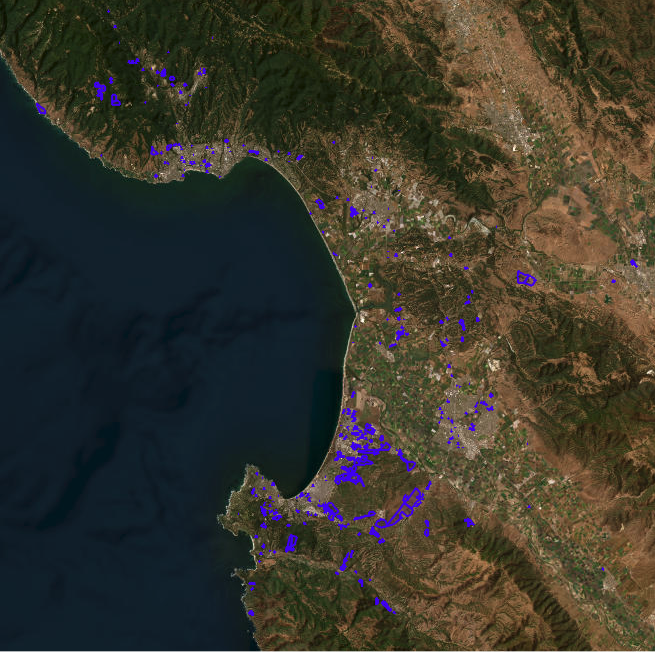
The team also took care to focus their analysis on parcels of public land that were within existing city growth boundaries and close to existing residential development, not green space or agricultural land on the periphery. Most of the parcels they identified were fragments of land left over from prior infrastructure-building projects. Anywhere that such public land could be used for affordable housing, the team estimates that development costs would be reduced by 20% or more, simply by not having to buy land.
To take advantage of this strategy, local housing authorities would have to adapt to become long-term stewards of a regional housing portfolio. Benner’s team recommends funding these projects through public bonds that could be used to offer public financing, in the form of below-market-rate construction loans to developers. The interest paid back to the housing authority on those loans could then offset most of the annual bond repayment. A similar model is currently in place in Montgomery County, Maryland. The county takes an ownership stake in the finished buildings, all for a net cost of about $600,000 a year.
California’s two-thirds supermajority requirement for local general obligation bonds does present a bit of a funding hurdle. Benner argues statewide reform is ultimately needed to remove the supermajority requirement for local housing bonds, as has already been done for school construction bonds. But in the meantime, there are alternatives, including specialized bond structures, infrastructure financing districts, development fees, and reallocating certain types of tax revenue. Political will may actually be the biggest missing piece at the moment.
“What we really need is just to shift people’s understanding that the market cannot solve this,” he said. “The public sector is the only entity at scale that can have a real impact, given the size of the problem that we face. We should embrace the potential of public housing for our area.”
UC Santa Cruz offers employee housing for staff and faculty, much of which is available at below-market rates. Learn more about the model that keeps these units more affordable in Section II of Professor Benner’s independent report. To serve the housing needs of students, the campus is pursuing an ambitious plan to provide more than 40% additional student housing within the decade and offers a two-year housing guarantee to new undergraduates.