Student Experience
Teaching students scientific-storytelling skills to inspire change
The senior capstone course ESCI 191 equips environmental-science majors with digital-storytelling skills to translate complex climate data into compelling narratives to immerse and engage the public.
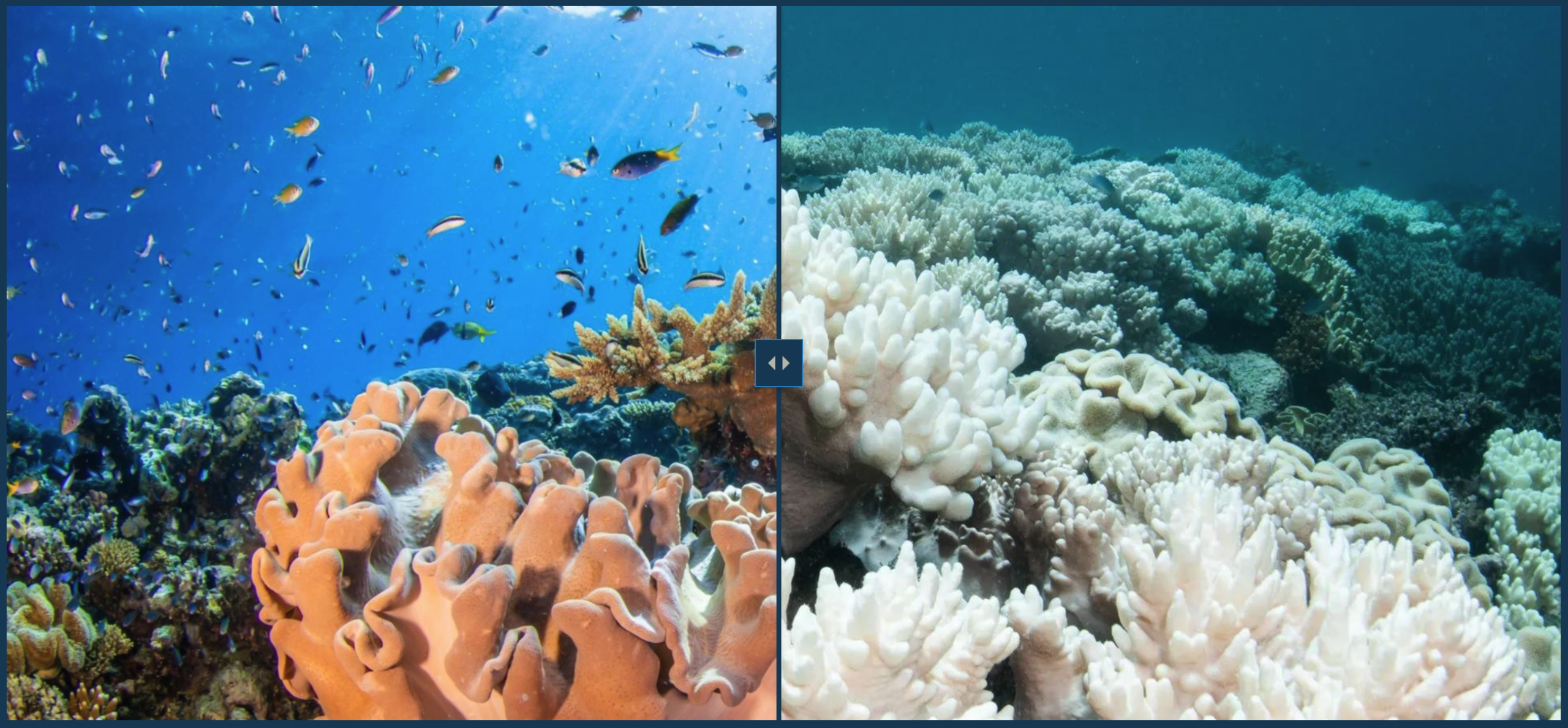
A senior capstone project published online as part of the course "Communicating Climate Science" that focuses on the Great Barrier Reef includes a slider that can be dragged to reveal coral before and after a bleaching event caused by high ocean temperatures.
The average person isn’t moved by statistics alone, but by stories that humanize those data points and make them feel personal and important to their lives. This is what guides the course ESCI 191: Communicating Climate Science, which shows environmental-science majors at the University of California, Santa Cruz, how to create modern and immersive stories about the effects of climate change on actual communities and ecosystems.
Students in the course use ArcGIS StoryMaps to create responsive, web-based narratives and data visualizations on a climate-related topic of their choice as their senior capstone project. Denise Marc (College Nine, ’26, environmental science) chose to focus on how certain communities along the Bay Area peninsula lack adequate green spaces that are a key part of adapting to a warming planet.
Grassroots issues
Marc’s capstone, “How ‘Green Gaps’ Deepen Climate Inequities” provides a critical look into climate change and the uneven distribution of green spaces like neighborhood parks and regional wetlands across the counties of San Francisco and San Mateo. She reports how they each have about three times the national average of census tracks that face climate vulnerability.
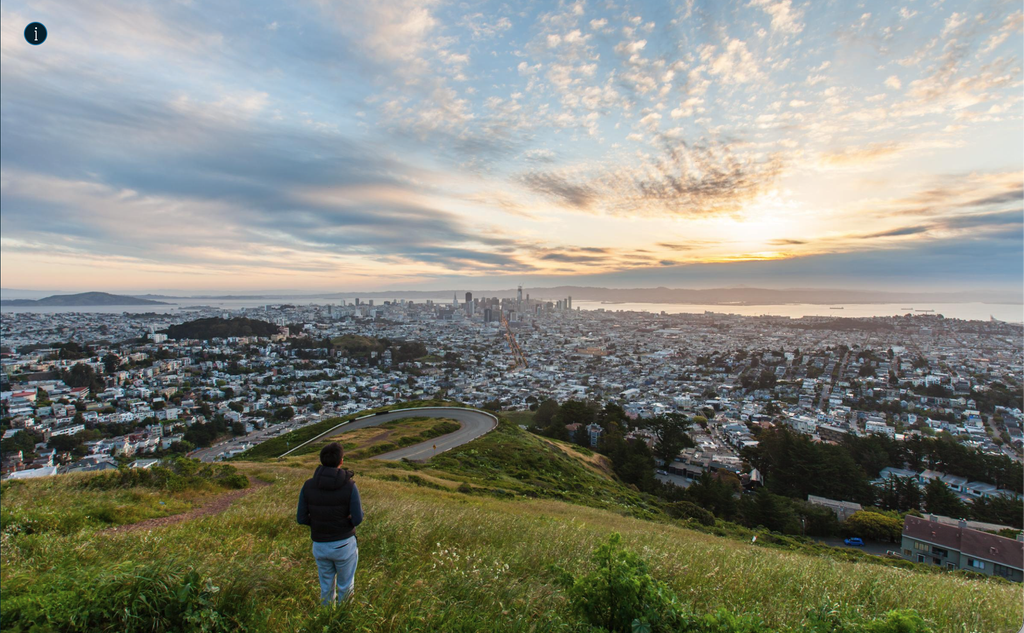
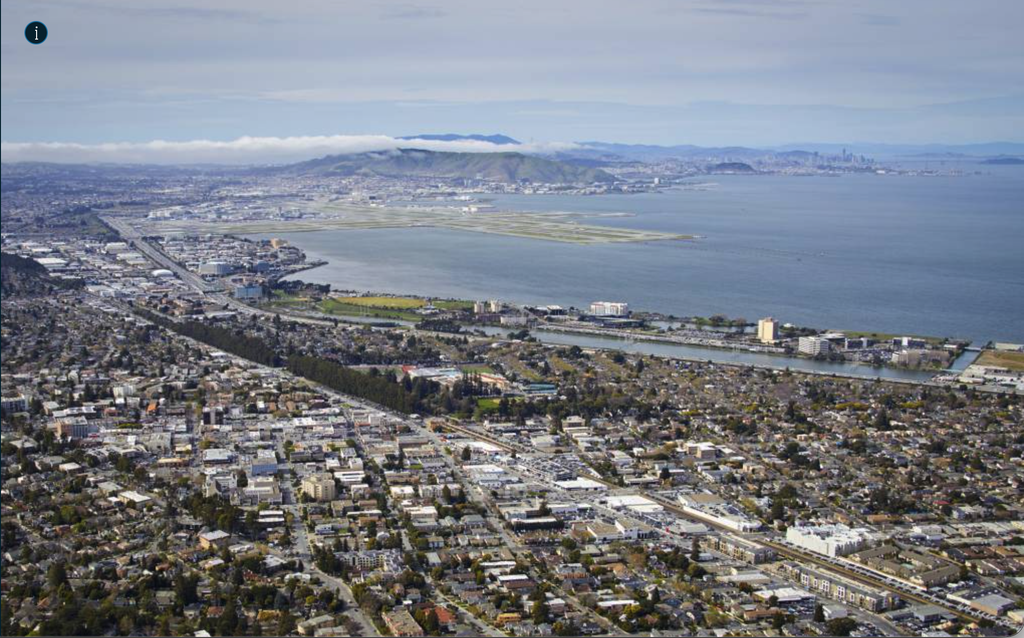
But as you scroll past those statistics, large photos of San Francisco at sunset and of the central peninsula from above float onto the screen:
Then, you swipe through various maps that visualize extreme heat events in the region, sea-level rise, increased wildfire risks, and increased air pollution. The dynamic display is then followed by a statement on how infrastructure, housing quality, and the financial resources needed to adapt to these changes are unequally distributed across the region—and that one of the most telling indicators of that disparity is what she terms the “greenspace gap.”
“It’s frustrating but eye-opening to see that sometimes, an entire established system is what perpetuates the harm that is done to the most vulnerable communities in the face of climate change,” said Marc, now pursuing a master’s degree at UC Santa Cruz in geographic information systems, spatial technologies, applications, and research.
Slowly boiling sea turtles
Matthew Ower (John R. Lewis ’26, environmental science) published a StoryMap titled “Sea Turtles & the Changing Environment.” The topic stems from his youth, growing up going to the beach and camping frequently. He said nature has always been an integral part of his life, and at UC Santa Cruz, he focused his environmental-science studies on climate change and its intersection with ocean systems.
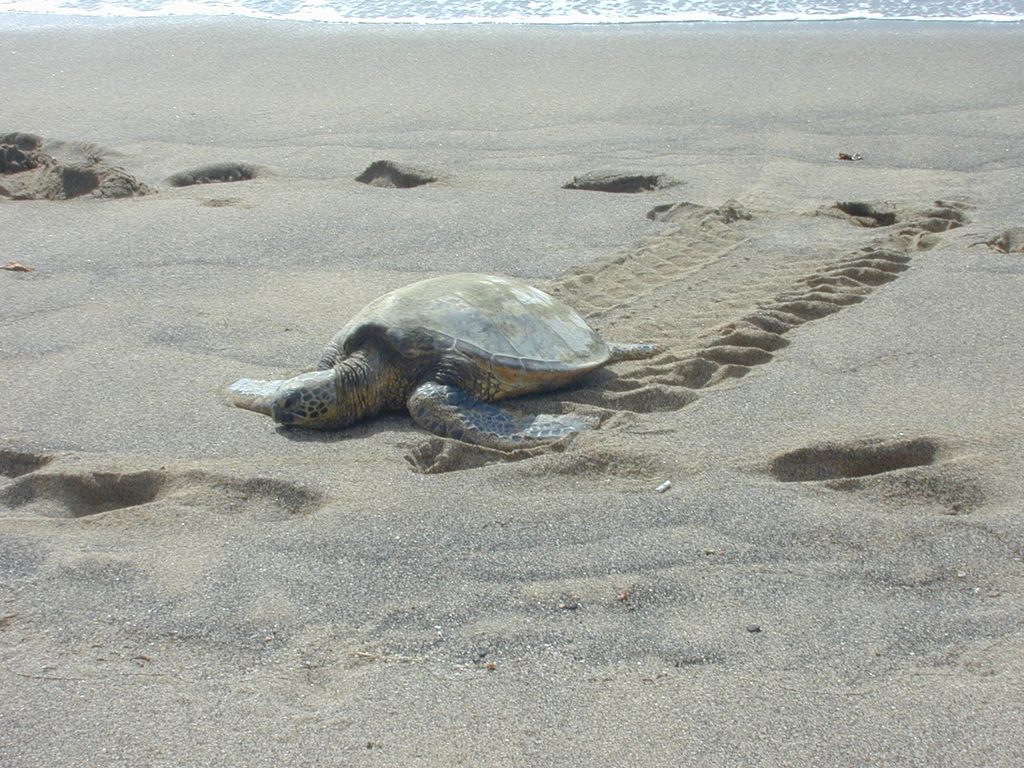
“Climate change poses a unique challenge for many ocean creatures that I grew up to love and still love. But I have noticed discourse focuses on the negative impacts on mainly marine calcifiers, such as coral reefs,” Ower said. “Sea turtles are such a vital part of the marine ecosystem. Plus they are super cute, so I felt an obligation to share their challenges attributable to climate change.”
A warmer climate has increased sand temperatures where sea turtles lay their eggs, resulting in more female hatchlings and reduced genetic variability and reproduction. As Ower outlines on his StoryMap, this is because hormones released at warmer temperatures leads to ovarian development. Meanwhile, ocean warming prompts sea turtles to swim into foreign waters farther north. Then, when fall hits, northern water temperatures drop too quickly and stun the turtles—leaving them stranded or vulnerable to predators, boat strikes, and other injuries.
The course is taught in winter quarter by Adina Paytan, distinguished professor of Earth and planetary sciences. It integrates concepts from Earth, life, and physical sciences, with a specific focus on utilizing current, open-access data on climate to help students understand and feel comfortable talking about climate change.
“Understanding climate change is scientifically and socially important. The actions we take today influence the future of our planet,” Paytan said. “StoryMaps tell different stories of climate change and the solutions that can reverse its impacts; and it is important that we teach students how to communicate this effectively, inspire people, and increase climate literacy.”
In her StoryMap, Marc highlighted a $12 million public-works project in San Francisco funded by a federal grant to plant 3,500 new street trees specifically targeting Bayview-Hunters Point and other low-canopy neighborhoods. She also cited a master plan adopted in 2022 by East Palo Alto to increase its citywide tree canopy from 13.5% to 30%—which would narrow the gap with neighboring Palo Alto, at 38%, and Menlo Park, at 27%.
Meanwhile, Ower highlighted actions taken in Australia by Queensland’s government and the Great Barrier Reef Foundation to relocate thousands of sea-turtle eggs to a site where they could be shaded by a canopy and cooled. He also called out the work of various nonprofits and aquarium organizations that patrol beaches for cold-stunned sea turtles and rescue and rehabilitate them before returning them to the ocean.
Communicating confidently and effectively
Ower said using ArcGIS StoryMaps was surprisingly intuitive. The user interface made it easy to find organizational tools, interactive immersives, and templates to make content engaging and fun. “Due to my pre-existing interest in climate change, I felt that I already had a strong understanding of the subject,” said Ower, now a graduate student in Paytan’s lab. “However, this course provided unique perspectives and allowed me to explore climate change in greater depth, further strengthening my understanding and ability to effectively communicate and discuss climate-related topics.”
Other students in the course created StoryMaps that spanned not just the region and state, but the globe. Some focused on the impacts of sea-level rise on Bay Area groundwater, California’s future of droughts and agriculture, oil drilling in Texas, and the effects of climate change on the Great Barrier Reef.
“This course was a great experience for learning and practicing cause-and-effect scientific storytelling with evidential data and imagery. I learned a lot about how to translate the data of climate change into tangible impacts in local communities,” Marc said. “These skills will be very useful moving forward—especially in an age where honest scientific communication and public education are more important than ever.”