Social Justice & Community
Could a one-time cash payment help lift families out of poverty?
Economics research shows how an alternative form of development aid could alleviate food insecurity in rural sub-Saharan Africa
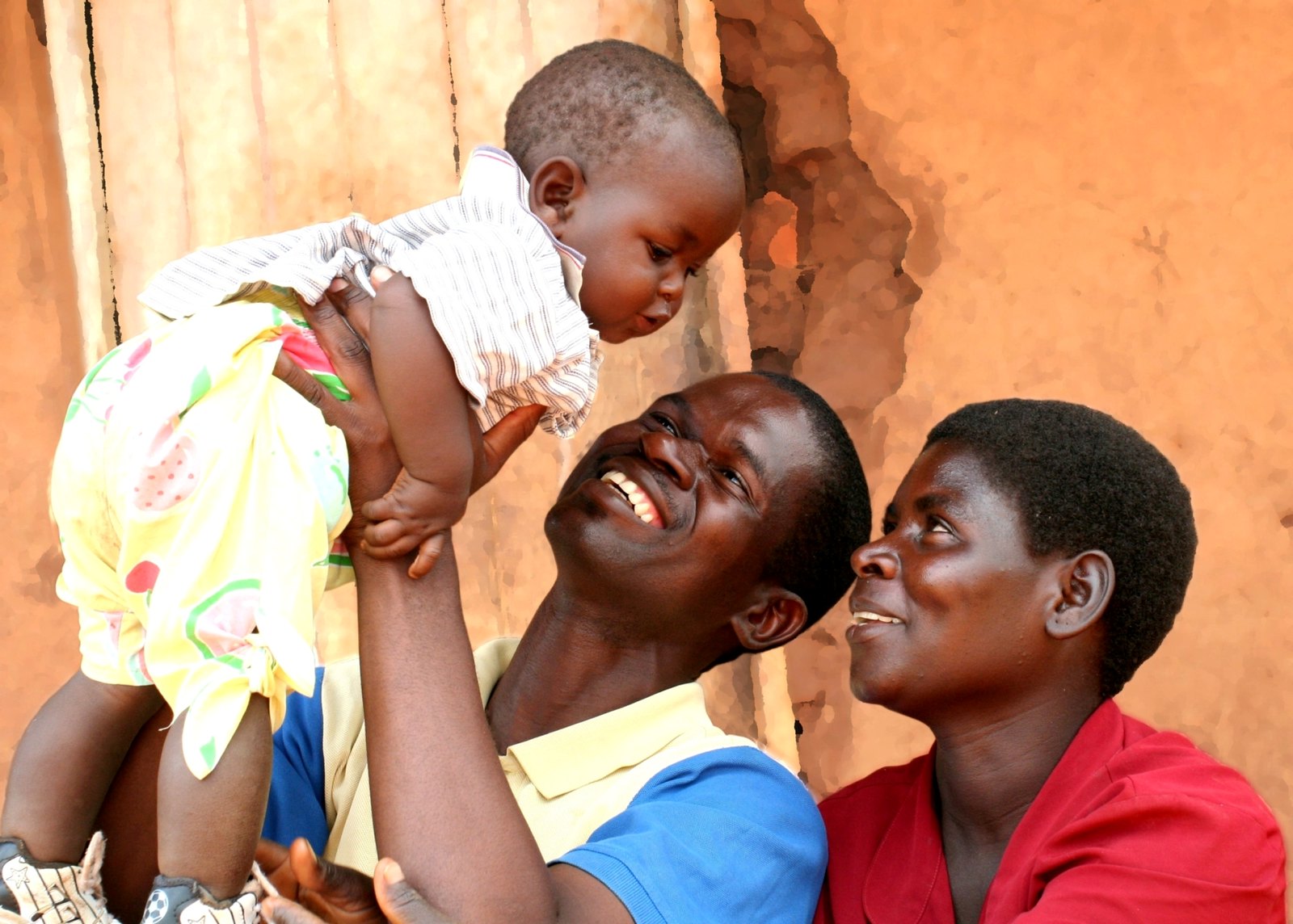
A family in Malawi plays with their child. UC Santa Cruz conducted research with USAID in Malawi and Liberia that found lasting benefits for food security, psychological well-being, and more from a "cash transfer" style of aid payments. Photo Credit: USAID/B. Deutsch.
Press Contact
International humanitarian aid groups are currently facing a heartbreaking mathematical dilemma.
Around the world, one in 10 people live in extreme poverty. About 2.3 billion people face moderate or severe food insecurity. Tackling these challenges requires foreign aid funding from wealthy nations to support development in regions where extreme poverty is most prevalent, like sub-Saharan Africa, the Middle East and North Africa, and Oceania. But trends in funding levels are moving in the wrong direction. Official Development Assistance fell by a record 23.1 per cent in 2025 and is projected to decline at least another 5.8% in 2026.
Amidst this backdrop, it’s more important than ever to squeeze the greatest possible impact out of every dollar of aid funding. That’s why an approach called a “cash transfer” has been gaining traction amongst some aid groups. Instead of using aid funding to create development programs—which require costly staffing and infrastructure—the concept of cash transfers is to simply give the full sum of aid money directly to people in need.
Initial research has shown some promising results, especially in meeting people’s immediate needs. But questions remain about whether or how cash transfers can also create long-term economic development benefits, and what role people’s spending decisions might play in that process. Now, a major study co-authored by UC Santa Cruz Economics Professors Jonathan Robinson and Alan Spearot—with former Ph.D. students Shilpa Aggarwal, Dahyeon Jeong, Naresh Kumar, and David Sungho Park, and Cornell Economist Jenny Aker—offers new evidence that an unconditional one-time payment can, in fact, boost long-term food security for rural farming families in sub-Saharan Africa.
“In countries in two very different parts of Africa, with very different institutional structures, we found fairly similar effects,” Spearot said. “People did find a way to improve their food security with the money they received, and these were lasting effects.”
Detailed tracking reveals long-term trends
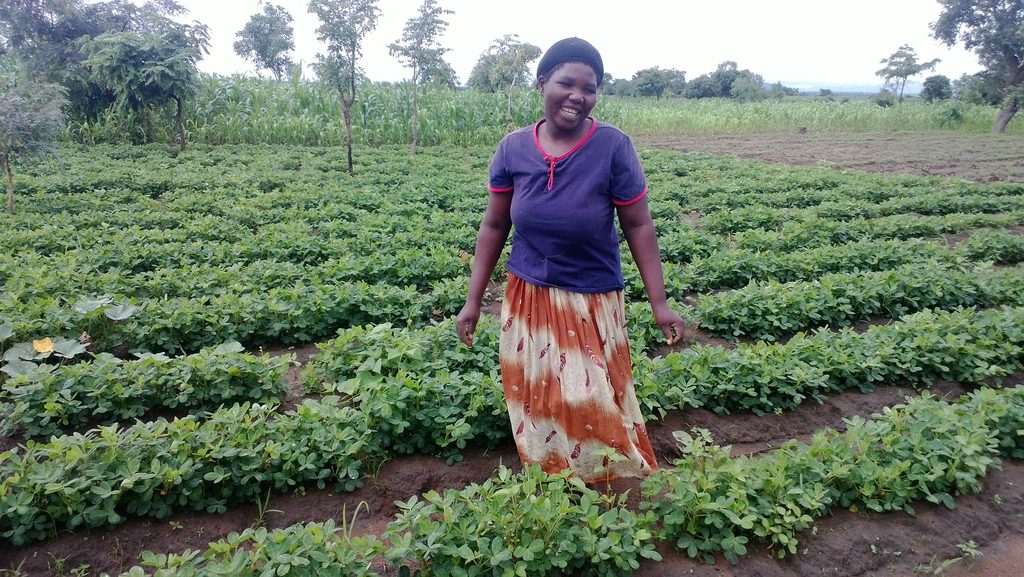
The team’s work, published in the American Economic Journal: Applied Economics, studies the effects of a cash transfer program that was implemented from 2019-2021 by the NGO GiveDirectly, with funding from USAID.
Researchers worked with the aid team to first conduct 3-hour-long surveys with thousands of households across 600 rural villages in Liberia and Malawi, targeting the female head of household for the survey. This established a baseline sense for household economics, food security, and other issues, like psychological well-being and intimate partner violence. The team then randomly selected half of the villages to receive a cash payment of either $250, $500, or $750 for each household in the village.
“These were large amounts of money for people in these villages,” Spearot said. “In the typical case, this was more than a year’s income, and far more in some cases. So the question was, with these large cash infusions, what impact would this money make in the short run and the long run?”
To find out, researchers followed up regularly over a one-to-two year period with about 20% of the households from their original sample. That involved conducting bi-monthly phone surveys to track changes over time in food security, expenditures, income, labor supply, transfers, savings, and credit. Researchers then conducted a final 3-hour survey, 18-25 months after the initial cash payments, with all households from the original sample.
The findings showed that, while households spent all of the money within a matter of months, the benefits lingered for years. The dynamics of this were slightly different in each country. In Malawi, food security increased massively in the short term, with some of those gains fading over time, while in Liberia the effect was more steady and persistent. Psychological well-being improved in both countries over the study period, and intimate partner violence (IPV) decreased by 8 percentage points in Liberia, which is notable since the country has high rates of IPV.
Turning dollars into impact
Researchers can’t say for sure exactly how the cash transfer created long term food security benefits, but their findings point strongly toward one main theory. People used some of the funding to buy seeds, fertilizer, farm tools, and livestock, and that likely contributed to a substantial increase in agricultural output observed during the study period. Specifically, the value of harvest output increased by about 50% in Liberia and 20% in Malawi, and households in both countries reported growing a larger number of crops.
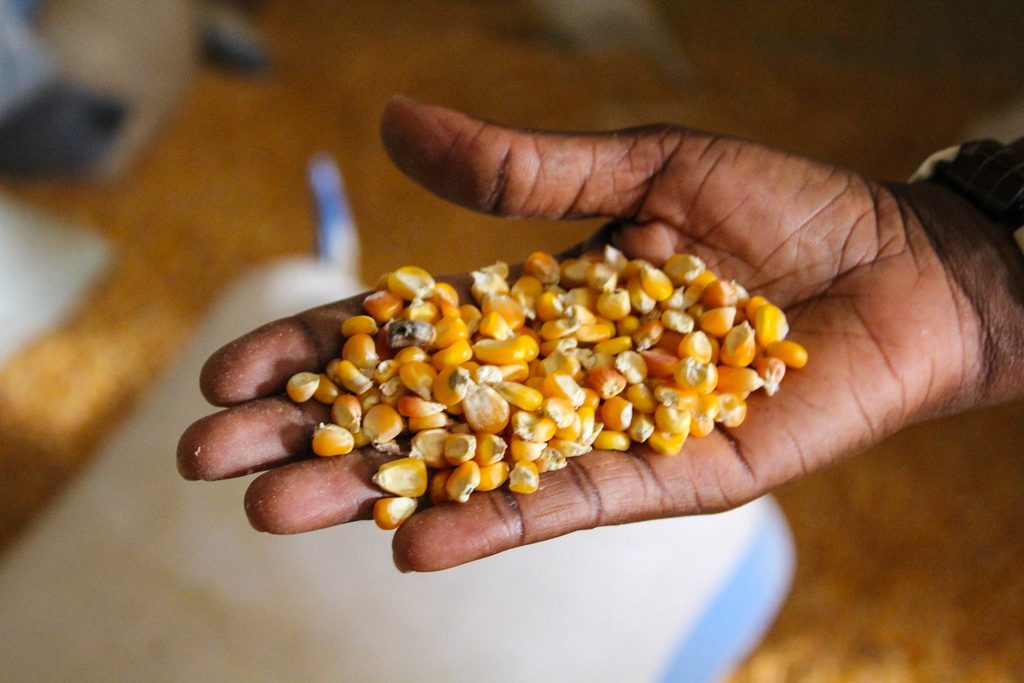
Spearot says the potential for purchasing decisions to have contributed to those increased outputs is especially important for several key reasons. In Malawi and Liberia, there’s very little access to banking for people to be able to save or invest their money, so the decisions they can make about what to spend money on are limited by what’s available in the current moment. And Liberia, in particular, also has a very underdeveloped agricultural inputs sector, meaning it’s hard to even find some key farm products, like fertilizer, for sale at affordable prices.
“To me, our findings show that people can find a way to make good agricultural investments, despite these significant barriers, and I find that very reassuring,” he said. “The choices that people made could still be contributing to a statistically significant difference in food security two years later.”
Researchers believe their findings may be useful to aid organizations that are considering creating or expanding cash transfer programs.
“There’s already been a really well-established short term reason to give cash aid, which is if people are in need due to some sort of shock, but aid groups are also moving beyond that and really trying to get people up the development ladder a bit, out of the extreme poverty that many of them face,” Spearot said. “With this research, I think we learned that, at least through some mechanisms, this type of cash transfer program can help with that.”