Climate & Sustainability
Improving community readiness for evacuations with electric vehicles
New research outlines key challenges and recommendations for city planners to best support EV drivers during an evacuation.
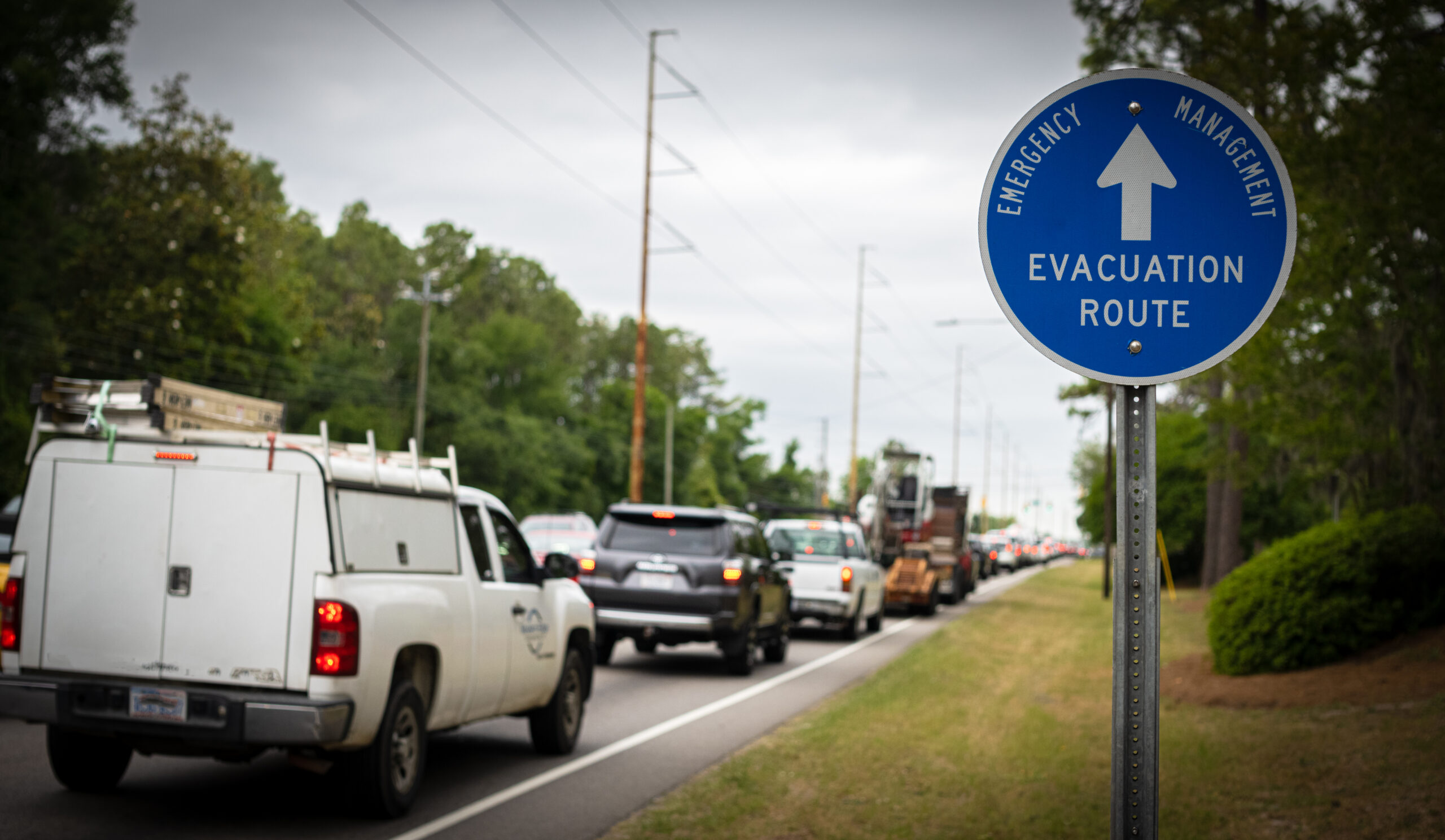
Getty Images/ Darwin Brandis
Press Contact
When natural disasters like wildfires or flooding strike, thousands of people may be told to pack their belongings into their cars and evacuate. Emergency planners base evacuation strategies on the assumption that people are driving gas-powered cars that can be refueled at any gas station—but with more people driving electric vehicles (EVs), new challenges arise.
That’s why a team of researchers at the University of California, Santa Cruz, UC Berkeley, UC Davis, and UC Merced published a study in IEEE Electrification Magazine that outlines key challenges and recommendations for city planners to best support EV drivers during an evacuation. Challenges include the limited network of EV chargers, and the vulnerability of the chargers that do exist to power outages, while opportunities for improving community readiness include EV-friendly evacuation routing and strategic positioning of mobile charging ports before a disaster strikes.
Community-engaged research
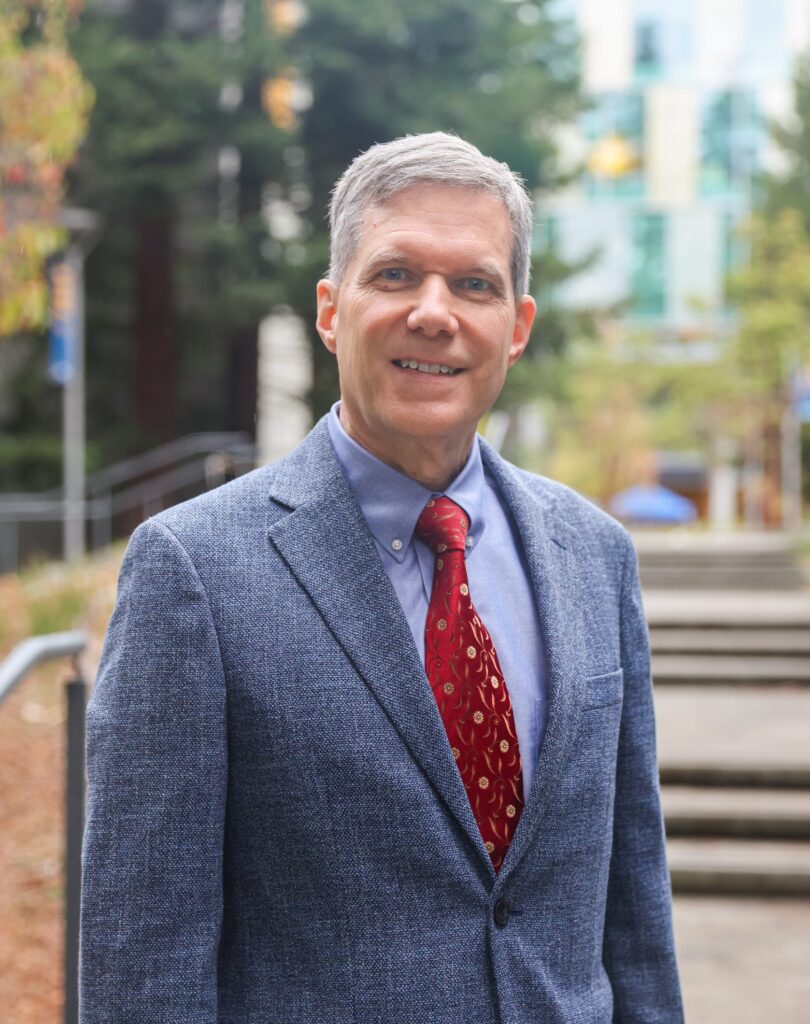
To study EV evacuation readiness, a team of researchers across several UC campuses came together, bringing expertise in electrical engineering, mechanical engineering, traffic theory, and renewable energy. Keith Corzine and Leila Parsa, professors of electrical and computer engineering at the Baskin School of Engineering, contributed deep expertise in power and energy systems and EVs.
Funded by grants from the UC Institute of Transportation and the California Climate Action Grant program, the team set out to understand how the growing number of EV drivers might be impacted during natural disaster evacuations. They were particularly motivated by wildfires, with Santa Cruz having recently experienced the 2020 CZU Lightning Complex fire that burned more than 85,000 acres, but the research applies to any natural disaster including earthquakes and flooding. The team partnered with Mariposa County in the Sierra Nevada foothills to meet various stakeholders, including emergency planners, companies that made EV chargers, and electrical utility representatives.
“From the beginning, we wanted to connect with communities,” Corzine said. “Our first idea was to explore what kind of recommendations could we make to a community to help them decide what they should invest in, like batteries, chargers, or renewable energy sources so that during an evacuation, they could use these resources.”
To understand a community’s readiness for evacuation, the team developed a process for scoring preparedness by looking at what charging infrastructure is in place, what kind of mobile backup power might be available, what transportation routes look like, and what engagement exists between emergency response officials and the community. The team has a forthcoming study on this topic, which city planners and emergency response professionals could use as a resource in their own communities.
One major challenge the team identified was the availability of charging infrastructure and recharging times, especially as some communities have few or no fast chargers. Power outages at charging stations present another vulnerability, particularly considering some electrical utility companies implement public safety power shutoffs when the risk of wildfire is high. EVs left behind during the evacuation could pose additional risks, because if their lithium batteries ignite, resulting fires are intense and toxic.
Preparing for the future with EVs
The researchers examined typical energy charging infrastructure to assess what charging needs might be during an evacuation, considering there may be a surge of energy needed at charging stations and many cars may be traveling along just a few roads. This brought together a range of factors like the energy efficiency of vehicles, the location of chargers, and the evacuation distance. Based on a benchmark standard power system, the UC Santa Cruz team examined how power flow might be optimized if a failure like a blackout occurs in one point of the system, in order to minimize damage.
This analysis led the team to several insights. First, mobile charging stations can be used to augment charging infrastructure during periods of high demand, and the team’s power flow analysis can help guide communities about how many of these chargers are needed, and where they should be placed.
The team members at UC Berkeley and UC Davis took the lead on traffic simulations, and found that some communities might experience major traffic congestion when thousands of evacuees converge on a few major corridors with EV charging stations. They found that in some situations, emergency planners should recommend different people take distinct evacuation routes, even if they are sometimes longer, based on the real-time conditions and needs of their EVs.
Their research also highlighted the necessity of educating communities on safe evacuations. For EV owners, one particularly important message is surprisingly straightforward: charge your EV to 100% if there’s a high chance of a wildfire, flood, or other hazard.
As part of the larger project, the researchers also considered what might be done to support communities in the aftermath of disaster. One opportunity they identified is that larger EVs, like electrified buses, trains, or machinery, could be used to power critical infrastructure like an emergency operation center. This concept is called “Vehicle to X,” the idea that EVs can be used to power a home, another vehicle, or even the utility grid before, during, or after a disaster.
Further, some of the larger vehicles may be hydrogen powered and may be more quickly and efficiently charged. Hydrogen vehicles can be used for Vehicle to X, or they could quickly unload hydrogen at a location for the purpose of power generation.
“We call that energy tankers: things that you would normally use for one purpose, you could repurpose,” Corzine said. “As transportation becomes more electrified, these resources could be used for something else during a disaster.”