Science
-
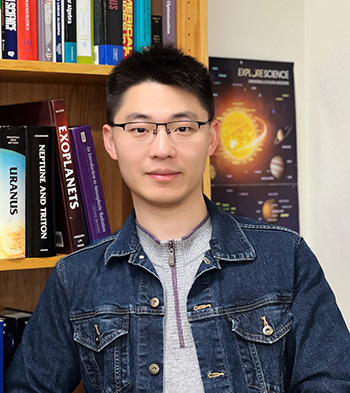
Grad student Huazhi Ge wins postdoctoral fellowship for planetary science research
Huazhi Ge, a doctoral candidate in planetary science at UC Santa Cruz, has won a prestigious 51 Pegasi b Fellowship from the Heising-Simons Foundation to support his postdoctoral research.
-
New program advises UCSC Ph.D. students on their path to entrepreneurship and venture capital
Many student-led innovations never make it out of the lab. A new program at UC Santa Cruz aims to change that by mentoring Ph.D. students in the life sciences on alternative career pathways outside academia: entrepreneurship and venture capital.
-

JWST’s first direct spectrum of planetary-mass object reveals dynamic atmosphere
The most detailed spectrum ever for a planetary-mass object outside our solar system covers an unprecedented range of wavelengths, providing a wealth of new insights.
-
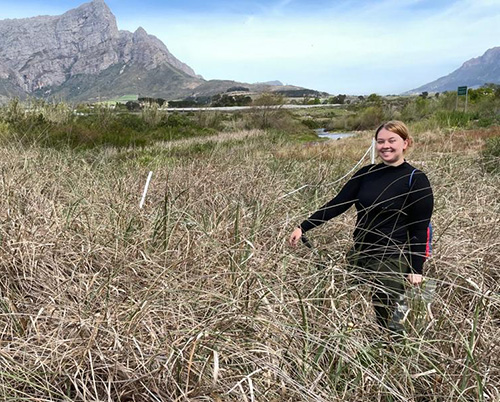
Collaboration with NASA uses eDNA technology to monitor biodiversity
UCSC scientists collected environmental DNA samples in South Africa as part of the BioSCape project.
-
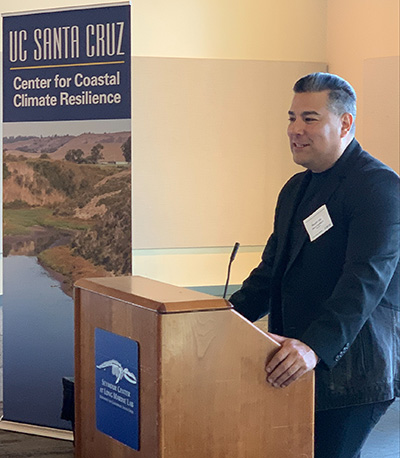
Scientists, policy leaders, and insurance experts meet to address climate risks
The Coastal Climate Resilience Symposium held at the Seymour Center focused on integrating nature-based solutions into risk management and insurance.
-
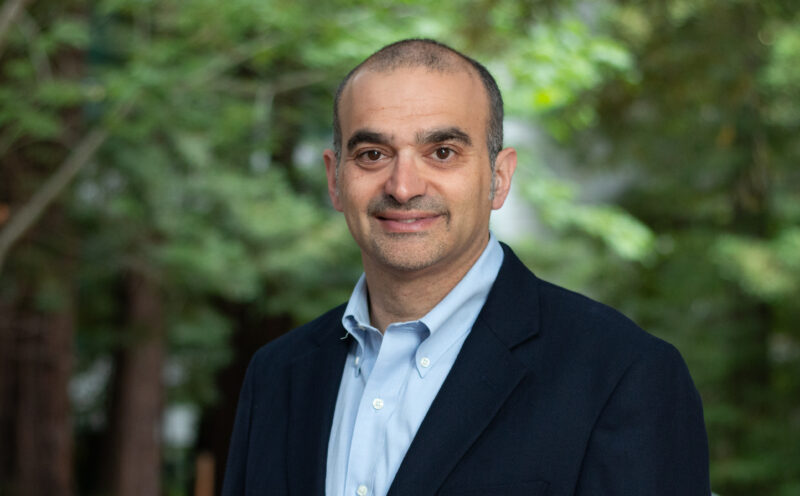
UCSC names astronomer Bryan Gaensler dean of Physical and Biological Sciences
UC Santa Cruz has appointed internationally recognized astronomer Bryan Gaensler to serve as dean of the Division of Physical and Biological Sciences, effective August 15.
-
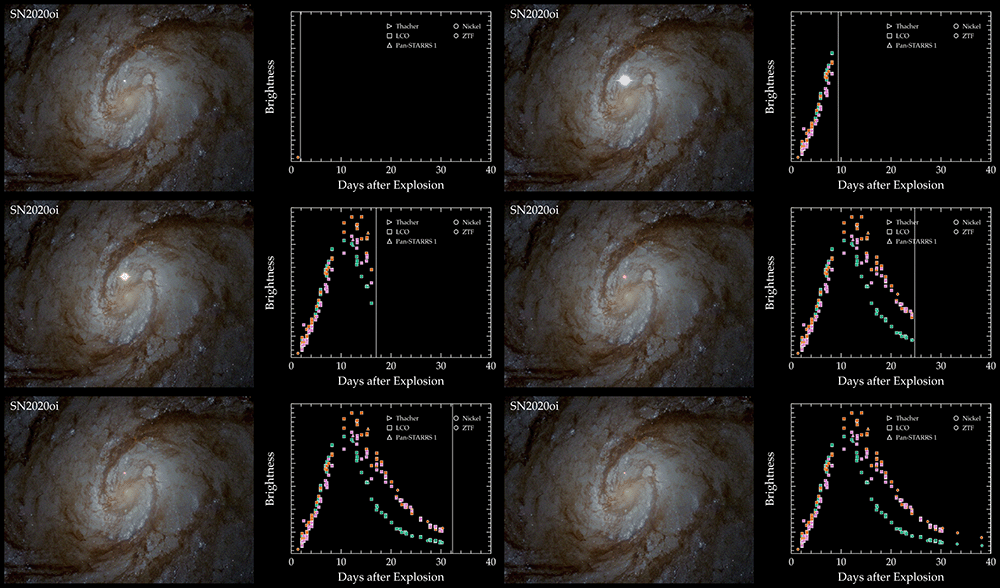
Young Supernova Experiment releases first set of transient survey data
UC Santa Cruz astronomers organized the survey, which has discovered thousands of cosmic explosions and other transient events of interest to astronomers and astrophysicists.
-
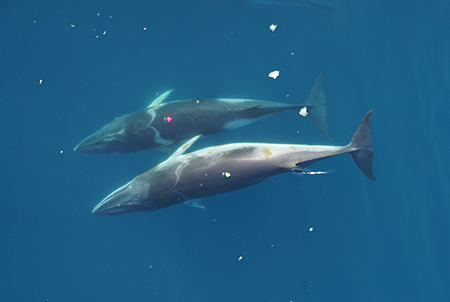
Minke whales are as small as a lunge-feeding baleen whale can be
Research on the feeding behavior of Antarctic minke whales found that a smaller whale could not capture enough food to survive using the lunge-feeding strategy of baleen whales.
-

Winning Grad Slam presentation highlights disease threat to Hawaiian birds
Ecology and evolutionary biology graduate student Christa Seidl will compete in the UC systemwide Grad Slam in May, presenting her research on avian malaria.
-

Planetary scientist Myriam Telus wins NSF CAREER Award
Myriam Telus, assistant professor of Earth and planetary sciences at UC Santa Cruz, has received a Faculty Early Career Development (CAREER) Award from the National Science Foundation (NSF) to support her research on the atmospheres of rocky exoplanets.
-
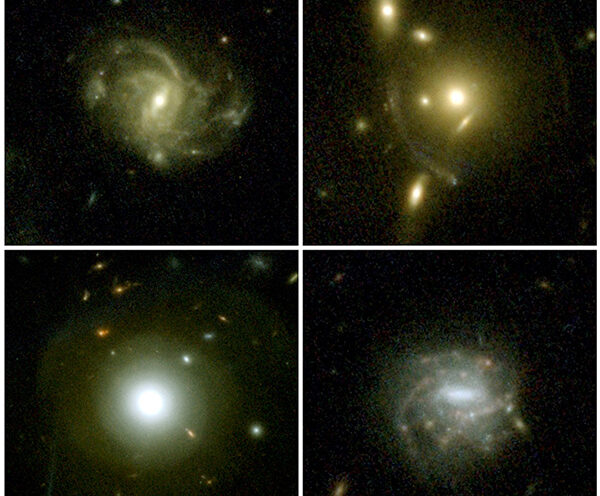
First images released from James Webb Space Telescope’s largest general observer program
Mosaic images from the COSMOS-Web program offer a treasure trove of early galaxies, including dazzling examples of spiral galaxies, gravitational lensing, and evidence of galaxy mergers.
-
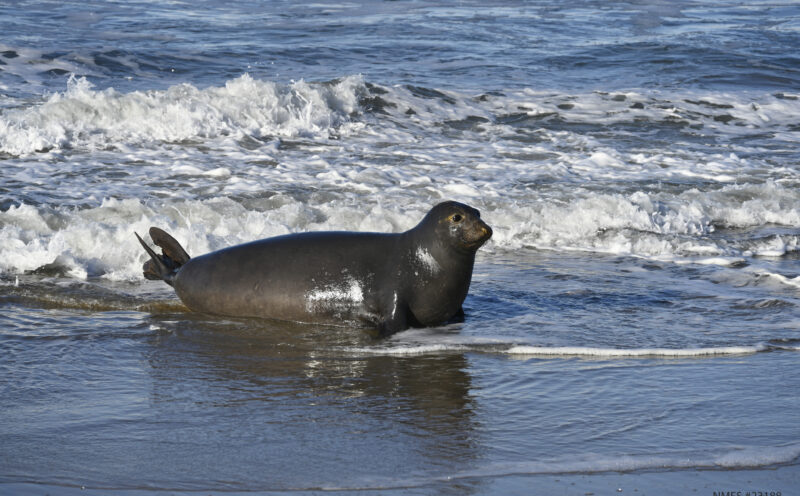
Marine mammal reproduction rests on a precarious tipping point of ocean resources
A study of northern elephant seals reveals a threshold at which a small decrease in the amount of prey females can find during foraging migrations could lead to a sudden drop in reproductive success.