Earth & Space
-

Researchers played elephant seals the calls of their nemeses. This is what happened next
“Male elephant seals come back to the exact same breeding location year after year and engage in competitive interactions with a number of familiar individuals,” says Caroline Casey, research scientist and adjunct professor at the University of California, Santa Cruz, in a statement. “It would make sense, then, that they would retain some memory of…
-

Mars Has Lightning, Scientists Prove
This is the first time there has been convincing evidence that electrical activity on Mars is actually occurring, says Francis Nimmo, a planetary scientist at the University of California, Santa Cruz, who wasn’t involved in the study.
-

What California’s big, gross elephant seals can teach us about life
“I mean, everything they do is extreme,” says Daniel Costa, professor of ecology and evolutionary biology at UC Santa Cruz. “They’re the deepest-diving pinniped and they dive for longer than any other seal or sea lion. They also fast for longer. Everything they do is just pushing the limits.”
-

Why California is seeing an earthquake cluster right now
Emily Brodsky, an earthquake physicist at UC Santa Cruz, said it’s difficult to draw any conclusions from the activity in San Ramon. “Although it’s the kind of thing you might expect to happen before a big earthquake, we can’t distinguish that from the many, many times that has happened without a big earthquake,” she told…
-
New Research Shows How AI Could Transform Math, Physics, Cancer Research and More
“I had not seen anything that impressive [in math] from an LLM before,” says Ryan Foley, an astrophysicist at the University of California, Santa Cruz, who was not involved in the study. “I suspect LLMs are going to upend how theories are created, vetted and improved.”
-
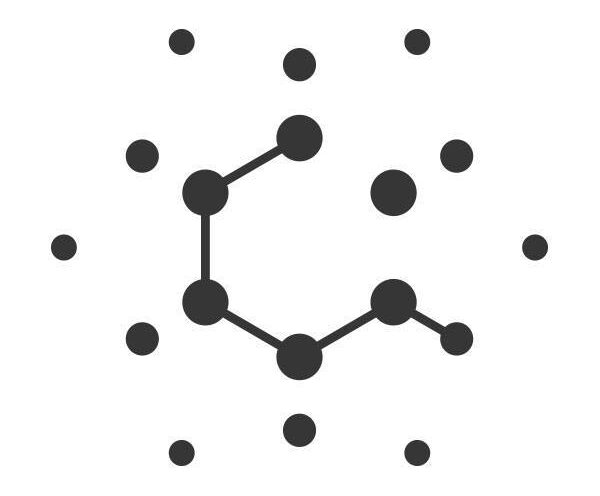
Cosmic Paradox Reveals the Awful Consequence of an Observer-Free Universe
This conclusion struck physicists as paradoxical, given that we too could conceivably live in a closed universe. And we clearly see far more than a single state around us. “On my desk there are an infinite number of states,” said Edgar Shaghoulian, a physicist at the University of California, Santa Cruz.
-

If another country tested nuclear weapons, here’s how we’d know
Seismologist Thorne Lay of the University of California, Santa Cruz has been involved with nuclear monitoring research for decades. Science News spoke with Lay to clarify what we know about nuclear testing around the globe.
-

UCSC astronomy Ph.D. survived war and helped build Kosovo’s first observatory. Now she’s bringing the cosmos to Bay Area classrooms
After surviving the Kosovo War and witnessing her first solar eclipse as a child, UC Santa Cruz astronomy Ph.D. student Pranvera Hyseni turned a moment of wonder into a lifelong mission to bring astronomy education to her homeland.
-

Alien worlds may be able to make their own water
“They can basically be their own water engines,” says Quentin Williams, an experimental geochemist at the University of California Santa Cruz who was not involved with the new work.
-

Cruise ships are flocking to Alaska to chase ice. But receding glaciers are leaving a new threat behind
Rocks expand and contract when they heat and cool, said Noah Finnegan, a geomorphologist and professor at the University of California Santa Cruz. Rocks that have been covered in a layer of ice for 1,000 years have been at a consistent temperature.
-
Volcano Worlds Might Be the First Exomoons Found by Astronomers
Co-author on the new study, postdoctoral researcher Athira Unni of the University of California, Santa Cruz, released measurements of the movement of sodium around WASP-49b, citing the rapid velocity around the system as a clue toward the origin being a volcanic satellite rather than stellar eruptions or other astrophysical sources.
-

An Earthling’s guide to planet hunting
Earth’s turbulent atmosphere makes it hard to detect new planets from the ground. UC Santa Cruz astronomer Rebecca Jensen-Clem is working out how to find them anyway.