News Article
-
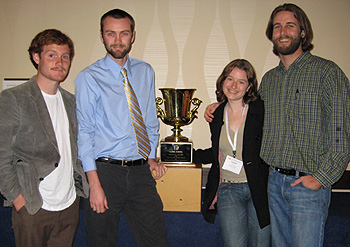
UC Santa Cruz engineering students win national robotics competition
A team of four students from UCSC’s Baskin School of Engineering won the first-place trophy in a national student robotics competition for their design of a solar-powered robot that can climb up a vertical ribbon carrying a payload.
-
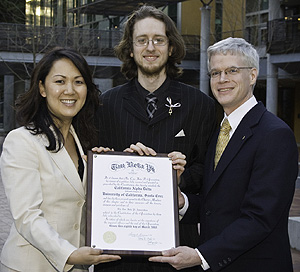
National engineering honor society installs chapter at UC Santa Cruz
The Engineering Honor Society at UC Santa Cruz was officially installed as the California Alpha Delta Chapter of Tau Beta Pi in a ceremony held on Saturday, March 8, at UCSC’s Baskin School of Engineering.
-

Nearby star should harbor detectable, Earth-like planets
A rocky planet similar to Earth may be orbiting one of our nearest stellar neighbors and could be detected using existing techniques, according to a new study led by UCSC astronomers.
-
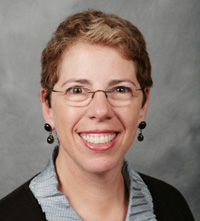
Biotech students learn about neglected diseases from alumna Nina Grove
As director of the malaria program at the Institute for OneWorld Health, alumna Nina Grove is involved in a unique public health project that is applying the tools of the biotechnology industry to the battle against one of the most devastating diseases in
-
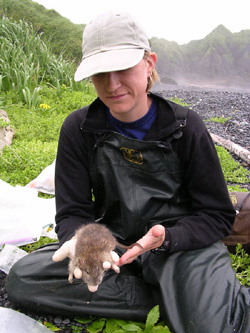
Rats on islands disrupt ecosystems from land to sea, researchers find
The ecological impacts of introduced rats on islands extend far beyond seabird nesting colonies, according to a new UCSC study that provides support for efforts to eradicate rats from the Aleutian Islands.
-
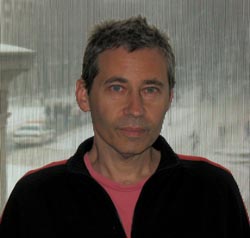
Award-winning journalist Alexander Stille to be keynote speaker at statewide Italian Studies conference hosted by UCSC
Award-winning author and journalist Alexander Stille will be the keynote speaker at a statewide conference presented by the California Interdisciplinary Consortium for Italian Studies at UC Santa Cruz, February 29-March 1.
-

Why does popcorn cost so much at the movies?
Movie theaters are notorious for charging consumers top dollar for concession items such as popcorn, soda, and candy. Are moviegoers just being gouged?
-
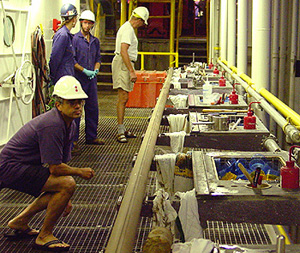
Past greenhouse warming events provide clues to what the future may hold
Scientists studying an episode of extreme global warming in Earth’s past are piecing together an increasingly detailed picture of its causes and consequences.
-
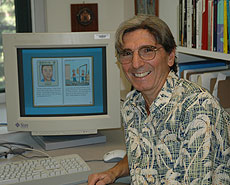
Animated tutors help remedial readers, language learners, autistic children
Tools developed by researchers exploring language and speech comprehension can become powerful aids for remedial readers, children with language challenges, and anyone learning a second language, according to psychology professor Dominic Massaro of the Un
-
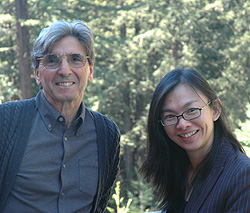
UCSC project aims to provide a virtual speech therapist via cell phone
UCSC researchers have received funding from Microsoft Research to develop a virtual speech therapist, accessible on a cell phone, to aid stroke survivors in Malaysia.
-

Astronomers find one of the youngest and brightest galaxies in the early universe
NASA’s Hubble and Spitzer space telescopes have uncovered what may be one of the youngest and brightest galaxies ever seen in the middle of the cosmic “dark ages,” just 700 million years after the beginning of our universe.