News Article
-
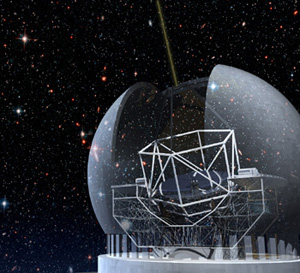
Thirty-Meter Telescope Project Receives $15 Million from Moore Foundation
UC and Caltech have each received $7.5 million in additional funding from the Gordon and Betty Moore Foundation for the development of the Thirty-Meter Telescope.
-
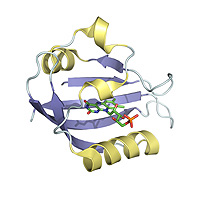
New light-sensing ability discovered in disease-causing bacteria
The bacteria that cause brucellosis can sense light and use the information to regulate their virulence, according to a study by UCSC researchers.
-
UCSC launches reclaimed water study
UCSC is initiating a study to assess the feasibility of developing an on-campus system for reclaiming and recycling water.
-
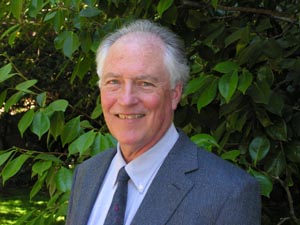
UCSC students present research at World History Association conference
Under the direction of professor Edmund Burke III, director of the UC Santa Cruz Center for World History, seven UCSC current and past graduate students in history presented papers at the 16th annual
-
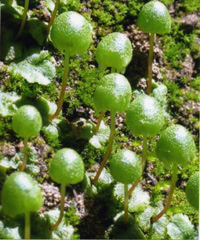
UCSC professor emeritus William Doyle publishes new reference for California botanists
William T. Doyle, professor emeritus of ecology and evolutionary biology, has published a comprehensive reference on the liverworts and hornworts of California.
-
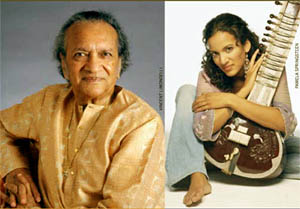
Arts & Lectures announces 2007-08 season of internationally acclaimed artists
Legendary sitarist Ravi Shankar, renowned Brazilian guitarist and songwriter Caetano Veloso, South African trumpeter Hugh Masekela, Senegalese superstar Youssou N’Dour, and National Public Radio’s Peabody Award-winning correspondent Scott Simon are just s
-
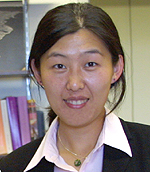
UCSC neuroscientist Yi Zuo wins two new research awards
Yi Zuo’s innovative research on the nervous system has attracted funding from three major foundations since her arrival at UCSC in January.
-
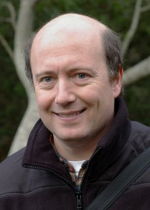
New program color-codes text in Wikipedia entries to indicate trustworthiness
The online reference site Wikipedia enjoys immense popularity despite nagging doubts about the reliability of entries written by its all-volunteer team. A new program developed at UCSC aims to help with the problem by color-coding an entry’s individual ph
-
Wobbly polarity is key to preventing magnetic avalanches on disk drives
New research brings models of magnetic avalanches much closer to reality, helping physicists understand both why they happen and why they don’t run out of control, wiping disk drives clean.
-
Influential fisheries ecologist Steven Berkeley dies at age 60
Steven A. Berkeley, an influential fisheries ecologist whose research helped propel the expansion of marine reserves, died at home in Scotts Valley on June 27 after a year-long battle with cancer. He was 60.
-
Silicon chip beams light through a liquid-core waveguide to detect one particle at a time
By guiding light through liquid-filled channels smaller than a human hair, researchers at UCSC and Brigham Young University have succeeded in building a silicon chip that can detect tiny particles one at a time.
-
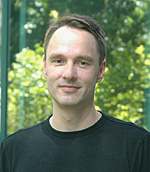
UC Santa Cruz biologist Hinrich Boeger named Pew Scholar in the Biomedical Sciences
The Pew Charitable Trusts has named Hinrich Boeger, assistant professor of molecular, cell, and developmental biology at the University of California, Santa Cruz, a Pew Scholar in the Biomedical Sciences.