News Article
-
Central Coast K-16 Education Collaborative receives $18.1 million grant to revolutionize student pathways and bridge equity gaps
The Central Coast K-16 Regional Collaborative has been awarded an $18.1 million, three-year grant through California’s Community Economic Resilience Fund (CERF) to establish new or expand existing pathways for career opportunities and to address long-standing equity gaps for students across the region.
-

A major new site expansion at Lick Observatory is on the horizon
Lick Observatory’s positioning in the Northern Hemisphere enables observation of a substantial portion of the Milky Way galaxy where there are a multitude of stars, billions of potential sites for life. Making Lick Observatory a perfect home for PANOSETI, or “Panoramic SETI or Pulse All-sky Near Infrared Optical SETI.”
-
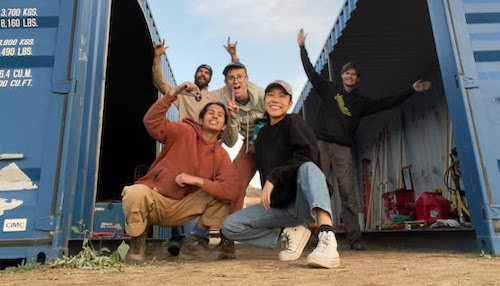
UC Santa Cruz students win three categories at Orange County Sustainability Decathlon
An interdisciplinary team of UC Santa Cruz students, many from the Rachel Carson College Sustainability Minor program, designed and built EcoHus, an innovative, affordable, net-zero house. The EcoHus team was selected to receive a $100,000 grant to participate in the 2023 Orange County Sustainability Decathlon (OCSD) held on Oct. 5-15, where they won first place…
-
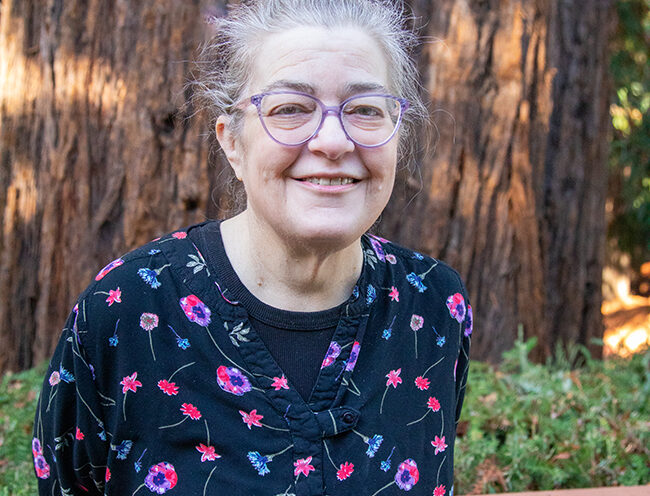
Communication, connection and inclusion are priorities for 2023 Outstanding Staff Awardee
Monique Leduc has been a valued member of the UC Santa Cruz community for 34 years, starting as an assistant analyst in the Financial Aid office in 1989. Six years later, she moved to the office that became Financial Affairs and has worked there ever since.
-

True or false? How uncertainty about the accuracy of information affects learning
UC Santa Cruz postdoctoral scholar Karen Arcos, Assistant Professor of Psychology Hannah Hausman, and Department Chair of Psychology Benjamin Storm published new research that explores how the process of guessing whether information is true or not might affect learning.
-

Immigrants targeted by scams are seeking justice. Here’s how to help them get it
Assistant Professor of Sociology Juan Manuel Pedroza’s research has identified trends in what types of justice immigrants who have been targeted by scams are seeking and offers recommendations for policymakers and law enforcement agencies on how to expand access to justice.
-

Seeing “One Too Many Racist Musicals” is What Led Preston Choi to be a Playwright
Rebecca Wear, professor of Performance, Play and Design, will direct the student production of “You’ll Get Used to It” at UC Santa Cruz on Nov. 3-12, 2023.
-

Irene Lusztig’s Film Richland Explores a Town Grappling with its Ties to the Atomic Bomb
Irene Lusztig’s latest film, Richland, tells the story of the town of the same name. The film opened at Tribeca and at the prestigious International Documentary Festival Amsterdam, it was selected to be part of the program “Signed.”
-

Coral reefs identified as national natural infrastructure
The U.S. Coral Reef Task Force (USCRTF) approved a resolution on Oct. 26 that designates coral reefs along U.S. states and territories as national infrastructure. This resolution makes it easier to direct federal funding, particularly infrastructure, hazard mitigation, and disaster recovery monies, to reef conservation and restoration to protect people, property, and livelihoods.
-

Scientists use Hawaiian fossils to study the past and future of climate change
This month, an international team of researchers returned to shore after a two-month-long ocean expedition exploring fossil coral reefs off the coast of Hawai’i. The fossils provide a record of past climate conditions, so scientists are using them to learn about environmental changes throughout geologic history and make predictions about the future.
-

Multidisciplinary team will develop advanced rhizosphere carbon imaging for climate change research with support of major DOE grant
A team of researchers at UC Santa Cruz and Stanford University are leading a new project in which they aim to use dynamic imaging and modeling of carbon in the rhizosphere to answer longstanding questions about how carbon moves through the soil and plant root interface.
-
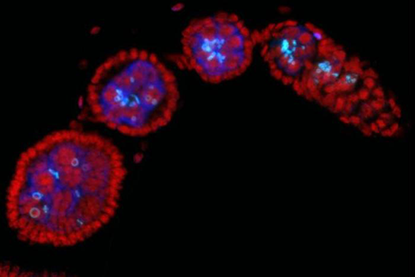
Bacteria can enhance host insect’s fertility with implications for disease control
New research led at UC Santa Cruz reveals how the bacteria strain Wolbachia pipientis enhances the fertility of the insects it infects, an insight that could help scientists increase the populations of mosquitoes that do not carry human disease.