BE-genomics
-
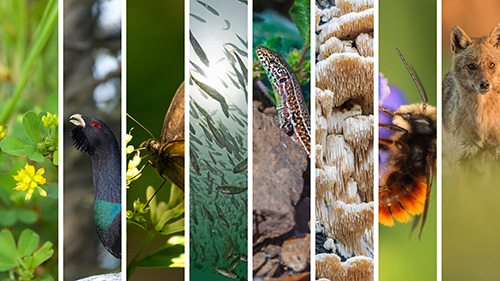
Successful conservation genomics pilot sets the stage to sequence European biodiversity
UC Santa Cruz Assistant Research Scientist Ann Mc Cartney is part of a group of scientists who released a new paper outlining their efforts to promote an inclusive, decentralized and equitable model for the future of large-scale conservation genomics
-
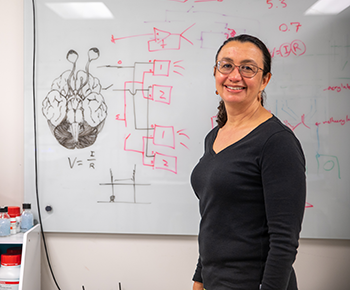
Researchers to investigate genetic roots of autism, look for new treatments
A new award from the California Institute for Regenerative Medicine will support a team of UC Santa Cruz researchers in exploring the genetic underpinnings of autism spectrum disorder.
-
Genomics Institute’s Research Mentoring Internship recognized with ‘Inspiring Programs in STEM’ award
The UC Santa Cruz Genomics Institute’s Research Mentoring Internship program was recognized with the ‘Inspiring Programs in STEM’ award from Insight Into Diversity magazine.
-
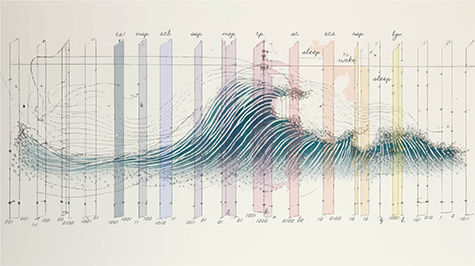
Scientists find that small regions of the brain can take micro-naps while the rest of the brain is awake and vice versa
For the first time, scientists have found that sleep can be detected by patterns of neuronal activity just milliseconds long
-
Study offers guidance on state-of-the-art long-read RNA sequencing techniques
A new study evaluates the strengths and weaknesses of the two leading long-read RNA sequencing platforms and offers guidance for the field.
-
Research on understudied lung cancer drivers may improve treatments
Angela Brooks has been awarded a $2.5 million grant from the National Institutes of Health’s prestigious R01 program to study how gene isoforms impact cancer progression and what treatments might be most effective or lead to drug resistance.
-
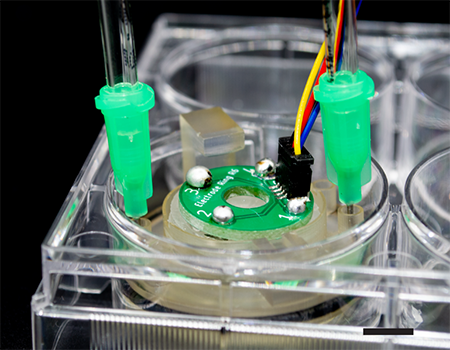
Bioelectronics enable precise control of organoids for better understanding of neuro diseases, neuron circuits
UC Santa Cruz researchers have developed a new plug-and-play bioelectronics system that enables researchers to precisely control neuronal activity in cortical organoids, which will help unlock new discoveries on how brains form neural circuits and the underpinnings of neurodevelopmental and degenerative diseases.
-
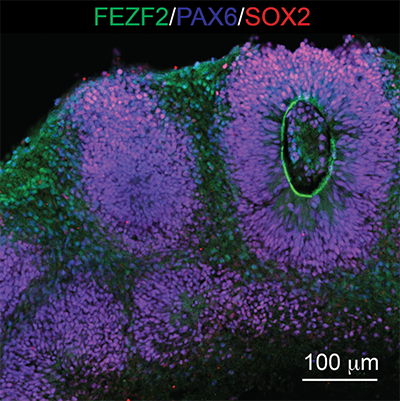
Cloud technologies bring organoids into undergraduate classrooms for the first time
For the first time, remote education tools have allowed undergraduate students to gain direct experience experimenting with cortical organoids grown at UC Santa Cruz.
-

Indigenous scientists awarded $9M to establish the first RADx Tribal data repository that upholds Indigenous data sovereignty
The National Institutes of Health announced funding for an Indigenous Data Repository led by Native scientists to help improve health in tribal communities and for all Indigenous Peoples.
-
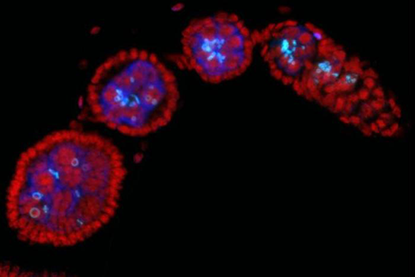
Bacteria can enhance host insect’s fertility with implications for disease control
New research led at UC Santa Cruz reveals how the bacteria strain Wolbachia pipientis enhances the fertility of the insects it infects, an insight that could help scientists increase the populations of mosquitoes that do not carry human disease.
-

Working to improve clarity for patients assessing their genetic breast cancer risk
A project to expedite the analysis of variants on the BRCA 1 and 2 genes, the most commonly affected genes in breast cancer cases, will help more people to better understand their cancer risk.
-

UCSC’s David Deamer and Mark Akeson honored for invention of nanopore sequencing
UCSC’s David Deamer and Mark Akeson won the AAAS Golden Goose award for the invention of nanopore sequencing, a transformational technology for reading DNA and RNA.