Genomics
-
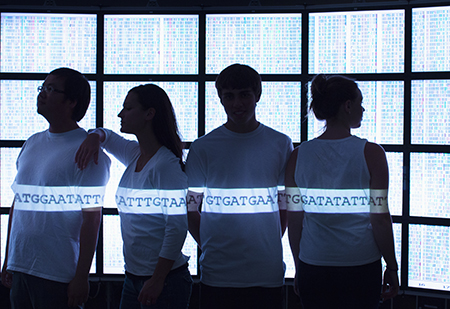
A new way to find genetic variations removes bias from human genotyping
Researchers at the UC Santa Cruz Genomics Institute have demonstrated an effective new tool for mapping genetic variants in sequencing data using ‘pangenomics’ instead of a single reference genome .
-

Researchers recover ancient mammoth tusk during deep-sea expedition
A team of researchers from UC Santa Cruz, Monterey Bay Aquarium Research Institute, and University of Michigan are studying the tusk retrieved from deep waters off the California coast.
-

Biologist Beth Shapiro’s new book explores how humans have shaped life on Earth
‘Life as We Made It’ explains how our species has been manipulating nature for the past 50,000 years and what the future may hold, depending on how we use new technologies.
-
NIH funds Center for Live Cell Genomics at UC Santa Cruz
The NIH Centers of Excellence in Genomic Science program has awarded $13.5 million over five years for a new center to advance genomics in biomedical research.
-

UCSC signs $3M state contract to deliver a public health data platform for pathogen genomics
The one-year, $3 million contract with the California Department of Public Health will galvanize pandemic-related genomic data analysis efforts for the public good.
-

Study takes unprecedented peek into life of 17,000-year-old mammoth
An international research team has retraced the astonishing lifetime journey of an Arctic woolly mammoth that roamed the Alaska landscape 17,000 years ago.
-

David Haussler ranked 6th among top scientists in computer science
Haussler, a distinguished professor of biomolecular engineering and director of the Genomics Institute, is ranked sixth in the 2021 Seventh Edition of the Top Scientists Ranking for Computer Science & Electronics.
-

Ancient horse DNA reveals gene flow between Eurasian and North American horses
New findings show connections between the ancient horse populations in North America, where horses evolved, and Eurasia, where they were domesticated.
-

New tools enable rapid analysis of coronavirus sequences and tracking of variants
Developed by the UC Santa Cruz Genomics Institute, UShER allows researchers to quickly see how a new viral sequence is related to all other variants of SARS-CoV-2, crucial information for tracking transmission dynamics.
-

Project to read genomes of all 70,000 vertebrate species reports first discoveries
A bold project to read the complete genetic sequences of every known vertebrate species has reached its first milestone, publishing new methods and the first 25 high-quality genomes.
-

Oldest DNA sequences reveal how mammoths evolved
Analysis of ancient DNA sequences recovered from mammoth teeth reveal North American mammoths were descended from two earlier mammoth lineages.
-
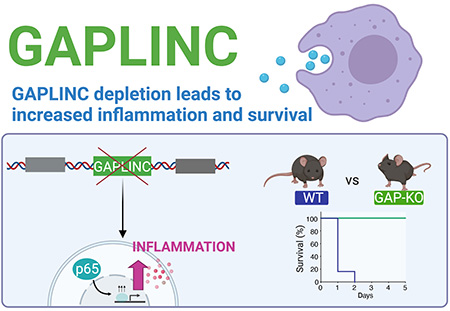
Noncoding RNA has surprising effects on immune response and sepsis, study finds
A long noncoding RNA regulates the expression of inflammatory genes and has a surprising effect on vulnerability to septic shock in mice.