Genomics
-
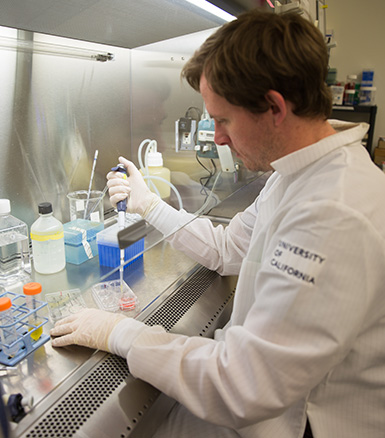
Genes found only in humans influence brain size
A set of three nearly identical genes found only in humans appear to play a critical role in the development of our large brains, according to a study led by UCSC researchers.
-

Biologist Beth Shapiro selected as Howard Hughes Medical Institute investigator
Shapiro’s Paleogenomics Lab at UC Santa Cruz uses ancient DNA to study evolutionary history and the effects of environmental change on species and ecosystems.
-

Transfer RNA research addresses a blind spot in understanding of human genes
Biomolecular engineer Todd Lowe has received a $2.7 million grant from the National Institutes of Health to support his lab’s international leadership in transfer RNA research.
-

UC Santa Cruz Genomics Institute receives funding for Human Cell Atlas projects
The Chan Zuckerberg Initiative is funding 85 projects, including three at UC Santa Cruz, to support efforts to develop a comprehensive reference atlas of all cells in the human body.
-

New ‘Pan-Cancer’ analysis reveals the common roots of different cancers
In the largest study of its kind, cancer researchers analyzed and classified more than 10,000 tumors from 33 cancer types to trace connections between different cancers.
-

Jenny Reardon among scholars speaking out on genomics and race
Sociology Professor Jenny Reardon joined 66 other scholars in signing an open letter about genetics and race, responding to a recent opinion piece in the New York Times written by David Reich, a professor of genetics at Harvard.
-
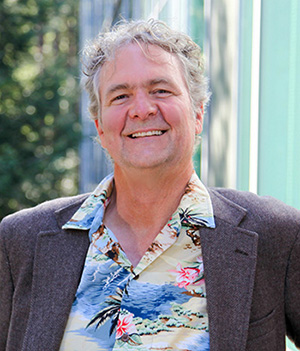
Two UCSC professors elected to National Academy of Engineering
Biomolecular engineer David Haussler and computer scientist Martín Abadi have been recognized for their pioneering achievements.
-

Breakthrough leads to sequencing of a human genome using a pocket-sized device
Nanopore sequencing technology, based on concepts pioneered at UC Santa Cruz, has revealed parts of the genome scientists had been unable to sequence before.
-
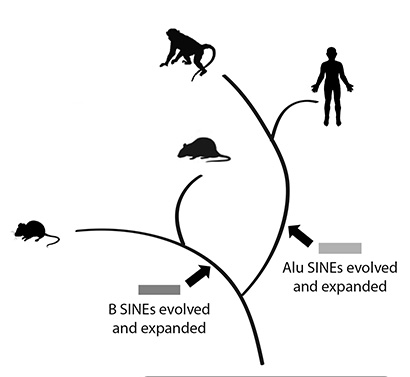
Study finds convergent evolution of gene regulation in humans and mice
Molecular biologists have found evidence of convergent evolution in an important mechanism of gene regulation in humans and mice.
-

New book, The Postgenomic Condition: Ethics, Justice, and Knowledge After the Genome, assesses progress since 2000
Sociologist Jenny Reardon evaluates the promise and pitfalls of genomics in her new book The Postgenomic Condition: Ethics, Justice, and Knowledge After the Genome (University of Chicago Press, 2017).
-
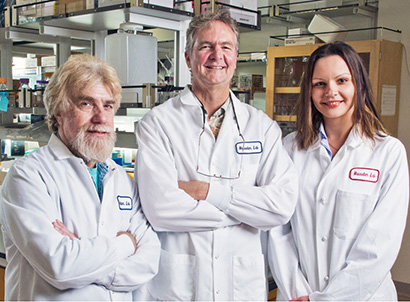
State initiative funds UCSC childhood cancer research
A $500,000 grant from the California Initiative to Advance Precision Medicine supports the Treehouse Childhood Cancer Initiative at the UCSC Genomics Institute.
-
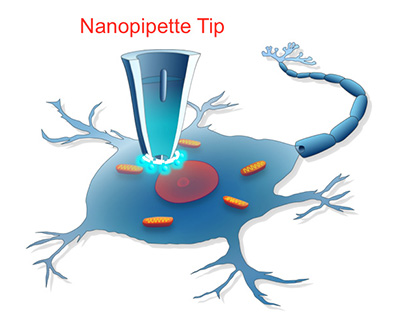
Nanopipette technology wins first place in NIH ‘Follow that Cell’ challenge
Biomolecular engineer Nader Pourmand has spent years developing technology to measure and track changes within a single living cell over time.