Genomics
-
New study finds potential targets at chromosome ends for degenerative disease prevention
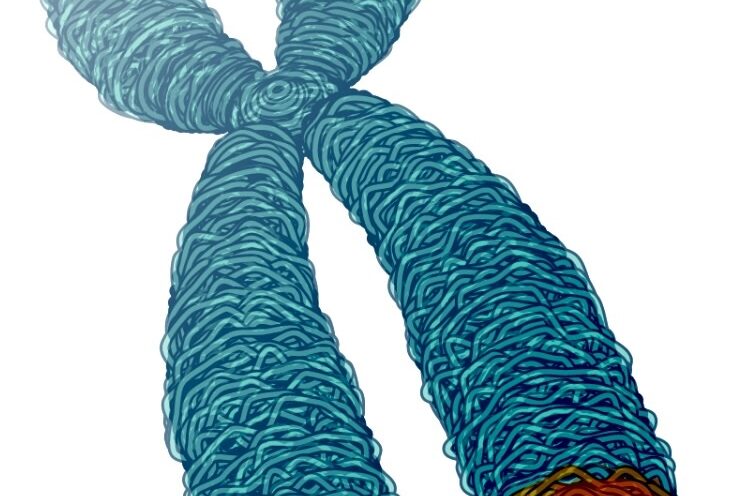
Published online today in Science, a new study finds that telomere lengths follow a different pattern than has thus far been understood. Instead of telomere lengths falling under one general range of shortest to longest across all chromosomes, this study finds that different chromosomes have separate end-specific telomere-length distributions.
-

Research on understudied lung cancer drivers may improve treatments
Angela Brooks has been awarded a $2.5 million grant from the National Institutes of Health’s prestigious R01 program to study how gene isoforms impact cancer progression and what treatments might be most effective or lead to drug resistance.
-

Protein designer awarded $2.5M to develop bioluminescent protein for deep tissue imaging
Assistant Professor of Biomolecular Engineering Andy Yeh was awarded a nearly $2.5 million grant from the Chan Zuckerberg Initiative to develop completely artificial enzymes that can produce bioluminescence in the body for deep tissue imaging.
-
Bioelectronics enable precise control of organoids for better understanding of neuro diseases, neuron circuits
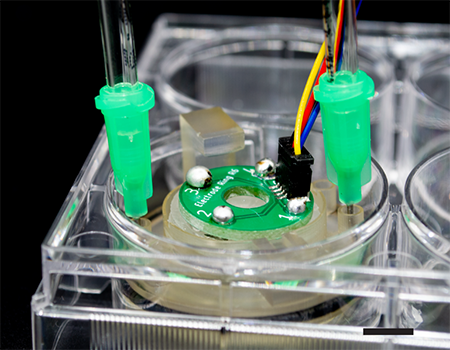
UC Santa Cruz researchers have developed a new plug-and-play bioelectronics system that enables researchers to precisely control neuronal activity in cortical organoids, which will help unlock new discoveries on how brains form neural circuits and the underpinnings of neurodevelopmental and degenerative diseases.
-

Insights from UCSC-made COVID-19 tracking tool will guide the future of studying pathogens in real time
A new paper by a team of UCSC pathogen genomicists offers guidance for the future of web tools for tracking pathogen evolution.
-
Cloud technologies bring organoids into undergraduate classrooms for the first time
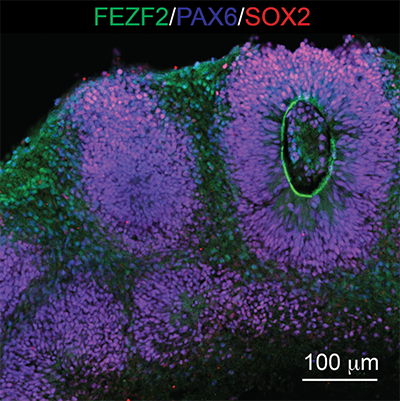
For the first time, remote education tools have allowed undergraduate students to gain direct experience experimenting with cortical organoids grown at UC Santa Cruz.
-

Indigenous scientists awarded $9M to establish the first RADx Tribal data repository that upholds Indigenous data sovereignty
The National Institutes of Health announced funding for an Indigenous Data Repository led by Native scientists to help improve health in tribal communities and for all Indigenous Peoples.
-
Bacteria can enhance host insect’s fertility with implications for disease control
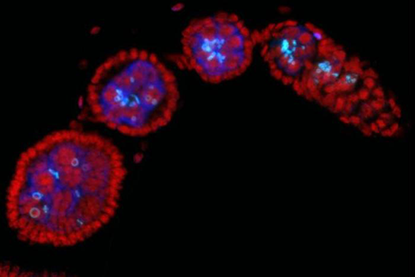
New research led at UC Santa Cruz reveals how the bacteria strain Wolbachia pipientis enhances the fertility of the insects it infects, an insight that could help scientists increase the populations of mosquitoes that do not carry human disease.
-

Working to improve clarity for patients assessing their genetic breast cancer risk
A project to expedite the analysis of variants on the BRCA 1 and 2 genes, the most commonly affected genes in breast cancer cases, will help more people to better understand their cancer risk.
-

Biotech founder and hero of the Human Genome Project joins UC Santa Cruz Genomics Institute as Executive Director
The UC Santa Cruz Genomics Institute has selected scientist, entrepreneur, and executive Lauren Linton as their new Executive Director.
-
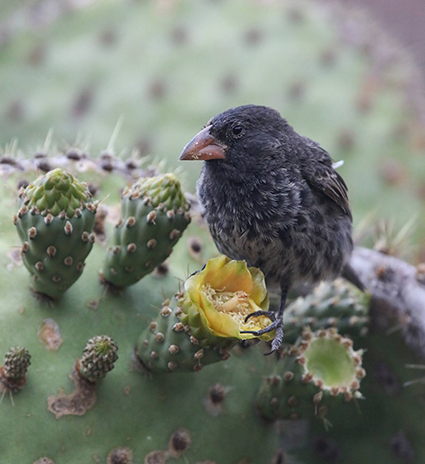
Genome study reveals 30 years of Darwin’s finch evolution
A study led by UC Santa Cruz postdoctoral scholar of Genomics & Bioinformatics Erik Enbody paints a dynamic picture of how species adapt to changing environments.
-

UCSC’s David Deamer and Mark Akeson honored for invention of nanopore sequencing
UCSC’s David Deamer and Mark Akeson won the AAAS Golden Goose award for the invention of nanopore sequencing, a transformational technology for reading DNA and RNA.