PBSci-research-impact
-

Research on dry-farmed tomatoes will better equip organic growers to adapt to climate change
New research led by UC Santa Cruz will strengthen understanding of which traits set tomato plants up to be grown successfully without irrigation.
-
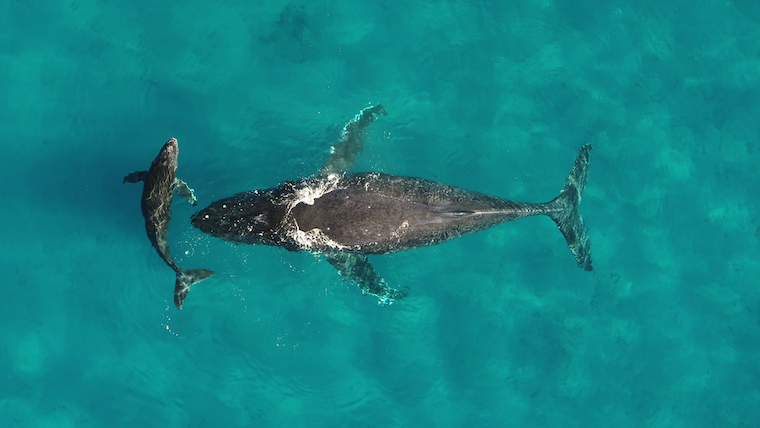
Whale waste helps health of oceans by funneling nutrients to the tropics, new study shows
New research shows that whales move nutrients thousands of miles—in their pee and poop—from as far as Alaska to Hawaii, supporting the health of tropical ecosystems and fish. UC Santa Cruz professors Dan Costa and Ari Friedlaender contributed their marine-mammal expertise to the study, which was published on March 10 in the journal Nature Communications.
-

Clinical pediatric cancer lab at UC Santa Cruz is cleared to accept and test patient samples
The UC Santa Cruz Colligan Clinical Diagnostic Laboratory has received its CLIA certificate of registration from the California Department of Public Health, which clears the way for it to begin accepting patient samples.
-

Turning opportunity into impact
UCSC student Cali Kimura is pursuing a career in women’s health and finds motivation with Weiss Family Scholarship award
-
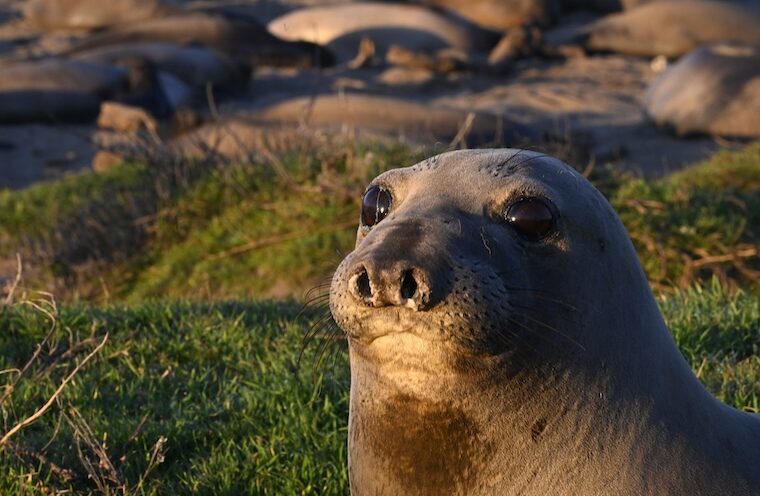
Foraging seals enable scientists to measure fish abundance across the vast Pacific Ocean
A new study led by UC Santa Cruz marine biologist Roxanne Beltran to be published as the February 14 cover story for Science concludes that seals can essentially act as “smart sensors” for monitoring fish populations in the ocean’s eerily dim “twilight zone.”
-
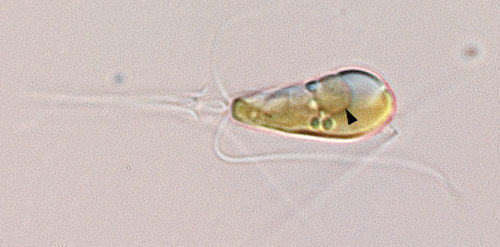
AAAS names UC Santa Cruz organelle discovery most outstanding paper in 2024
The discovery by UC Santa Cruz researchers of a new organelle within single-celled algae that converts nitrogen gas into ammonia continues to be celebrated by the science community, this time by winning the prestigious AAAS Newcomb Cleveland Prize.
-
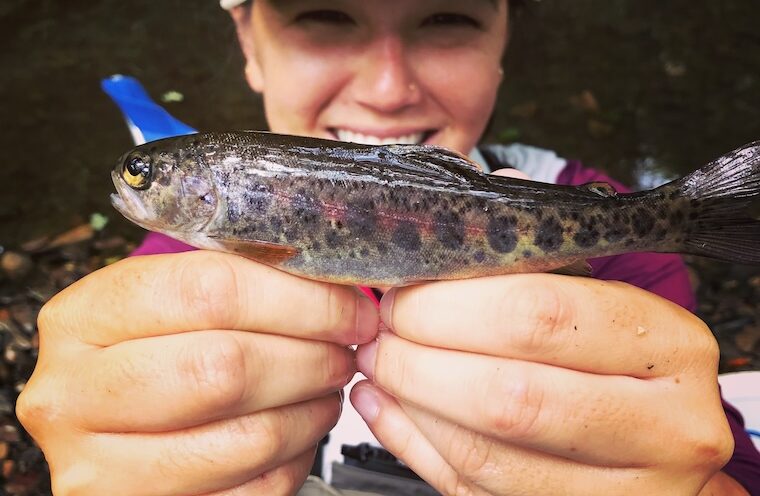
$7.5 million awarded to UC Santa Cruz to support leadership in salmon-recovery science
UC Santa Cruz has received nearly $7.5 million from the National Oceanic and Atmospheric Association (NOAA) to vault scientific research on imperiled Pacific salmon populations into one of the nation’s most powerful collaborations between the agency and academia to save the vital species.
-
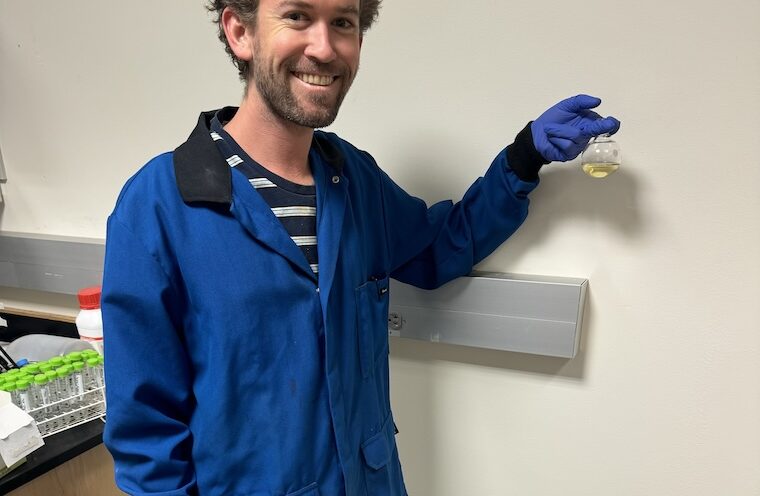
New chemical process makes biodiesel production easier, less energy intensive
UC Santa Cruz chemists have discovered a new way to produce biodiesel from waste oil that both simplifies the process and requires relatively mild heat. This discovery has the potential to make the alternative fuel source much more appealing to the massive industrial sectors that are the backbone of the nation’s economy.
-

Ultra-small spectrometer yields the power of a 1,000 times bigger device
UC Santa Cruz researchers are designing new ways to make spectrometers that are ultra-small but still very powerful, to be used for anything from detecting disease to observing stars in distant galaxies
-
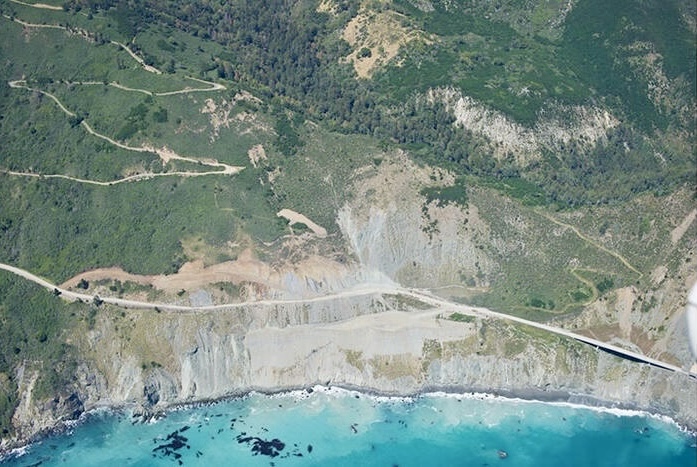
Understanding landslides: a new model for predicting motion
Along coastal California, the possibility of earthquakes and landslides are commonly prefaced by the phrase, “not if, but when.” This precarious reality is now a bit more predictable thanks to researchers at UC Santa Cruz and The University of Texas at Austin, who found that conditions known to cause slip along fault lines deep underground…
-

UC Santa Cruz research will harness advanced AI to better measure, predict climate-change impacts
Two UC Santa Cruz research projects designed to leverage advanced forms of artificial intelligence to improve how scientists measure and predict the effects of climate change have won funding from a $20 million investment by the National Science Foundation.
-
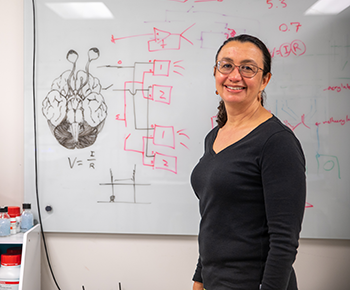
Researchers to investigate genetic roots of autism, look for new treatments
A new award from the California Institute for Regenerative Medicine will support a team of UC Santa Cruz researchers in exploring the genetic underpinnings of autism spectrum disorder.