Campus News
-
The Humanities Institute transitions faculty leadership
After 12 years, Nathaniel Deutsch will step down from his role as Faculty Director of The Humanities Institute (THI) at UC Santa Cruz at the end of the 2021-22 academic year. Professor Deutsch has held the position since 2010, when it was known as the Institute for Humanities Research. During his tenure, THI has mounted…
-

These red flags can let you know when you’re in an online echo chamber
Researchers at UC Santa Cruz have identified specific elements of tone and style in online speech that are linked to hyperpartisan echo chambers. These language markers could also prove useful for flagging spaces where disinformation may be likely to emerge.
-
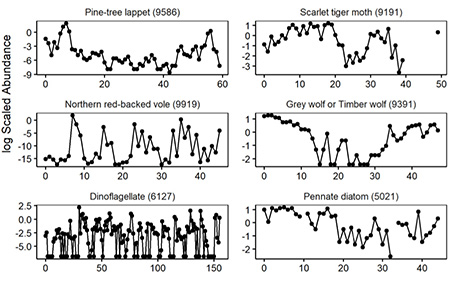
Study finds chaos is more common in ecological systems than previously thought
The idea that chaos is rare in natural populations may be due to methodological and data limitations, rather than the inherent stability of ecosystems.
-
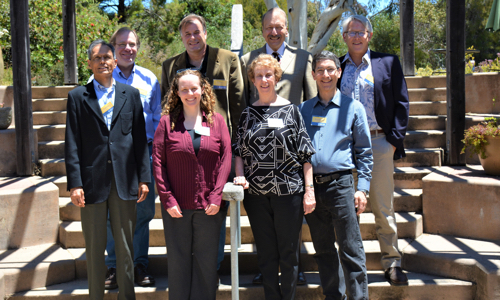
Campus recognizes innovative, dedicated teachers
The Academic Senate’s Committee on Teaching (COT) in collaboration with Chancellor Larive and CP/EVC Kletzer, Cruz celebrated UCSC’s innovative and dedicated teachers with a gathering at the Cowell Provost House in early June.
-
Campus division renamed to Finance, Operations and Administration
UC Santa Cruz is renaming the Division of Business and Administrative Services to the Division of Finance, Operations and Administration.
-
Supreme Court decision revokes fundamental civil rights
We are deeply dismayed by the U.S. Supreme Court opinion issued this morning that revokes the rights of millions of Americans to make private, personal, informed choices about their health care and ultimately their lives.
-
Allied for exponential impact
The Black Men’s Alliance, established in 1994 as an organization to create community for Black students at UC Santa Cruz, now boasts a population of 60 engaged and active alumni—and wants to expand further.
-
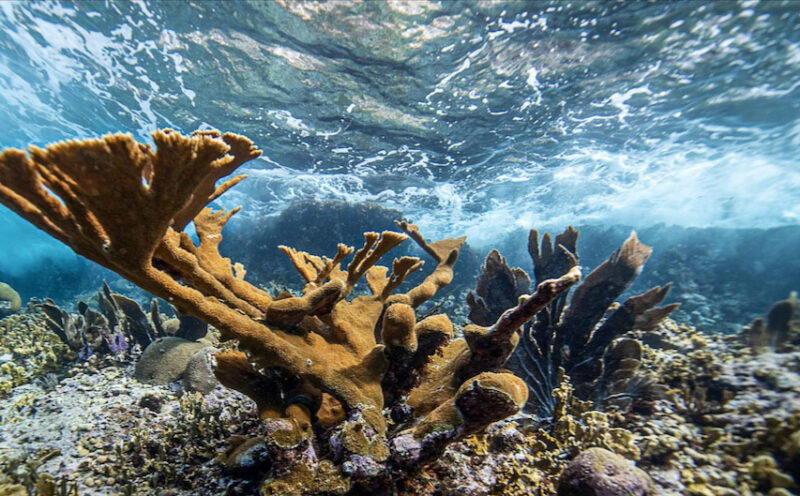
Reefense project aims to meld biology and engineering in novel structures for coastal protection
UCSC scientists are part of a DARPA-funded team to develop innovative solutions for coral reef restoration in Florida and the Caribbean to protect coastal infrastructure.
-
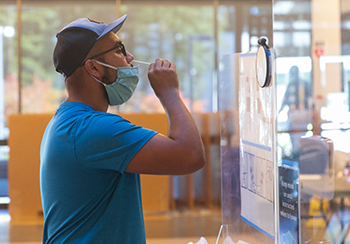
The team behind a tree of 10 million Covid sequences
10 million sequences of COVID-19’s genomic code have now been organized into a phylogenetic tree in the UC Santa Cruz SARS-CoV-2 Browser, which is the largest tree of genomic sequences of a single species ever assembled.
-
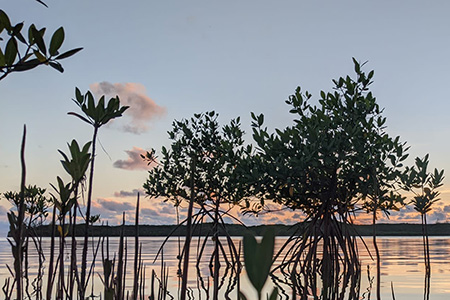
Study shows mangrove and reef restoration yield positive returns on investment for flood protection
A robust analysis demonstrates that nature-based solutions to reduce the damage caused by coastal flooding are cost-effective.
-

Polar bears in Southeast Greenland shed light on the species’ future in a warming Arctic
The most genetically isolated population of polar bears on the planet, they have limited access to sea ice and use ice from Greenland’s glaciers to survive.
-

100,000-year-old polar bear genome reveals ancient hybridization with brown bears
Scientists found that all brown bears today have some polar bear ancestry due to genetic admixture that occurred during a warm interglacial period more than 100,000 years ago.