Technology
After leading 10 years of growth, Alexander L. Wolf steps down as Dean of Baskin Engineering
Wolf guided the school through a period of major growth among students, faculty, and research funding
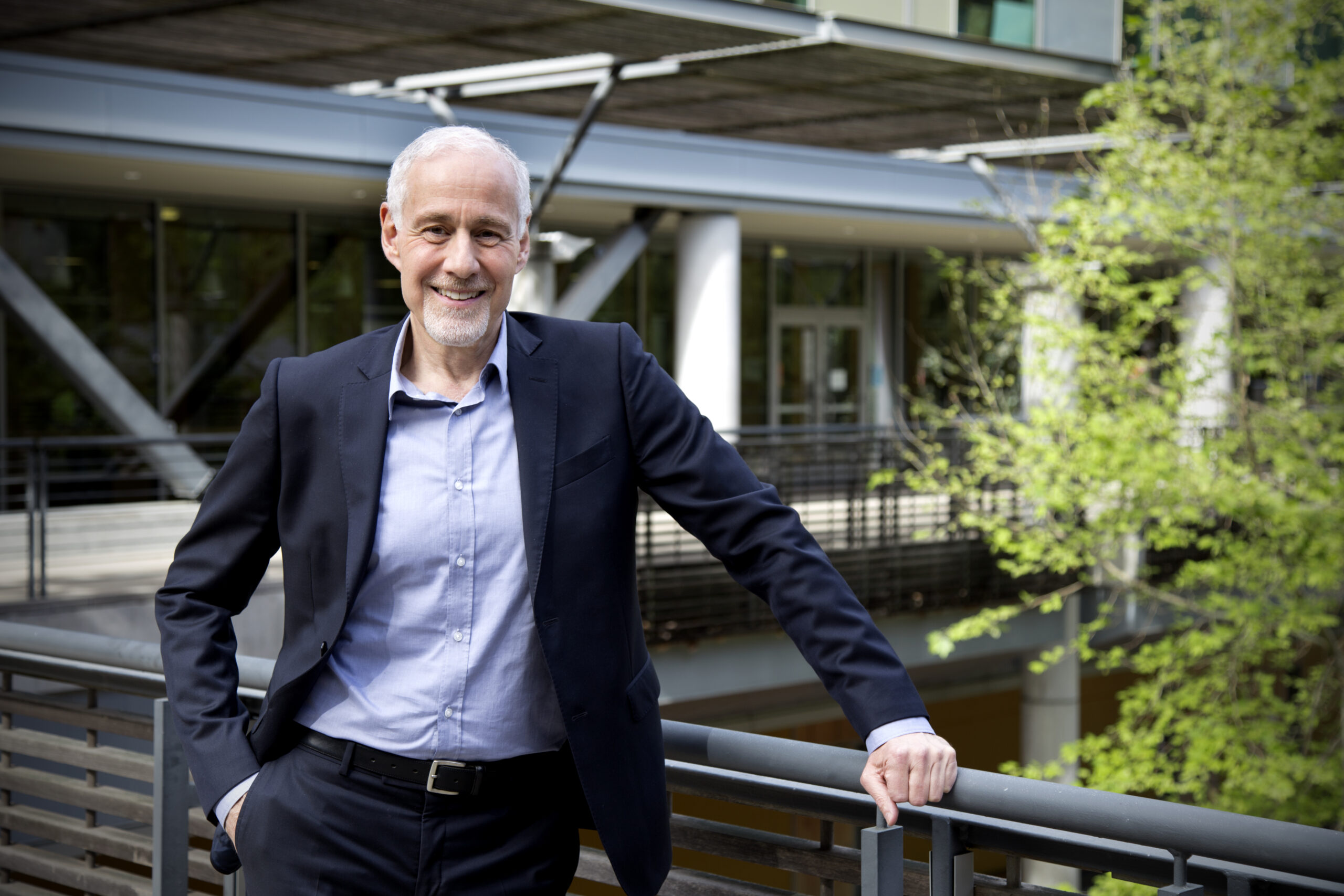
After 10 years leading the Baskin School of Engineering to new heights, Dean and Distinguished Professor of Computer Science and Engineering Alexander L. Wolf will step down from his administrative role. Wolf guided the school through a period of major growth among students, faculty, and research funding, while supporting programs and physical spaces to boost the student experience, research collaborations, and the school’s reputation.
“Alex’s leadership has shaped Baskin Engineering in extraordinary ways,” said Chancellor Cynthia Larive. “He guided a remarkable period of growth for the school and boosted our national visibility while never losing sight of the importance of community and student success. Alex understands that great engineering education goes beyond technical excellence to also foster creativity, collaboration, and societal impact. His vision and steady leadership have left a lasting mark on UC Santa Cruz.”
Wolf took the helm at Baskin Engineering in 2016. He was drawn to the school for its focus on 21st century engineering challenges and disciplines, its position within a university with a long focus on social justice, and Santa Cruz’s stunning natural beauty.
“One major pull was the idea that there was an engineering school embedded in a university where social justice and social good are genuine values, what it means to choose research problems and do research in that context, and what it means to educate students in that context,” Wolf said.
During Wolf’s tenure, Baskin Engineering grew on all fronts.
- Undergraduate students: 16% of UCSC’s undergraduate population in Fall 2015 to 27% in Fall 2025
- Graduate students: 28% of UCSC’s graduate population in Fall 2015 to 41% in Fall 2025. While the campus graduate student population grew by 19% in these 10 years, the majority of that growth took place in engineering
- New alums: The total number of Baskin Engineering students graduating from the undergraduate and graduate programs grew by 136% since 2016
- Faculty: 96 Baskin Senate faculty in academic year 2016-17 to 135 in academic year 2025-26
- Research funding: Per-faculty research funding grew to $400,000 in fiscal year 2025, a 155% increase since FY 2016
Supporting student success
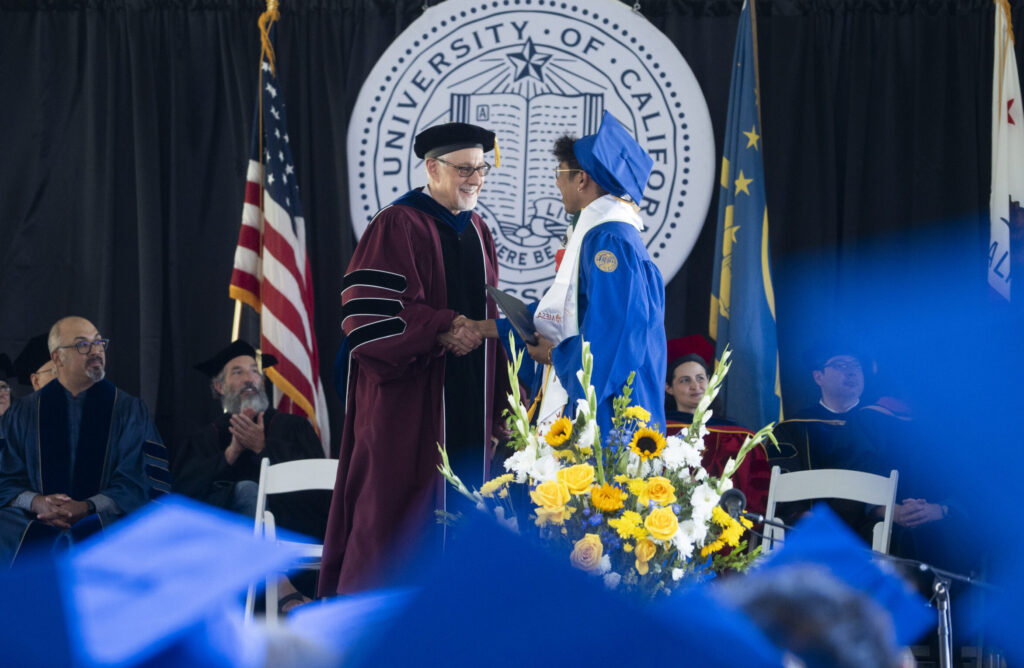
With the growth in student population, Wolf and his team emphasized ensuring all students have the resources to thrive and the support to graduate. As part of an overall campus push to increase student success, Wolf helped develop programs for faculty to examine and renew their course curricula, address equity gaps, and expand programs like the MESA University Program. He advocated for early engineering courses to be considered “entryway” rather than “gateway” courses, shifting an emphasis toward making sure all students had the opportunity to succeed within the school.
“Supporting student success requires creating holistic support structures, enacting cultural shifts, and enabling capacity for our faculty and staff to support the mission of the school,” said Marcella Gomez, associate dean for diversity, equity, and inclusion at Baskin Engineering. “Establishing the Office of Access, Belonging, and Equity and the new associate dean position was in response to those needs, as part of a school-wide effort for sustained progress.”
Under Wolf’s leadership the school leaned hard into undergraduate experiential learning, enabling students to move beyond theory to practical applications of the material earlier in their undergraduate careers. He initiated the development of the Design Build Experience (CMPM 17) course, led by Associate Dean for the Undergraduate Experience Jim Whitehead. These courses introduce students to a range of concepts and skills fundamental to engineering and creative design. He supported the Vertically Integrated Projects program, led by Director of Research Pathways David Lee, which provides undergraduate students the opportunity to contribute to faculty lab research for course credit.
In partnership with the Humanities division, Baskin Engineering introduced the Humanizing Technology certificate, a series of courses on ethics and tech targeted to early career engineering students but open to all UC Santa Cruz undergraduates.


To support students’ overall learning and experience on campus, Wolf invested in community-building spaces. A major initiative, in partnership with Whitehead, was the 2023 opening of Slugworks, a creatorspace at Baskin Engineering open to all students across campus. The space facilitates technology development, design, and art, as students can use a range of tools including CNC routers and mills, screen printing equipment, sewing machines, laser cutters, and metal fabrication tools. The space hosts classes, workshops, and open hours for students to get hands-on experience bringing ideas to life.
Wolf also provided increased support for student clubs, whether they be chapters of professional organizations, affinity-based groups, or competitive teams, to foster students’ growth. One such effort was the creation of a new esports room, a dedicated area for competitive gaming and community building that is home to the Slug Gaming club.
“Clubs are a major piece of our culture in engineering,” Wolf said. “We identified a real need to think about belonging, about how students get involved. These are extremely important opportunities for students to develop themselves as future professionals, so we need to make them inclusive, available, and accessible.”
Growing research presence
The past 10 years saw a marked growth in research at Baskin Engineering, with increases in both research funding and areas of study. Wolf encouraged a culture of open source and collaboration at Baskin Engineering, with roots in the first public release of a human genome in 2000, and supported interdisciplinary research and partnerships with other divisions on campus.
New research centers and initiatives include the Generative AI Center, the Sequencing Technology Center, the Open Source Program Office, and the AgTech Alliance. Efforts in areas such as climate solutions, cybersecurity, and genomics grew under his watch.
Facilitating faculty research also meant building out the administrative and staff structures needed to sustain growth. One of Wolf’s first actions as dean was a reshaping of the departments to their current organization based on the needs of a changing engineering landscape. He introduced new structures to bring faculty voice into the dean’s office, creating the Associate Dean for Research and Associate Dean for Diversity, Equity, and Inclusion positions.
Wolf helped greatly increase the presence of Baskin Engineering, and the campus as a whole, at the Westside Research park, an 18-acre facility near campus. WRP has transformed from a space for just a few faculty labs into the home for cutting edge research in disciplines like genomics, smart power, film and digital media, and robotics—Wolf supported the build-out of a flying arena for drones and other technology. This effort built synergy with the nearby start-up scene, mostly focused on biotechnology.
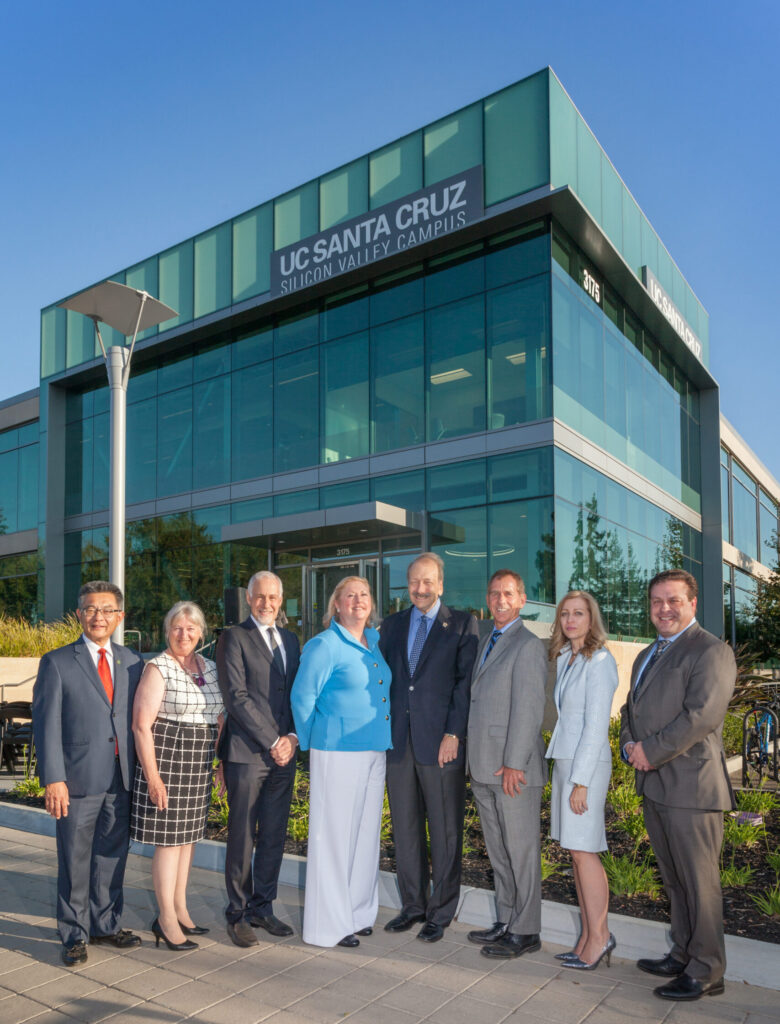
Wolf also bolstered the research and academic presence of Baskin Engineering and overall campus presence at UCSC’s Silicon Valley Campus in the heart of the tech industry. He brought faculty and graduate students in the computer science and engineering and computational media departments to SVC to build a strong research presence, and oversaw the introduction of the Natural Language Programming and Human-Computer Interaction professional master’s programs.
Under Wolf’s watch, Baskin Engineering has strengthened relationships with industry in nearby Silicon Valley and beyond, both in research collaborations and experiential opportunities for students, with a focus on building long-term relational development and building networks among Baskin Engineering alumni. He has also helped forge new partnerships with international universities, such as the campus’s first 2+2 degree agreement with the University of Indonesia.
To build a culture of collaboration among faculty and staff amid this growth, Wolf encouraged and supported development and created clear pathways for professional growth. Working with Senior Assistant Dean and Chief of Staff, Anne Criss, he reduced staff vacancy rates from 30% to 5% and grew staffing across the school in areas such as student advising and student success, philanthropic advancement, corporate partnerships, communications, department operations, and finance.
“If I want to take credit for anything, it’s being very thoughtful about who to bring in the school, and enabling them and empowering them to do good work,” Wolf said.
Early influences
Wolf’s early interest in engineering was inspired by visits to the Brooklyn, New York metal manufacturing factory that his father owned and ran. The smell of metal and machines in the Slugworks creatorspace at Baskin Engineering remind him of his roots.
After discovering an aptitude for programming during his undergraduate studies, Wolf pursued graduate school in computer science at the University of Massachusetts-Amherst, where his advisor was Lori Clarke, the first female faculty member at the UMass computer science department. Her strong sense of mentorship and service to the professional community profoundly shaped Wolf’s views on leadership.
“She was very good at involving me in things, bringing me to conferences and meetings, and instilling a sense of leadership and servingness,” Wolf said. “She encouraged people’s talent and put them in positions to develop them, give them knowledge and experience. As a leader, you’re there to lift other people up—that’s what I’ve aspired to do and be remembered for.”
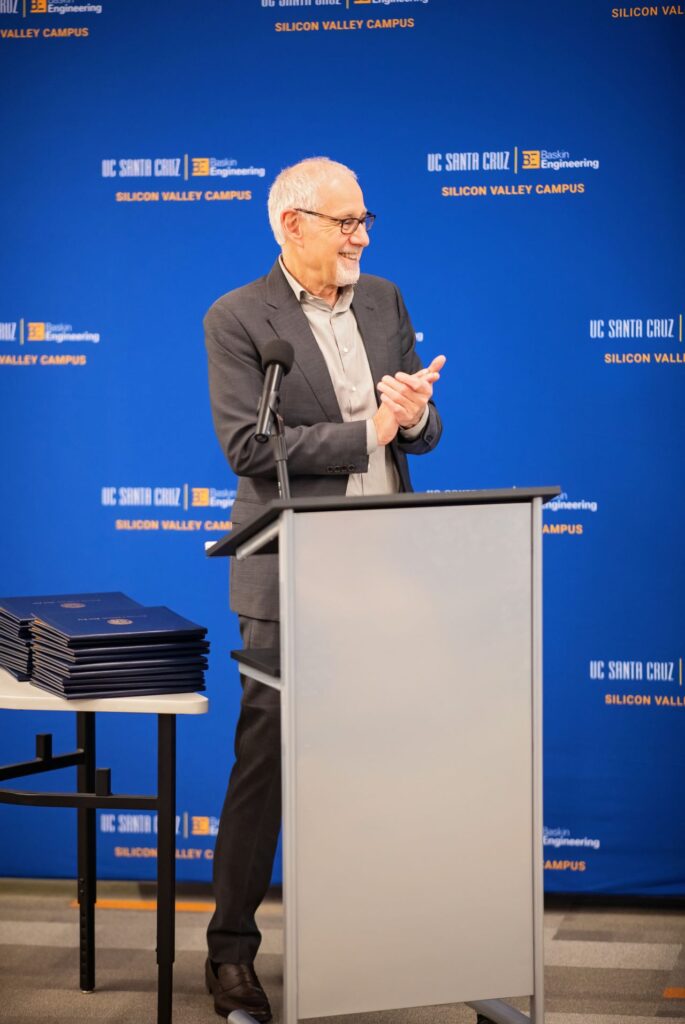
With a Ph.D. in computer science, Wolf joined AT&T Bell Laboratories as a software engineering researcher. He later returned to academia as a professor at the University of Colorado, Boulder. He later co-founded and taught in the Faculty of Informatics at the Università della Svizzera Italiana in Lugano, Switzerland and then spent another decade as a Chaired Professor at Imperial College London. During his career as a computer science researcher and in collaboration with Ph.D. students, Wolf contributed to the creation of computer science sub-fields including software architecture and business intelligence. He moved between different sub-fields spanning software engineering, databases, distributed systems, networking, and computer systems. While each area had their own culture, metrics, and conferences, Wolf enjoyed being a disruptor who brought elements of different sub-fields together.
In his more than 40 years in academia, Wolf observed as computer science education moved away from big-picture design and validation of systems to a more narrowed focus on programming. Now, in the age of AI, he believes that the tide is turning back toward design- and architecture-level thinking.
Professor of Computer Science and Engineering and Associate Dean for Graduate Experience Roberto Manduchi will serve as interim dean, effective July 1.
To honor Dean Wolf’s leadership, consider giving to the Baskin Engineering Dean’s Opportunity Fund. These funds allow the dean to launch new programs, support emerging research, and seize new opportunities as they arise.