Technology
Partnership with Oxford Nanopore Technologies will support development of RNA liquid biopsy for cancer early detection
The technology screens for cancer, and even abnormal “precancerous” cells, using a simple blood draw.
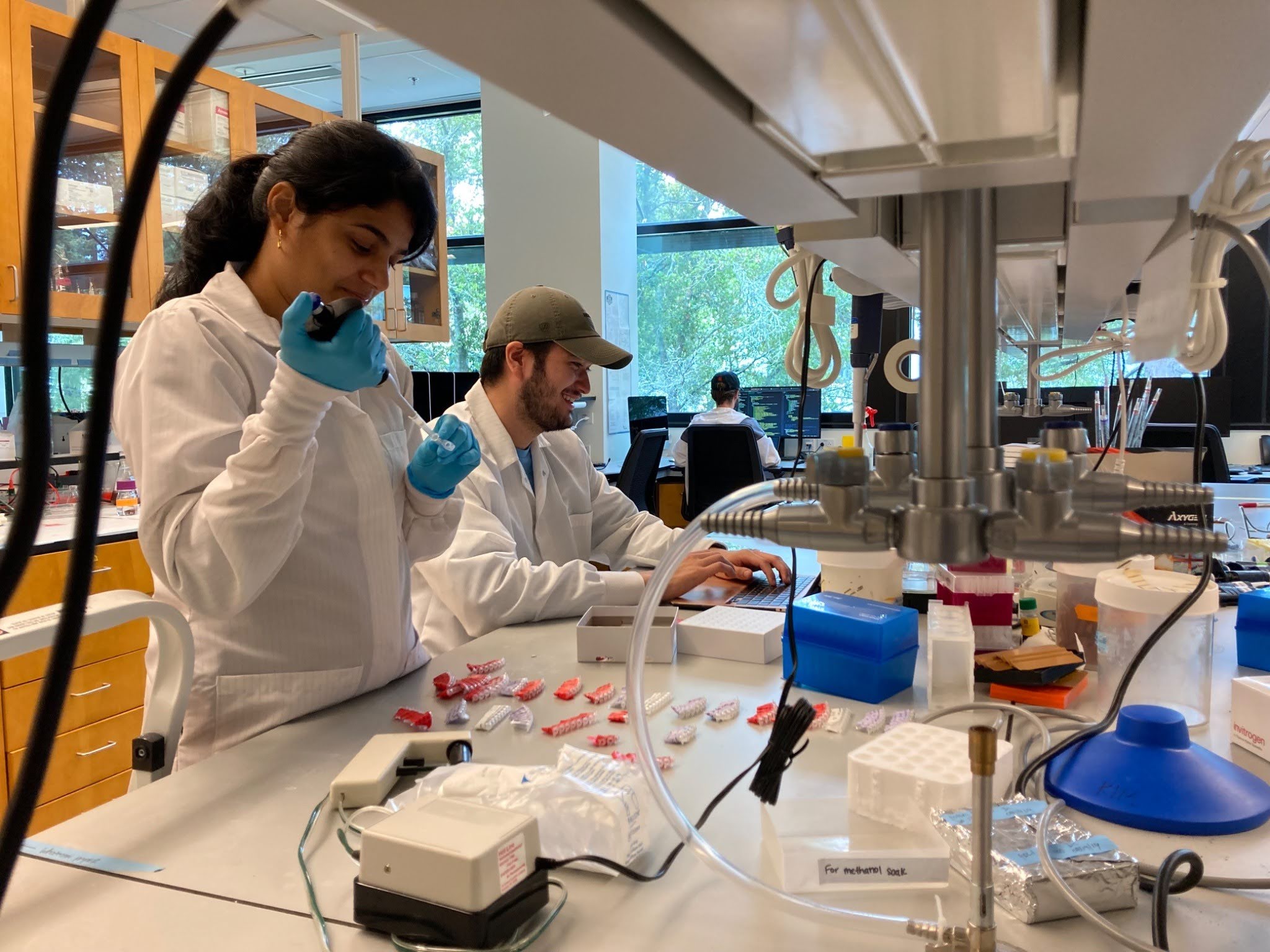
Former Kim lab postdoctoral scholar Sreelakshmi Velandi Maroli and Ph.D. student Connor Mattingly work in the lab.
Press Contact
Esophageal cancer, which is cancer of the swallowing tube, has only a 22.2% five-year relative survival rate, but early detection and intervention can greatly improve outcomes. That’s why Daniel Kim, an assistant professor of biomolecular engineering at the University of California, Santa Cruz, is developing a technology for early detection called an RNA liquid biopsy that screens for cancer, and even abnormal “precancerous” cells, using a simple blood draw.
Now, Kim’s lab has entered a research partnership with Oxford Nanopore Technologies, a leading company in DNA and RNA sequencing technology. Through this collaboration, Oxford Nanopore supports the development of Kim’s RNA liquid biopsy technology, with the goal of improving diagnosis and helping identify more precise treatment options for esophageal and other cancers.
“Our long-term goal is not only to detect cancer at the earliest stages, but also to detect these precancerous conditions at very early stages before they become cancerous, so that hopefully we can understand how to prevent cancer in the future,” Kim said. “We are also working on establishing strategic partnerships with global pharmaceutical companies to discover novel drug targets for cancer interception—preventing progression from precancerous conditions to cancer.”
Novel early detection technology based on RNA and nanopore sequencing
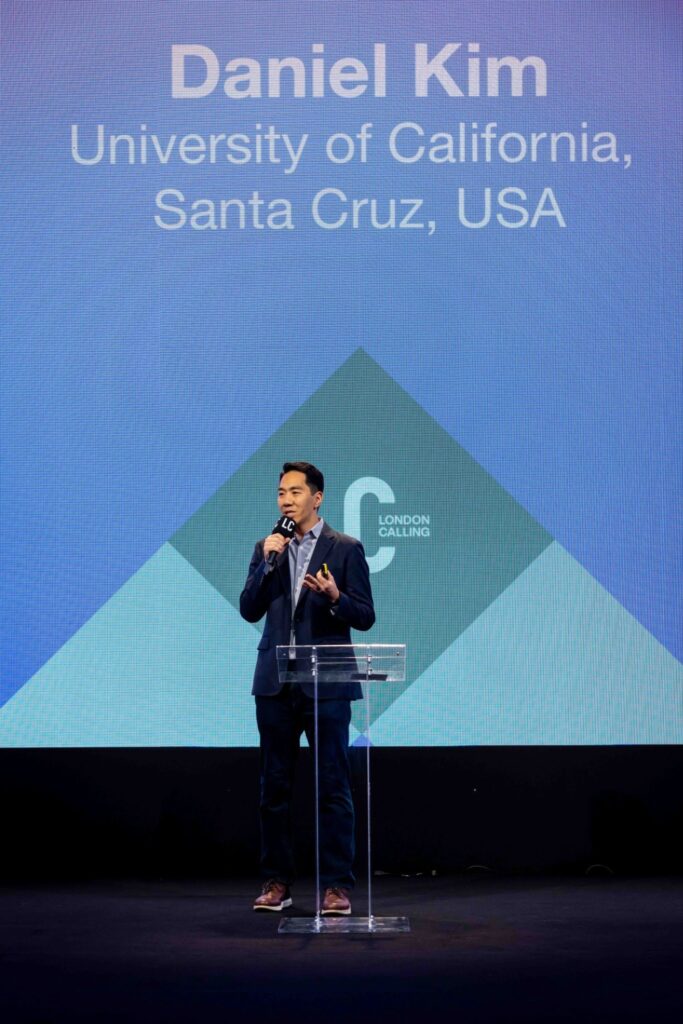
Kim’s research focuses on discovering cellular warning signs of cancer long before symptoms appear. In a recent preprint study, Kim and his collaborators Karen Miga at UC Santa Cruz and Rebecca Fitzgerald at the University of Cambridge showed that they can detect early esophageal cancer as well as a precancerous condition called Barrett’s esophagus with their nanopore-based RNA liquid biopsy technology.
Kim’s approach to liquid biopsy is unique in that it looks for evidence of precancer and cancer in non-coding RNA—genetic material that doesn’t build proteins but floats in the bloodstream in extracellular vesicles, acting as a cellular messenger. Using nanopore sequencing to characterize these cell-free RNAs, Kim’s team found thousands of never-seen-before biomarkers of cancers. Then, they trained a machine learning model using these novel RNA features, which was extremely successful at detecting both early cancer and precancer.
In the future, these RNA irregularities used for diagnoses could also be leveraged for drug target discovery to precisely treat and hopefully prevent cancer.
“Because we’re looking at the full transcriptome using our platform, we can identify all the different pathways that are dysregulated in these cancer patients, but importantly also in these precancerous patients as well,” Kim said. “We’re trying to figure out how we can treat precancerous patients in a precise, molecularly informed way, so that they would not progress to cancer.”
Strategic collaboration and continued excellence
A key component of Kim’s RNA liquid biopsy technology is nanopore sequencing, which enables direct analysis and characterization of the full length of cell-free RNA. After their initial success, Kim and his group will expand the scope of their work and further assess the approach on a larger patient group. This marks another step toward advancing their RNA liquid biopsy platform as a blood-based initial screening tool for people at heightened risk of developing cancer.
The collaboration with Oxford Nanopore builds on a long history of innovation and excellence in long read nanopore sequencing at UC Santa Cruz and the Baskin School of Engineering. David Deamer and Mark Akeson, professors emeriti of biomolecular engineering, co-invented and led the early development of nanopore sequencing, proving that DNA and RNA can be read by threading the genetic material through a nanometer-sized hole charged with an ionic current. Their foundational work was later licensed and contributed to the development of Oxford Nanopore technology.
Now, UC Santa Cruz researchers are leading the charge on using nanopore sequencing for human health, environmental conservation, and more, and the Baskin School of Engineering’s Sequencing Technology Center on campus supports nanopore sequencing at UC Santa Cruz and beyond. In August, the campus will host the RNA Futures Meeting, a premier international conference bringing together leaders in nanopore sequencing and biotechnology.
Your support for The Kim Lab helps to create better diagnostics and identify new treatments for cancers like esophageal, lung, pancreatic, and colorectal cancers.
Learn more about how we’re supporting Health & Wellbeing through our Inspiring Change fundraising campaign.