Social Justice & Community
Beach season is here—just not for everyone
Marine and social scientists at UC Santa Cruz explain why privileged people enjoy more recreational, economic, and emotional benefits of the ocean than underresourced groups, and offer holistic remedies
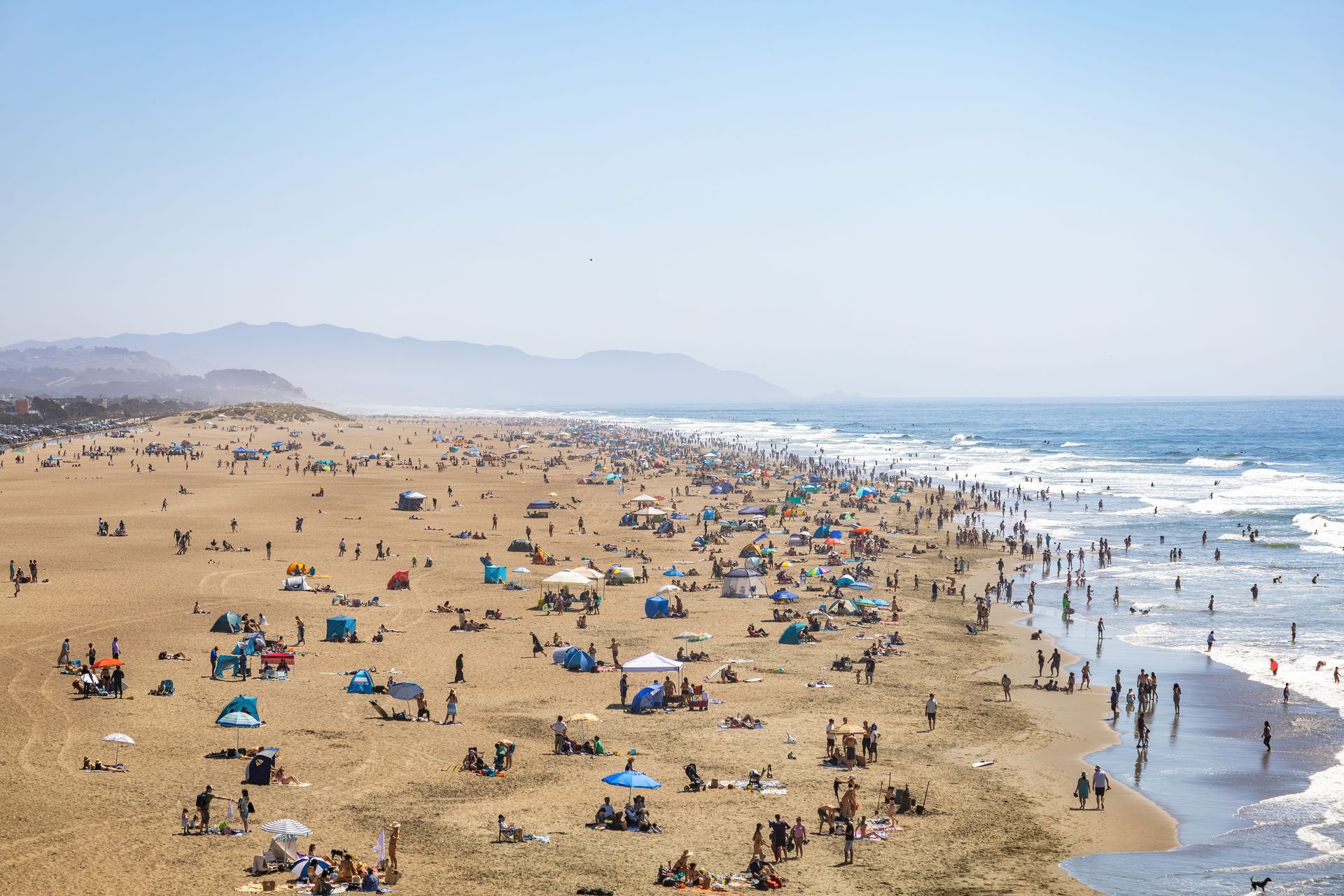
Ocean Beach, San Francisco
Press Contact
Key takeaways
- Despite the promise of the California Coastal Act, deep structural barriers continue to limit access to the state’s beaches and other coastal areas, preventing marginalized communities from obtaining the physical, economic, and emotional benefits of the ocean.
- Disparity in infrastructure investment favors affluent neighborhoods, leaving beaches near underserved communities with neglected facilities, limited public transit, and fewer amenities, effectively restricting meaningful access to those who live nearby.
- Beyond physical obstacles, persistent legacies of redlining, colonial land-use policies, and entrenched cultural norms continue to exclude women, low-income households, and people of color from coastal activities like surfing and fishing—reinforcing social divisions that extend into broader recreational and career opportunities.
- The authors of this study recommend actionable policies such as mandatory equity audits, improved public transit, and Tribal co-stewardship to ensure coastal resources serve all Californians, not just the privileged and affluent.
As locals and visitors across the globe flock to California’s famous beaches this summer, a collaboration of marine and social scientists, in partnership with grassroots organizations, have peeled back the so-called “coastal curtain” and revealed in plain sight an unfortunate reality: Less wealthy and historically marginalized members of the public face persistent barriers in accessing our oceans and coasts.
On the 50th anniversary of the California Coastal Act, which codified the public’s right to access and enjoy the state’s iconic coastline, the team led by researchers from the University of California, Santa Cruz, present new work that describes the different conditions across more and less affluent areas of the Central Coast, the disparities that perpetuate disadvantage, and the hidden, often deeply rooted cultural and societal currents churning just below the surface.
For years, researchers have monitored the trend of shrinking public access to the coast and how Californians feel about it. But this new study, published in Nature Communications on July 13, shares the lived experiences of those facing physical, financial, social, and informational barriers between them and all the coast has to offer. The paper also provides holistic solutions by leveraging the expertise of marine and social scientists who not only address natural-resource management, but also investigate the underlying dimensions of human behavior, psychology, and culture that determine its effectiveness.
In the end, what they found is that “structural barriers” often exclude marginalized groups from ocean spaces and limit their wellbeing—creating a feedback loop that may perpetuate inequality and degrade public health and wellness. Though California considers itself a world leader in protecting and managing ocean environments, the team says more work is needed to foster more inclusive and equity-centered approaches to coastal governance.
“While California prides itself on being a pretty diverse state, it is painfully evident to anyone who has spent much time on the coast how segregated these areas remain—and the vast differences in resources and infrastructure between parks, protected areas and beaches next to wealthy communities, and those next to more disadvantaged or underserved communities,” said lead author Timothy Frawley, a project scientist in the Fisheries Collaborative Program at UC Santa Cruz.
“This social division has a huge impact on the kind of recreational activities people pursue and—as is particularly relevant to the Monterey Bay Area—on the kind of career paths they perceive as relevant,” he added.
In contexts ranging from marine-science conferences to surfing, Frawley said ocean spaces and discourses remain primarily dominated by white males and other coastal elites. He emphasized the need for a greater diversity of perspectives in management and rule-making, insisting that the ocean should benefit everyone regardless of race, gender, or income level.
Indeed, past research on natural-resource management supports this and has established strong links between equity and long-term sustainability. “There is an entire body of research that demonstrates bringing in diverse individuals and their knowledge can lead to creative solutions to tricky problems,” said co-author Corey Garza, a professor of marine ecology at the University of Washington. “Additionally, individuals may become more engaged with coastal management and its outcomes when they see members of their own community actively involved in the process.”
Historical roots and cultural barriers to access
Western perspectives and policy paradigms frame the ocean as a natural resource for humans to exploit, manage and conserve. However, Indigenous, Black, brown, and other intellectual traditions have long recognized the ocean as a source of kinship, connection, identity, and spirituality. This difference results in a dynamic where the Western approaches dominant in this country often undermine local rights and relationships, and reinforce the historical legacy of colonialism.
Here on the Central Coast, the phrase “locals only” is often treated as a matter of tradition in surfing and fishing communities. But ideas about who belongs along the coast did not emerge in a vacuum. They are intertwined with a history of exclusion—from redlining and discriminatory housing practices, to unequal investment in coastal communities—that has shaped who has the opportunity to build lasting relationships with the ocean across generations.

Ocean access isn’t simply about getting people to the beach, said co-author Jillian Lyles, a Ph.D. candidate in the Emmett Interdisciplinary Program in Environment and Resources at Stanford University. Access, Lyles explained, is also about whether people feel they belong there, whether they have opportunities to build relationships with the ocean over time, and whether those relationships can become part of family, community, and cultural life.
“When communities are excluded from coastal spaces across generations, they don’t just lose recreational opportunities—they lose opportunities to cultivate the kinds of relationships with the ocean that foster belonging, community, cultural identity, and care,” said Lyles, whose research examines how relationships with the ocean shape identity, community, and environmental care.
An additional insight from the study underscored how patriarchal norms of the past paved the way for men today to reap more of the economic and recreational rewards of the ocean. “Our immigrant focus group participants discussed how in their cultures, outdoor and ocean activities are not considered feminine or appropriate for women,” said co-author Emma Gee, a Ph.D. student in environmental studies at UC Santa Cruz. “We found in our study, and can confirm through our lived experiences as oceangoers, that coastal activities like surfing, fishing, and diving are dominated by men in California as well.”
Geography of disadvantage
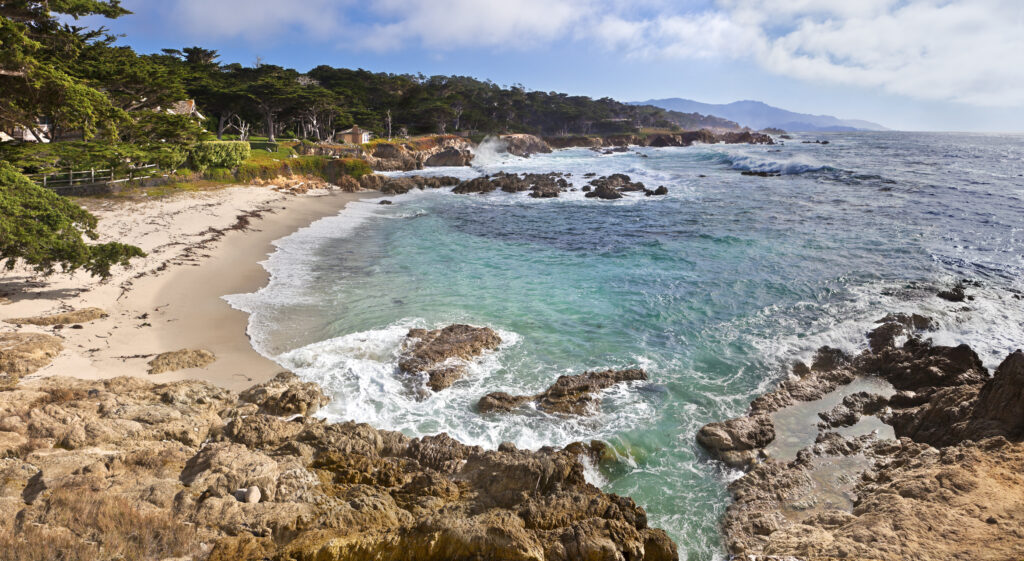
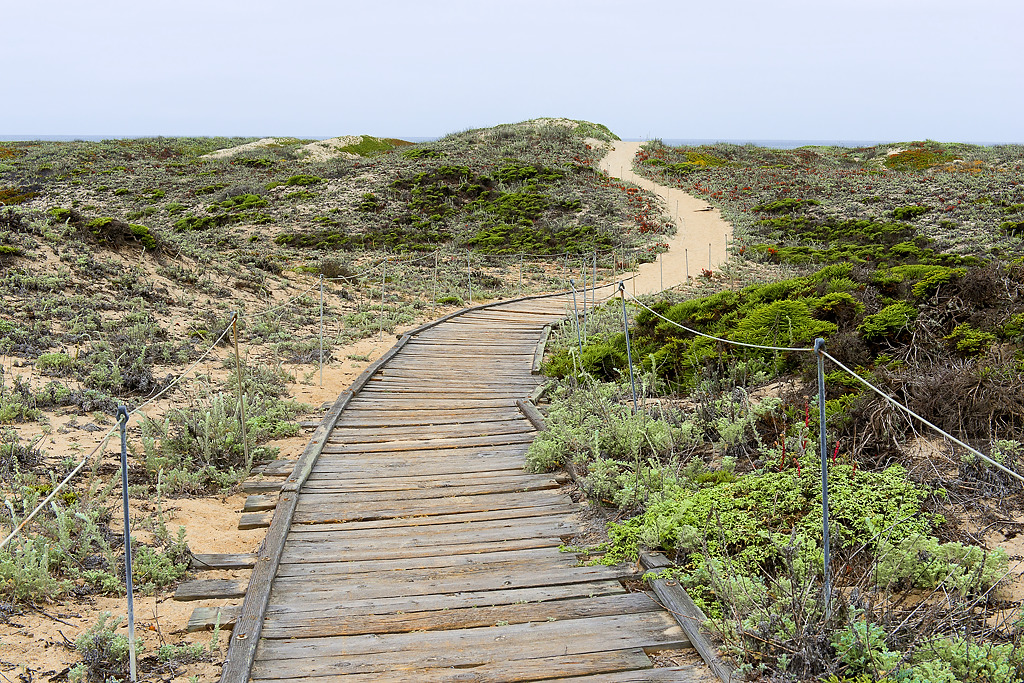
The researchers also explain how these social forces result in the dramatic disparity in the condition of infrastructure and amenities at coastal access points in wealthy areas versus those in or near underresourced communities. Asilomar State Beach, located near Pacific Grove, boasts boardwalks, walking trails, and consistent park-staff presence.
In contrast, at places like Salinas River State Beach, which is closer to migrant communities and industrial agriculture, visitors typically experience overflowing trash cans and poor water quality. The beach is seldom served by state park employees.
“Without targeted investment and policy reforms designed to level the playing field and address the needs and values specific to local communities, many ocean areas will continue to be unknown, underused, and therefore undervalued,” said Nancy Faulstich, executive director of Regeneración – Pajaro Valley Climate Action. “For years, I’ve heard stories that despite the closest access point being less than 20 minutes by car, many people in Watsonville have never even been to the beach.”
In order to conduct place-based investigations into equity in ocean access and personal impacts, the team surveyed nearly 1,700 individuals, approaching them in community hubs like laundromats, markets, and neighborhood events—as well as at coastal access points. They also surveyed some people online, focusing on communities designated as “disadvantaged” or “severely disadvantaged” by the California Environmental Protection Agency, stretching from San Francisco, down to Ventura, northwest of Los Angeles.
Pathways for more equitable policy
Perhaps the most practical contributions of this study are its policy recommendations to reduce barriers to accessing the ocean and its benefits. A few examples include:
- Reduce parking fees, provide community vouchers, or free lots.
- Improve affordable and accessible public transit to beaches and coastal areas.
- Facilitate Tribal co-stewardship of coastal areas and resources, including streamlining permits for ceremonial practices.
- Conduct equity audits and develop resource-allocation plans to increase investment in neglected coastal areas.
- Provide cultural competency training for coastal public safety and resource protection staff, prioritizing hiring and recruiting local personnel reflective of community demographics.
“The state of California has some of the strongest coastal protections anywhere in the country, and even the world,” said senior author Katherine Seto, associate professor of environmental studies at UC Santa Cruz. “But the promises of those policies remain unfulfilled while structural inequities continue to create such huge disparities in peoples’ ability to benefit from the coast based on their income and identity.”
While barriers to ocean access are not limited to California, it’s where the problem is perhaps most acute because of rapid coastal gentrification and growing income inequality—positioning California to once again introduce progressive policies for other states facing the same issue to follow.