Health
NIH grant supports bringing complete genome sequencing from the lab to the clinic
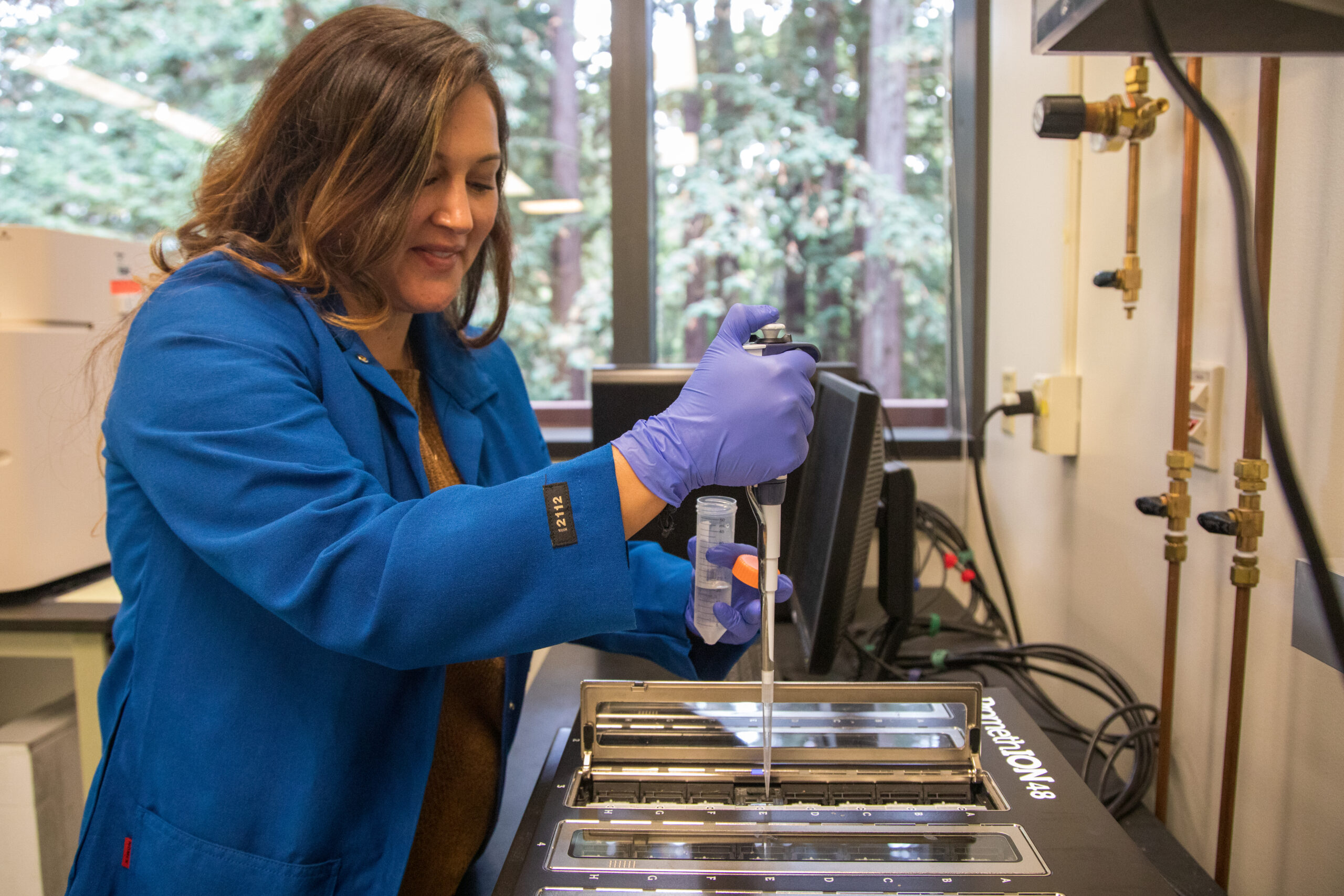
A $2.9 million R01 research award from the National Institutes of Health will support the efforts of engineers at the UC Santa Cruz Genomics Institute to further develop and drive down the cost of complete genome sequencing technology.
Carolyn Lagattuta
Press Contact
Genomics researchers at the University of California, Santa Cruz, are working toward a future in which each person can have their genome sequenced at birth to serve as a reference for medical care throughout their life.
A $2.9 million R01 research award from the National Institutes of Health (NIH) will support the efforts of engineers at the UC Santa Cruz Genomics Institute to further develop and drive down the cost of complete genome sequencing technology to enable this vision for personalized genomics medicine. A research team led by Associate Professor of Biomolecular Engineering Karen Miga will develop cost-effective, streamlined methods for complete genome sequencing to facilitate scientific discovery and clinical usefulness.
“Now that we’ve proved it’s possible to completely sequence human genomes almost as a matter of routine, this next phase of research will focus on using these resources to make biological and health discoveries,” Miga said. “By making our methods more accessible to the research and clinical community, we will reshape the way researchers can advance our understanding of genetic variation and disease processes.”
End-to-end genome sequencing has already provided answers for patients with rare diseases whose genetic origins could not be determined by older sequencing methods. Access to more streamlined complete genome sequencing could have a huge and almost immediate impact for millions of patients with rare and undiagnosed diseases.
Co-investigators on this project will include UC Santa Cruz Professor of Biomolecular Engineering Benedict Paten and Johns Hopkins Research Professor Adam Phillippy.
Leadership in complete genomes
Miga and Phillippy are leaders of the Telomere-to-Telomere (T2T) Consortium, an international research collaboration to enable the routine sequencing and interpretation of complete genomes. Complete genomes allow scientists and clinicians to analyze the entirety of a person’s DNA, including the most complex regions that had previously been thought to be too complicated to study.
Their work so far revealed never-seen-before areas of the human genetic code, enabling better study of human disease and evolution. Landmark achievements include the first complete sequence of a human genome in 2022, the first complete human Y sequence in 2023, and the first complete diploid human genome in 2026. This award is a renewal of an initial NIH R01 grant that supported this work.
Accessible personalized medicine
Now that they’ve established it’s possible to produce complete genomes, the researchers are focused on advancing the technology to make it more cost effective, scalable, and accessible. They want T2T genomes to be integrated into clinical studies, population studies, and the study of evolution.
To enable this, the team will develop an end-to-end workflow for efficiently producing cost-effective, high-accuracy T2T genome assemblies. This will include improvements of the genome sequencing techniques, assembly algorithms which make it possible to read and analyze DNA, and quality assessment and annotation tools.
The initiative will provide a comprehensive process for producing long read functional assays— laboratory tests of genomic data that enable scientists and clinicians to understand how a person’s DNA is uniquely expressed in their body. This will enable better study of important biological features like chromatin accessibility, DNA-protein interactions, and transcriptional profiling.
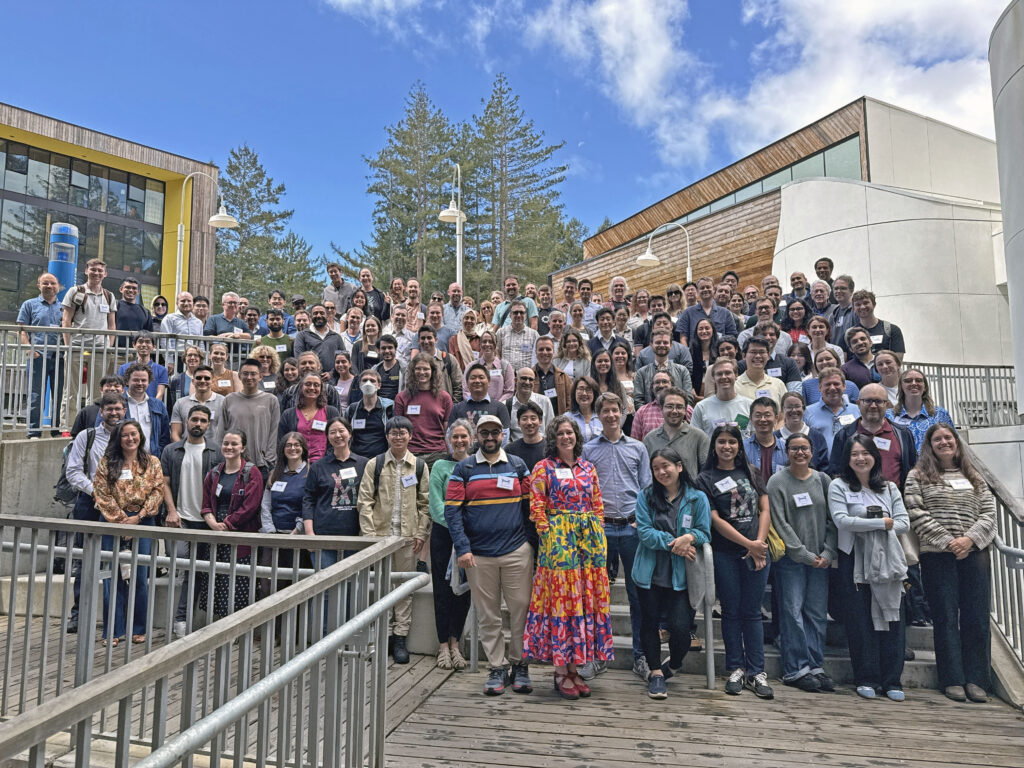
From September 3-4, 2026, UC Santa Cruz hosted the T2T Face-to-Face conference, bringing together researchers from around the world to discuss the latest advances and opportunities for complete genome sequencing research.
The UC Santa Cruz Genomics Institute is housed under the Baskin School of Engineering and is one of the premier public institutions for storing, cataloging, assembling, validating, and analyzing huge volumes of genomic data. The Genomics Institute is dedicated to openly and responsibly sharing what it learns and creates in order to contribute to creating a healthier world.