Earth & Space
Science Division launches five new centers to foster multidisciplinary research in areas of growing importance and interest
These centers debuted July 1 with five years of initial funding and will focus on marine genomics, geohazards, materials innovation, RNA science, and astrobiology.
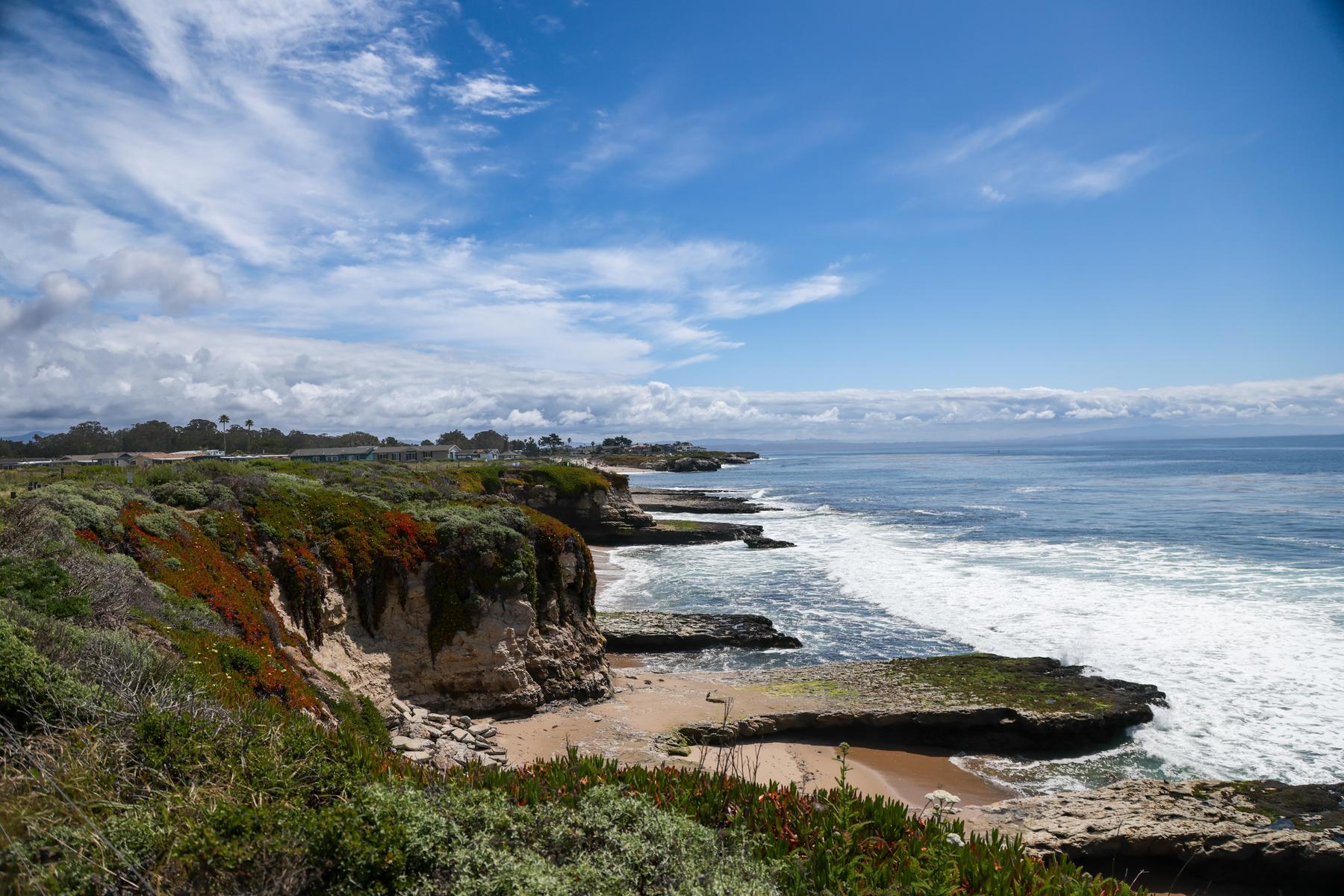
The Center for Marine Genomics, one of five new “focused research activities” in the Science Division, seeks to accelerate discoveries in ocean science and conservation.
Press Contact
The Science Division has launched five new centers that aim to advance multidisciplinary research, leverage external funding, contribute to undergraduate or graduate education, and materially advance the division’s strategic pillar on research impact.
Also known internally as “focused research activities” (FRAs), these centers are funded for an initial term of five years, commencing on July 1, 2026. Here they are, along with their stated mission, and director:
- The Center for Marine Genomics, led by Ecology & Evolutionary Biology Professor Joanna Kelley, will harness genomic technologies to accelerate discoveries in marine science and conservation, integrating research and training to promote healthy oceans, thriving coastlines, and sustainable communities.
- The Geohazards Center, led by Earth & Planetary Sciences Professor Emily Brodsky, aims to predict geological processes that significantly threaten our safety, such as earthquakes, landslides, and debris flows.
- The Materials Innovation Center will integrate interdisciplinary research in materials synthesis, advanced characterization, and AI-driven modeling to accelerate the discovery and design of functional materials and devices for sustainable energy and quantum technologies. Chemistry & Biochemistry Professor Yat Li leads the center, along with Physics Professor David Lederman and Chemistry & Biochemistry Assistant Professor Marcos Calegari Andrade as co-directors.
- The UCSC RNA Center will advance RNA science through interdisciplinary research, education, and collaboration. By connecting fundamental discoveries with emerging applications, the center will help shape the future of RNA biotechnology and medicine. Chemistry & Biochemistry Professor Michael Stone leads the center, along with Molecular, Cell, & Developmental Biology Professors Susan Carpenter and Jeremy Sanford as co-directors.
- The Santa Cruz Center for Astrobiology, led by Astronomy & Astrophysics Professor Natalie Batalha, will advance interdisciplinary research and academic opportunities focused on the origin, evolution, and distribution of life in the universe—while also examining the sociocultural impacts of finding evidence of life beyond Earth.
These five centers will complement campus-level Organized Research Units, such as the Genomics Institute, the Santa Cruz Institute for Particle Physics, and the Institute of Marine Sciences. The FRAs will also suppelment UC-level multi-campus research units hosted by UC Santa Cruz, like the UC Observatories and the Dickens Project.
The new centers are the final outcome of a competitive process that began with 16 notices-of-intent in response to Science Division Dean Bryan Gaensler’s call for proposals in fall 2025. These five centers were ultimately chosen by a panel of expert faculty that considered 11 full proposals.

Throughout the upcoming academic year, we’ll learn more about each new center. Professor Kelley will kick off the year-long series by introducing the Center for Marine Genomics.
Why was the creation of this center needed now?
Kelley: The world’s marine and coastal ecosystems are changing faster than our ability to understand and protect them. Marine heatwaves, biodiversity loss, and shifting ecosystem dynamics are reshaping coastal and open-ocean communities—often before conventional monitoring can reveal which populations are most vulnerable or why.
At the same time, genomic technologies have become powerful enough to track biodiversity, identify locally adapted populations, and detect early signs of stress and disease. These advances will help connect biological change to management decisions.
What are some of the most impactful discoveries in marine science and conservation enabled by genomic technologies?
Kelley: Genomics has transformed marine science by allowing researchers to see biological diversity and adaptation that are very nearly impossible through observation alone. For example, genomics can identify shared DNA among populations, showing where orca populations move along coastlines and within oceans. These data can be used to help guide restoration efforts by helping us identify which populations to protect.
Another valuable tool is environmental DNA, or eDNA, which allows scientists to detect species from traces of genetic material. It is expanding biodiversity monitoring in seawater, improving detection of rare or invasive species, and making it possible to survey communities with far less disturbance.
In a few sentences, what’s the first research project the center will launch once it’s fully up and running?
Kelley: A main goal of our new center is to provide an intellectual hub where researchers can share ideas and research directions in marine genomics and learn cutting-edge analysis methods. While this is happening in my own lab, we aim to scale up and train many students to use state-of-the-art genomic technologies and big-data analytics to study marine species and ecosystems. We want the next generation of marine biologists to be as comfortable in a molecular lab as they are in the field.
I am very excited for our first project, which will be a series of training workshops where graduate students and undergraduates can learn how to generate and analyze genomic data.
Webpages for each center will go online in the months ahead, as will Q&As with their directors throughout the 2026-27 academic year.