Student Experience
UC Santa Cruz stem-cell institute launches mentorship program to prepare undergraduates for careers in research and industry
New program removes financial barriers, offering stipends to participate in stem-cell research and career-development activities in preparation for advanced study or careers in regenerative medicine, biotechnology, or related fields.
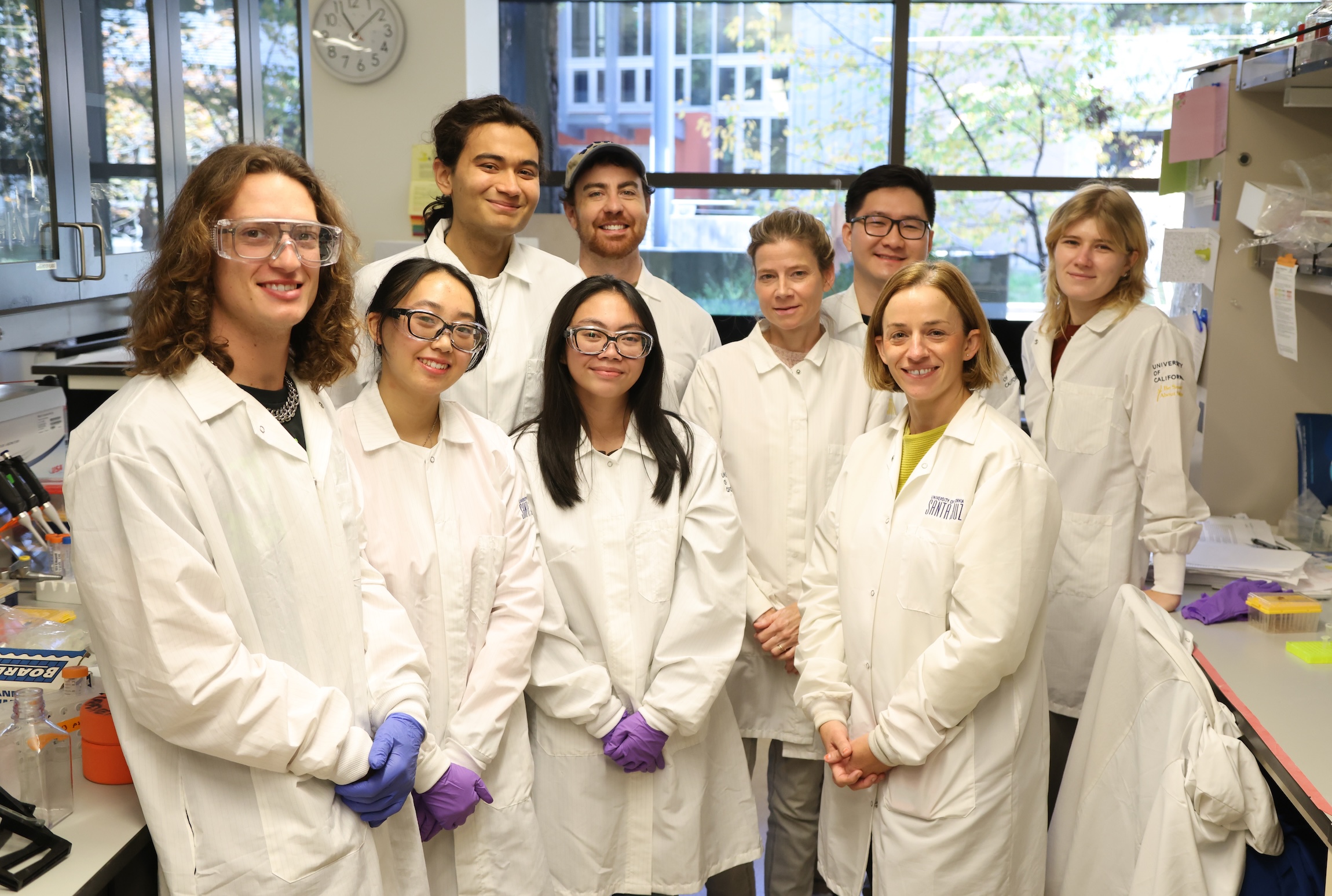
Professor Susan Carpenter (front row, far right) with UC Santa Cruz students who participated in the Science Division's Course-based Undergraduate Research Experiences (CUREs) program and now work in her lab.
Photo by Carolyn Lagattuta
A $2.8 million grant from the California Institute for Regenerative Medicine (CIRM) will support new stem-cell research and career-development training for undergraduates at the University of California, Santa Cruz. The CIRM award has enabled the launch of “UCSC COMPASS: Advancing Diverse Stem Cell Scholars Through Integrated Research and Career Development,” a program to be headed by Susan Carpenter and Guido Bordignon, professors of molecular, cell, and developmental biology.
The program removes financial barriers for students, enabling broader participation in the field by awarding stipends for stem-cell research and career-development activities. The UCSC COMPASS program will integrate structured mentorship, experiential learning, and inclusive research environments, providing students with hands-on training in stem-cell biology, genome editing, and regenerative medicine—fostering both technical proficiency and critical scientific thinking.
The program pairs foundational coursework in stem-cell biology, with course-based undergraduate activities that will engage students in authentic, discovery-driven laboratory research rather than following predetermined protocols. Courses will cover data design and interpretation, ethics, scientific communication, and an optional “good manufacturing practices” component for those interested in biomanufacturing careers.
Trainees then participate in intensive summer internships and capstone projects that emphasize the importance of translational research and professional dissemination through journal publication—preparing students for advanced study or careers in regenerative medicine, biotechnology, or related fields. Through scalable research experiences embedded in the undergraduate curriculum, the program is designed to address equity gaps in the stem-cell and regenerative-medicine workforce, as well as enhance participation and academic achievement.
Over the next five years, undergraduates will be able to apply to UCSC COMPASS through the Institute for the Biology of Stem Cells. Monthly stipends for summer-research internships will be up to $3,600, and up to $1,200 for academic-year training. The program will also offer up to $11,500 per year to offset tuition and fees, $2,600 per year for research-lab supplies, and a $1,200 travel allowance to attend and participate in conferences or similar activities.
“We aim to support students’ persistence, degree completion, and readiness for graduate and professional pathways,” said Carpenter, the program’s principal investigator. “By cultivating a diverse and highly skilled cohort, this program contributes to the development of a regenerative-medicine workforce capable of advancing innovation and maintaining California’s leadership in biomedical research and therapy development.”
More broadly, the UCSC COMPASS aims to strengthen California’s leadership in stem cell research and biotechnology by providing undergraduate trainees with rigorous scientific training, hands-on research experiences, and exposure to translational and industry-relevant practices.
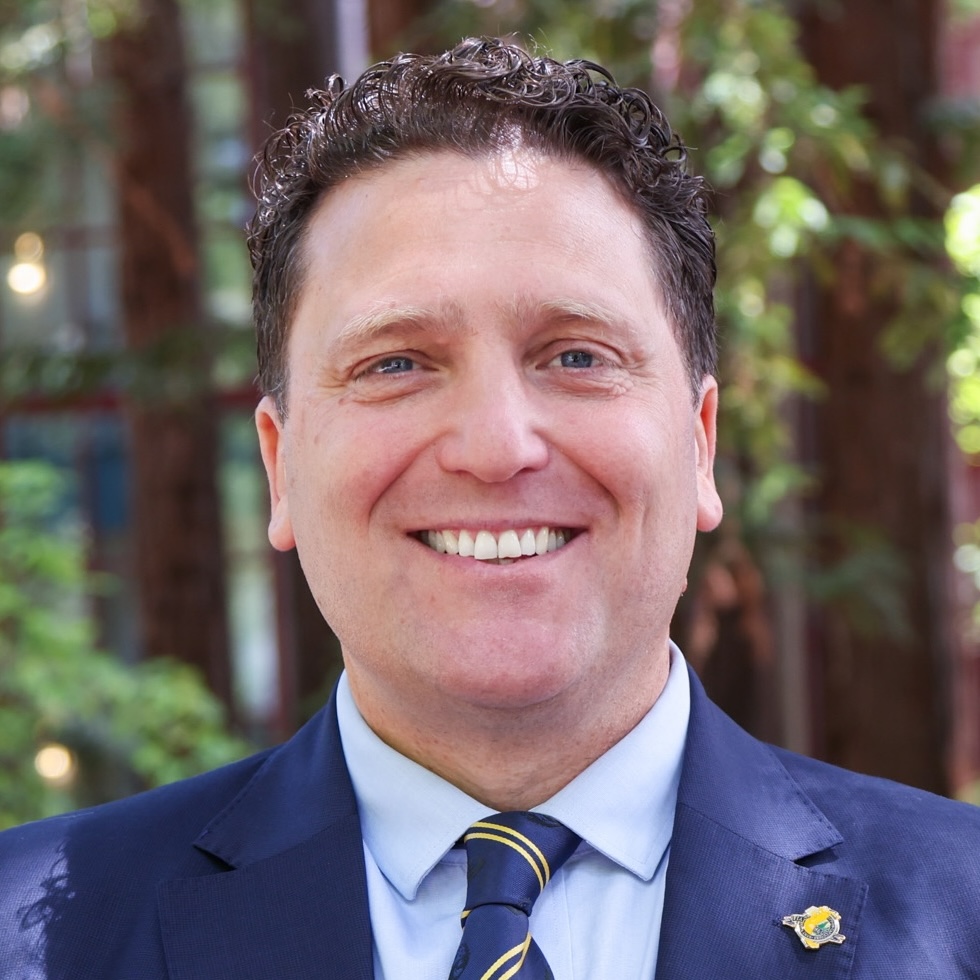
“This program will prepare our students to become scientific innovators who contribute to the advancement of new therapies for a wide range of diseases and conditions affecting Californians,” said Bordignon, vice provost for global engagement at UC Santa Cruz. “In doing so, the program helps accelerate the translation of scientific discoveries into clinically meaningful treatments that can improve health outcomes and quality of life.”
The program will also expand access to high-quality research training for students from historically underrepresented backgrounds, contributing to a more inclusive and representative scientific workforce. This broadening of participation, the professors say, enhances innovation, supports equitable access to career opportunities in high-growth sectors, and will strengthen the state’s capacity to meet future biomedical and healthcare needs.