Arts & Culture
Ethan van Thillo: From student film festival to a cultural institution
Ethan van Thillo (Merrill ’92, Latin American studies) founded the first-ever Chicano Film Festival at UC Santa Cruz, the first San Diego Latino Film Festival, and San Diego-based nonprofit Media Arts Center San Diego.
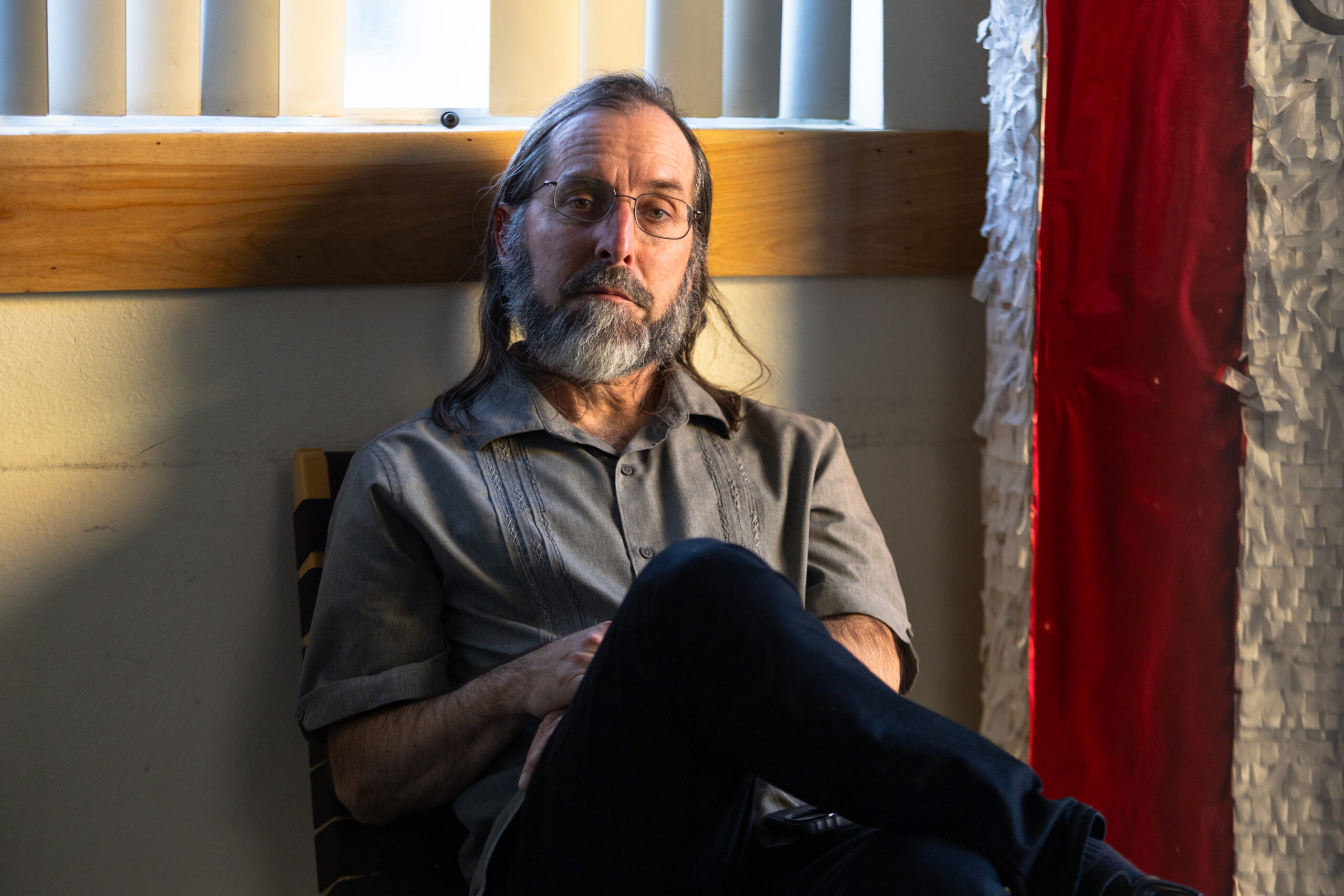
Alumnus Ethan van Thillo (Merrill ‘92, Latin American and Latino studies) founded San Diego-based nonprofit Media Arts Center San Diego.
Ethan van Thillo (Merrill ‘92, Latin American and Latino studies) grew up in San Clemente, CA, in an artistic and social justice-centered household. Raised by a Spanish-English bilingual school teacher mother with a passion for immigrant rights, van Thillo came to the University of California, Santa Cruz eager to expand upon his interest in Latino history and culture.
As a student, van Thillo started the first Chicano film festival at UC Santa Cruz, helping launch his career in promoting Latino films and filmmaking. Van Thillo started the San Diego Latino Film Festival in 1994, and within several years, it expanded to the non-profit, Media Arts Center San Diego, where Van Thillo has served as the Executive Director to this day.
While van Thillo is not Latino himself, he said he always knew that whatever he did in life, he would work with Latino and immigrant communities. As a child, van Thillo accompanied his mother on her weekly visits to her students and their families—his first exposure to the immigrant experience. Van Thillo also observed racist remarks made toward Latino and immigrant communities living in a racially segregated 1970s Southern California.
Van Thillo was torn between attending the University of California,Irvine and UC Santa Cruz, ultimately choosing Santa Cruz for its beautiful campus and liberal arts education.
He started school without a major, but landed in the Latin American and Latino Studies (LALS) Department after taking LALS, Spanish, and Chicano studies courses. The idea to create a Chicano Film Festival emerged from a Chicano Studies class taught by visiting professor, Armando Valdez, a leader in the 1960s Chicano Movement. Valdez asked if any students were interested in starting a Chicano film festival as their final project for the class; Van Thillo jumped at the opportunity.
While at the time, van Thillo identified more as a musician than a filmmaker or film appreciator, he had a soft spot for films. Van Thillo grew up watching films including Miloš Forman’s Amadeus and works by Phillip Glass, appreciating the way that film brought together different artistic elements.
Valdez connected van Thillo to well-known Chicano film festivals to help him create his own two-three day festival with 10-20 films which ran for three years in a row. There were only two other Latino film festivals in the United States at the time, one in San Antonio and another in Chicago. He called those film festivals to gain permission to screen some of their films at his and invited filmmakers to speak at his festival, curating a multi-day festival with 10-20 films.
“During this whole period, I was really learning how the power of film really can be a great tool for social change and education,” van Thillo said.
He took film courses at UC Santa Cruz that exposed him to international films.
Van Thillo wrote his senior thesis on how to organize a Chicano film festival. He was advised under Professor Julianne Burton-Caravajal who taught him about filmmaking as a vessel for social change and social justice.
In addition to hosting a film festival, van Thillo produced the short film Regeneration with his colleague Jeffery Reyna. The film, shot on the UC Santa Cruz farm, is about a young Chicano reconnecting with his Mexican heritage.
Van Thillo also continued to pursue music as a student. He played violin in a Cumbia band he started, in an Americana band, and with the UC Santa Cruz Orchestra.
After van Thillo graduated from UC Santa Cruz, he moved to San Diego with his now wife, Mary Reed (Merrill ’91, language studies), for her to pursue her teacher’s credential at the University of California,San Diego. Van Thillo’s first job out of college was working with migrant education. In 1994, van Thillo organized the first San Diego Latino Film Festival, “Cine Estudiantil”, hosted on the UC San Diego campus exclusively featuring student films. In 1998, the festival began screening more prominent films and hosting them off campus at local theaters. The following year, in 1999, van Thillo expanded the festival into a new non-profit, Media Arts Center San Diego, to better support the growing festival.
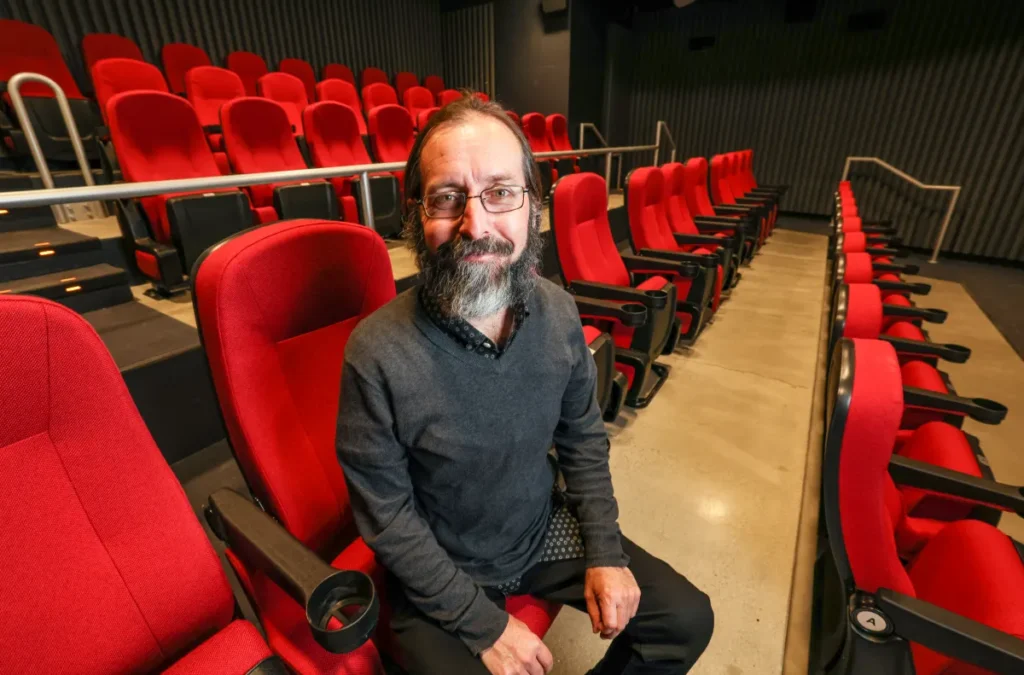
Van Thillo was inspired by media centers in other cities that serve as spaces for local filmmakers to access equipment, workshops, trainings, sponsorships, and exhibition space. The three key pillars of Media Arts Center San Diego are the film festival, production, and education. Ten years ago, the center opened a movie theater, which serves as the only movie theater in downtown San Diego and the last arthouse cinema in San Diego County.
Over the past few years, the Media Arts Center has expanded its education program, including its work readiness program. The work readiness program initially helped filmmakers launch their careers, but now it also teaches people digital storytelling and technology skills.
While Van Thillo’s life and work are rooted in San Diego, he is still connected to UCSC. Van Thillo still has friends from UC Santa Cruz who live in San Diego with whom he regularly gets together.
His oldest of two children, ages 22 and 26, graduated from UCSC with a degree in chemistry.
“Santa Cruz has been really important in my life,” van Thillo said.