Science
-
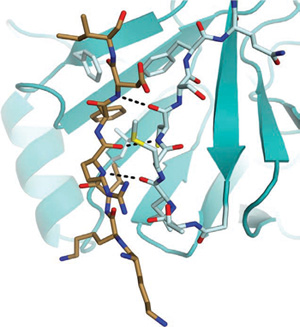
Protein structure reveals how tumor suppressor turns on and off
The retinoblastoma tumor suppressor protein acts like a gate in the cycle of cell growth and division–a gate that stays open in many types of cancer, allowing cells to multiply out of control.
-
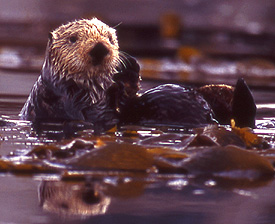
California sea otter numbers drop again
After a decade of steady recovery, the southern sea otter is in decline for the second year in a row, according to the latest population survey by USGS and UCSC researchers.
-
Earth and planetary scientist Gary Glatzmaier elected to National Academy of Sciences
Gary Glatzmaier, professor of Earth and planetary sciences, has been elected to the National Academy of Sciences in recognition of his excellence in original scientific research.
-
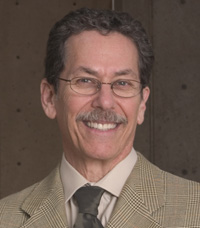
Ronald Evans, hormone expert who found “exercise in a pill,” to speak at UCSC on Thursday, May 6
Ronald M. Evans, an authority on hormones whose research on exercise and metabolism led to the discovery of compounds that act like “exercise in a pill” in lab tests, will deliver the 2010 Sinsheimer Lecture in Biology at UC Santa Cruz on Thursday, May 6.
-
Earth sciences program ranked 13th in U.S. News grad school survey
The graduate program in Earth sciences at UCSC was ranked 13th in a survey of U.S. doctoral programs in the sciences published by U.S. News and World Report.
-
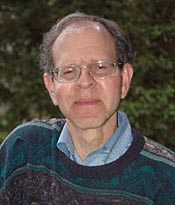
Four UCSC professors elected to American Academy of Arts and Sciences
Four UCSC faculty members are among the newly elected fellows of the American Academy of Arts and Sciences.
-

UCSC hosts International Summer Institute for Modeling in Astrophysics
UCSC has launched a new summer institute that brings together scientists and students from a broad range of backgrounds to study current problems in theoretical astrophysics.
-
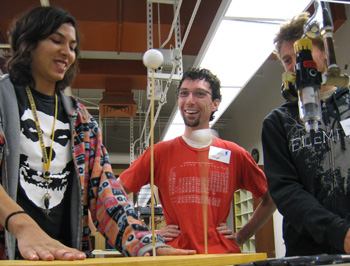
New institute prepares science and engineering grad students to teach
The Institute for Scientist and Engineer Educators prepares science and engineering graduate students for teaching.
-
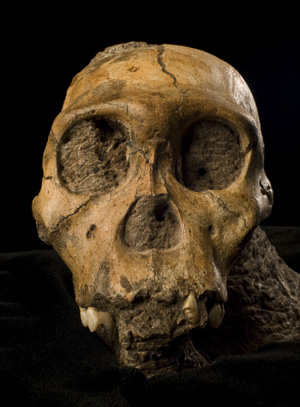
UCSC researcher contributes to major hominid fossil find in South Africa
Researchers in South Africa have discovered two remarkably well-preserved fossil skeletons of an ancient human ancestor dating to almost 2 million years ago.
-
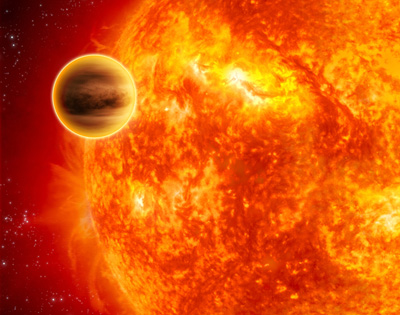
Massive planet is being torn apart by its own tides
An international group of astrophysicists has determined that a massive planet outside our Solar System is being distorted and destroyed by its host star.
-
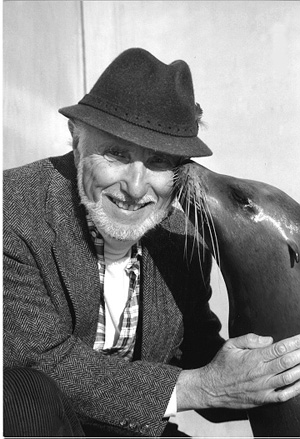
Pioneering marine mammal scientist Ronald Schusterman dies at age 77
Ronald Schusterman, a pioneering marine mammal scientist, died on February 11 at Stanford Hospital after a brief hospitalization. He was 77.
-
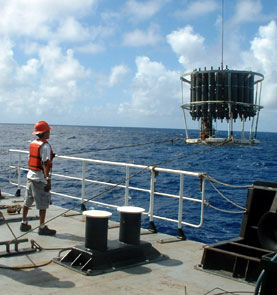
Genome analysis of marine microbe reveals a metabolic minimalist
An unusual marine microbe appears to have ditched several major metabolic pathways, leaving it with a remarkably reduced set of genes.