Science
-
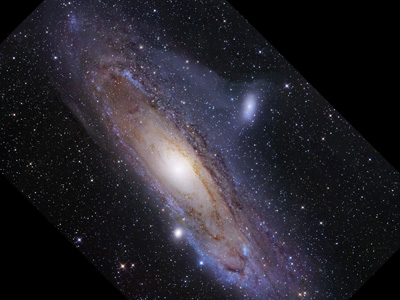
New tidal streams found in Andromeda reveal history of galactic mergers
Astronomers have identified two new tidal streams in the Andromeda galaxy, the remnants of dwarf galaxies consumed by our large galactic neighbor.
-
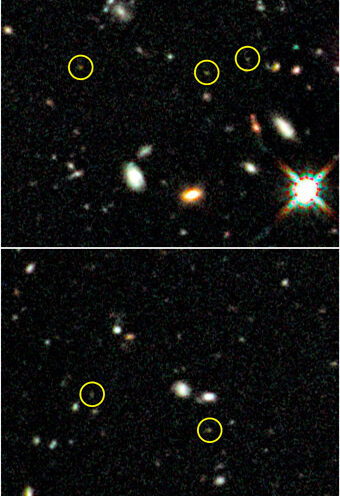
Hubble reaches “undiscovered country” of primeval galaxies
NASA’s Hubble Space Telescope has broken the distance limit for galaxies and uncovered a primordial population of compact and ultra-blue galaxies that have never been seen before.
-
Global warming likely to be amplified by slow changes to Earth systems
The sensitivity of Earth’s temperature to increases in carbon dioxide in the atmosphere may be greater than has been expected on the basis of climate models.
-
Three UCSC professors elected 2009 AAAS Fellows
Three professors at the University of California, Santa Cruz, have been awarded the distinction of AAAS Fellow by the American Association for the Advancement of Science.
-
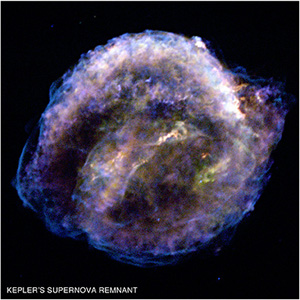
Supernova explosions stay in shape
Supernova remnants–the debris from exploded stars–retain information about how their progenitor stars exploded.
-
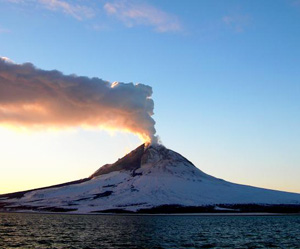
Pre-eruption earthquakes offer clues to volcano forecasters
Pre-eruption earthquakes give scientists an opportunity to study the tumult beneath a volcano and may help them improve the accuracy of eruption forecasts.
-
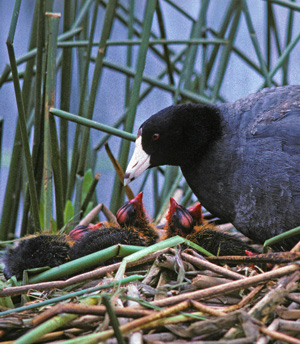
Soap opera in the marsh: Coots foil nest invaders, reject impostors
Coots have evolved a remarkable set of cognitive abilities to thwart other coots that lay eggs in their neighbors’ nests.
-

Icy moons of Saturn and Jupiter may have conditions needed for life
Evidence from recent NASA missions suggests that conditions necessary for life may exist on the icy satellites of Saturn and Jupiter, according to planetary scientist Francis Nimmo.
-
New planet discoveries suggest low-mass planets are common around nearby stars
An international team of planet hunters has discovered as many as six low-mass planets around two nearby Sun-like stars.
-
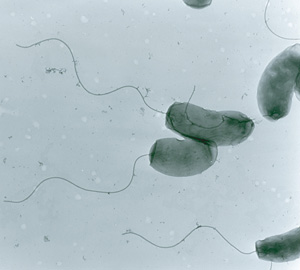
Cholera bacteria show adaptability to changing environments
Understanding the behavior of cholera bacteria between epidemics and how the pathogen moves between different environments could help prevent outbreaks.
-
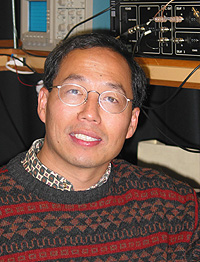
Chemist Jin Zhang elected Fellow of American Physical Society
Jin Zhang, professor of chemistry and biochemistry, has been elected a Fellow of the American Physical Society in recognition of his outstanding contributions to physics.
-
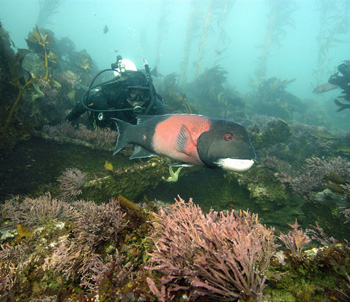
Studies show marine reserves are an effective tool for managing fisheries
Studies conducted in California and elsewhere provide support for the use of marine reserves as a tool for managing fisheries and protecting marine habitats.