Arts & Culture
A reckoning in fiction: Karen Tei Yamashita returns to Bookshop Santa Cruz with acclaimed new novel Questions 27 & 28
Bookshop Santa Cruz will host the celebrated novelist and Emeritus Professor of Literature Karen Tei Yamashita for the launch of her new book, Questions 27 & 28, in conversation with History Professor Alice Yang.
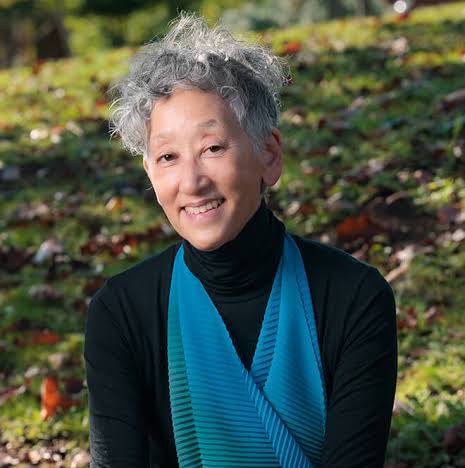
Karen Tei Yamashita
Bookshop Santa Cruz will host the celebrated novelist and Emeritus Professor of Literature Karen Tei Yamashita for the launch of her new book, Questions 27 & 28, in conversation with History Professor Alice Yang.
The reading, co-sponsored by The Humanities Institute at UC Santa Cruz, will begin at 7 p.m. Tuesday, April 28.
The novel is structured around the infamous U.S. government loyalty questionnaire administered in camps where Japanese Americans were interned unjustly during World War II.
The title refers to two loaded prompts: one demanding that incarcerated Japanese Americans declare willingness to serve in the U.S. military, and the other requiring them to renounce any allegiance to the Japanese emperor.
Answering those questions fractured families and communities.
Refusing to answer — or answering “no-no” — meant segregation, statelessness, and in many cases the forced renunciation of American citizenship itself.
Most people who answered ‘no-no’ to the questionnaire ended up being transported against their will to the bleak Tule Lake concentration camp, a designated ‘segregation’ center cordoning off people who were labeled as ‘disloyal’ from those who were considered ‘loyal.’
Some of the families who were called disloyal were faced deportation to Japan.
The novel has just been published but it’s already receiving widespread critical acclaim for Yamashita, whose previous novel, I Hotel, was selected as a finalist for the National Book Award.
Publishers Weekly calls her new book “a powerful and lively novel that documents the turmoil endured by internees while raising enduring questions about identity, loyalty, and citizenship.” The reviewer praised Yamashita’s blend of archival documents, oral histories, and fictional flourishes — including, in one memorable thread, a trombone that travels with its owner to join a wannabe Glenn Miller band.
Kirkus Reviews calls it “an ambitious novel that spans many forms, ably crossing oceans and centuries,” while noting that no matter how the text is constructed or where characters find themselves in space and time, injustice remains a constant.
Esquire named it one of the most anticipated books of 2026, with critic Adam Morgan writing that “Karen Tei Yamashita deserves to be a literary household name.”
Perhaps the most urgent endorsement comes from Maxine Hong Kingston, author of The Woman Warrior.
“Now, at this very moment, our government is rounding people up, imprisoning and deporting them — immigrants, refugees, students, workers with legal visas,” Kingston writes. “It is crucial that we read Questions 27 & 28 by Karen Tei Yamashita.”
The novel, published by Graywolf Press, reaches backward and forward from the moment of the questionnaire, chronicling the individuals who arrived from Japan at the turn of the century, their children who came of age during wartime incarceration, and their descendants who lived in the aftermath.
This book is deeply personal for Yamashita, who drew on her family history to write this novel.
Born in Oakland in 1951, the daughter of parents who survived internment at the Topaz concentration camp in Utah, Yamashita has written against erasure across nine books — from Through the Arc of the Rain Forest to Tropic of Orange to the monumental I Hotel.
In March 2024, The Atlantic published its list of the most consequential American novels of the past hundred years — placing I Hotel alongside works by William Faulkner, F. Scott Fitzgerald, and Toni Morrison.
From 1997 until her retirement in 2018, Yamashita taught at UC Santa Cruz, helping build one of the university’s most distinctive creative writing programs and shaping generations of writers in the process.
She has also turned her attention to local history — investigating buried and marginalized stories of the region, insisting that the experiences of immigrants, Indigenous people, laborers, and communities of color are not footnotes to coastal California’s past, but its foundation.
The reading takes place at Bookshop Santa Cruz, Tuesday April 28, 7 p.m. This event is free and open to the public.