Arts & Culture
From Homer to Hollywood: The enduring fascination with The Odyssey
Ahead of Christopher Nolan’s blockbuster film release, UC Santa Cruz classics professors discuss the enduring fascination with The Odyssey
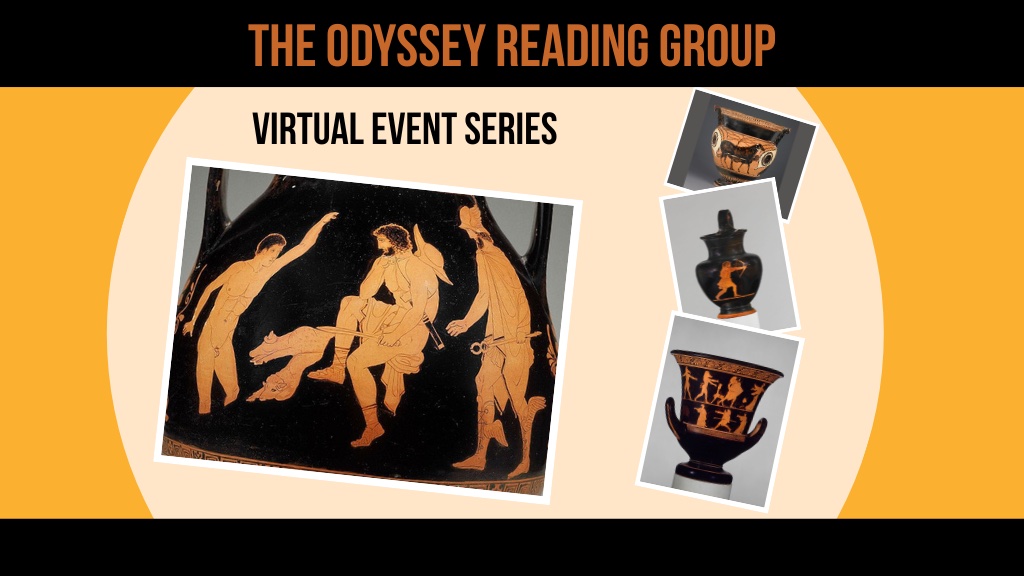
The Odyssey of Homer continues to find a wide audience 2,700 years after its creation. This epic poem from the ancient world remains a living text for each new generation that returns to it.
The acclaimed director Christopher Nolan is set to release his movie adaptation of the epic poem on July 17. In light of the upcoming film release, Associate Professor of Literature Martin Devecka, director of the Ancient Studies program, and Associate Professor of History Anne Kreps will host a virtual Odyssey Reading Group on Wednesday, June 24 and Wednesday, July 1.
Devecka and Kreps will discuss the wild world of The Odyssey “and what it can teach us about the enduring value of things like being nice to strangers, lying, and picking a good disguise.”
This program will use Emily Wilson’s 2018 translation of The Odyssey and will cover Books 1–12 on June 24 and Books 13–24 on July 1. Register for the discussion group here. These discussions are presented by The Humanities Institute and the UC Santa Cruz Ancient Studies Program, and is co-sponsored by Bookshop Santa Cruz.
In advance of the free online discussions, which are open to the public, Devecka spoke to UC Santa Cruz News about the enduring appeal of The Odyssey. Devecka teaches an introductory course to The Odyssey at UC Santa Cruz.
Dan White: Are you planning on watching the Christopher Nolan movie?
Martin Devecka: I probably will. I’m on sabbatical right now in Vermont. There’s no movie theater within 50 miles of me, but when I get my car worked on, there is a movie theater right next to the car dealership so I’ll probably see it then.
Dan White: Why does The Odyssey still get renewed relevance? It keeps finding an audience after thousands of years.
Martin Devecka: Because we have kept it around so long. It is one of the few really weird cultural objects we have access to, and we can either deal with that weirdness or do the cultural work of covering it up, of making it normal.
Dan White: But there must be something about this particular epic that keeps it immensely popular when so many other epics have been lost or fallen by the wayside.
Martin Devecka: I think it is the way that The Odyssey has a way of appearing to eat other poems. There are large sections of The Odyssey that seem to be kind of doing stuff that other now-lost poems did, that seem to be repeating sections of the epic cycle. The stories which Helen and Menelaus tell, for instance, in Book 4, the stories that Nestor tells, are probably references to other epic cycle stuff. Or in Book 11, there are all these ladies who have children with gods — that seems to be duplicating a Hesiodic work called the Catalogue of Women, which was also lost. So it seems like The Odyssey is sort of summarizing, doing fun poetic stuff with a bunch of other lesser poems.
That doesn’t totally explain why The Odyssey is the one that has made it. I think the main thing that works in its favor is the way it has proven so interpretable by lots of different people — everyone is sort of making use of it to make rhetorical and ethical points. It’s read as a kind of description of the journey of the soul in late antiquity. People are always remaking it and therefore keeping it in circulation.
Dan White: For me, one of the most interesting things about The Odyssey is the simplicity of the set-up. All it is about is a guy who is just trying to get home, and it’s such a colossal undertaking for him.
Martin Devecka: It’s more story-like in the sense of actually having a beginning and an end and narrative events in the middle, than a lot of other epics. There is this whole other existential dimension to the homecoming where he needs to prove to people that he is Odysseus, to be Odysseus when he gets there — when he gets back home, he isn’t anyone in the literal sense. He has a name but it doesn’t mean anything.
Dan White: What do you make of the fact that this epic dips in and out of phantasmagoria — there are realistic scenarios and then you have monsters such as the man-eating Polyphemus the Cyclops, this gigantic creature, and then there are other dangerous creatures like Scylla and Charybdis.
Martin Devecka: Polyphemus belongs to the cosmology of this ancient Greek world even though he doesn’t belong to its culture. I think that in general our sense of phantasmagoria is highlighted by the fact that we have satellite maps of the entire world and therefore believe we know what’s out there, but of course that sort of knowledge would not have been available to (Homer’s) audience, so perhaps what looks like phantasmagoria to us would not look like phantasmagoria to them.
Dan White: One of the recurring themes I see in The Odyssey is different forms of xenia – ritualized hospitality. The epic seems preoccupied with the ideas of the good host and the bad host, and what distinguishes real and corrupt versions of hospitality, way beyond the idea of “just be nice to guests.”
Martin Devecka: You are right to point that out. There is an explanation for its presence in The Odyssey, which has to do with the economic world of the epic. There is a level where you trade cows for things — cows are the basic unit of currency, commodity exchange, something that is recognizably like what we do when we go to the grocery store.
But then there is another kind of exchange that happens among the elites where you give people something and then maybe 10, 20 years later you are going to get something back.
The occasion for these gifts is when you are visiting someone. Whenever you visit someone they give you a gift — the idea is, as people move around, eventually you are going to visit the person you gave a gift to and they are going to give you a gift too, probably even a better gift. That sort of gets Odysseus in trouble with the Polyphemus the cyclops — Odysseus goes in there thinking, “what treats will the Cyclops give me?” because it is part of the obligation of xenia. But of course the Cyclops doesn’t even know what he’s talking about — like, ‘I’ll give you a gift, I’ll eat you last.’
Dan White: So the threat of danger of the ancient world, and the concept of xenia, are closely connected.
Martin Devecka: (Xenia) is connected to an economy that is in the background, but on a more basic level, the world of the poem is a place where things are uncertain. That is basically the world people lived in — it is a crapshoot to sail around on the Mediterranean even nowadays, and back then it certainly was. If you get shipwrecked, what you would like is for the people who find you on the beach to put you back on your feet, send you home.
There is a strong social norm in favor of hospitality, in favor of receiving guests, that has to do with the uncertainty of life — anyone, even the fanciest fellow, can end up salty and wet on the beach and needing help, as we see with Odysseus.
Dan White: The Odyssey encapsulates so many things that can go wrong when you travel far from home.
Martin Devecka: If you look at some of the divinatory texts and dream interpretation manuals from the second, third century CE, people are still really worried about this. Artemidorus of Daldis has this dream interpretation manual — half the dreams in there are supposed to tell you whether you should take a trip or not. So people are really worried about what happens when you go away from home. The institutional norm of xenia, hospitality, is another way of addressing that problem, making it not so scary to go on a trip.
We’re talking about the 8th, 7th centuries BCE. It was not a period of super strong social organization, not particularly — you see various things seem like everybody fighting everybody, a little bit chaotic. But even in later periods, going on a trip in the ancient world was one of the most anxiety-inducing things because so much can go wrong. Leaving aside shipwrecks, you can get robbed, you can fall in a hole.
Dan White: The Odyssey is a written text that owes so much to oral traditions. What is the earliest version of the written text?
Martin Devecka: The manuscript tradition starts later — earlier manuscripts tend to get lost. There are historical references to (a text) made in Athens in the sixth century BCE, which is the first “official” text of the Odyssey. But the manuscript tradition suggests there are quite a lot of early variations, different versions of the text.
What you see with Homer is that there are more variations toward the beginning of the manuscript history — that is where we get a sense there maybe was not an official text of the poem even after it started being written down. There were all these local variations. It does owe a lot to oral traditions, down to the very language it was written in — there are oral formulae (repetition) in the poem, as Milman Perry and Albert Lord showed by comparing Homer to modern oral bards (in the 1920s and 1930s).
Dan White: Is it possible there was an individual named Homer who wrote The Iliad and The Odyssey — and how did that question of ascribing these epics to an individual author even get started?
Martin Devecka: Even in antiquity ,people were saying that it seemed hard to believe the same Homer wrote both the Iliad and The Odyssey. A book ascribed to a man named Longinus called On the Sublime makes the point that the style was so different — one seems like the work of a poet at dawn, another at sunset. People were speculating early on that these were not the same Homer, and now we are totally sure that is the case. The language in the poems is so different.
The Odyssey does seem really aware of the Iliad as a precedent, along with several other lost epics from the same cycle, but the Iliad doesn’t seem aware of The Odyssey in the same way, so we are thinking there was a pretty significant time gap between when these poems kind of solidified. I do think it is possible there was a person named Homer involved at some point in the transmission and recomposition of these poems, possibly even playing a fairly substantial role in the composition of one of them at least.
But then you see a whole lot of other stuff ascribed to the same Homer — various hymns which don’t really seem like they are by the same person, various other lost epics from the same cycle — it seems like Homer is a name that people knew and that they just kind of attached stuff to.
Dan White: Why would they do this?
Martin Devecka: Probably because they felt suddenly that these things needed an author. The tradition of ascribing things to a human author, as much as it seems natural to us, is rather culturally peculiar — it is not for the most part a feature of Middle Eastern scribal culture, where generally stuff is ascribed to a god or a particular ancient scribe, somebody who can lend it some authority. My suspicion is that the problem of authorship did not necessarily come up when the poems were being composed, but that it did come up later, and so an authorial attribution or tag needed to be attached to these poems at some point, because people were asking the question about poetry that is being composed contemporarily to them: who wrote The Odyssey, who wrote The Iliad?
Dan White: I was hoping you could talk about the role of disguises and trickery in The Odyssey.
Martin Devecka: I feel like there are two, maybe three questions there. There is the question of how the gods appear in the world, which is not usually in their own form and shape — except very occasionally they will show up as themselves — so it’s perhaps their nature to be disguised, because the epiphany of one of these gods is reserved for someone special. Their nature is to be disguised. Generally it is not the nature of human beings to be disguised in that way, but somehow it is also Odysseus’s nature in much of the poem to undergo various transformations. At one point, he gets a glow-up from Athena, then gets withered by Athena when he is back in Ithaca. He, in addition to being visually disguised, has to act differently. He is in the position of being able to infiltrate his own household when he returns to Ithaca, so for him these disguises are instruments of power. He is very dependent on disguise because he needs a place in the household, and his place can’t be that of Odysseus, but he can be in the household as a sea hobo, somebody who shows up.
And you see the suitors looking at this guy who they think really is just a beggar, and trying to figure out what to do with him — make him a day laborer on a farm, or sell him into slavery.
He needs that disguise until the moment when he can actually step into his old social position and prove he is who he says he was. There is a narrative function of the disguise because it demonstrates how some — but not all — the suitors are failing to follow the rules of xenia themselves. They are not being good hosts, they are being hosts in Cyclopean ways. This is part of the narrative appeal of the poem. In the Iliad, the other Homer says “anger drips into the heart like honey.” Aristotle realizes that making people angry is fantastic rhetoric because people love to be angry. Readers feel a pleasurable anger when they read The Odyssey.
Dan White: There is so much build-up to Odysseus’s incredibly violent slaughter of the suitors after he finally makes it home to Ithaca. Instead of killing them right away, he plots and plans first. He waits for the right moment, and takes a lot of abuse. There is an”enough is enough” feeling — and I kept asking myself, why is Odysseus’s son Telemachus not doing more against the suitors before his dad gets home?
Martin Devecka: Yes, and that blinds you to the fact that what Odysseus is doing at the end of the poem is the biggest betrayal of xenia of all — he is exacting violence against guests in his house, and he kills 108 of them.
Dan White: And Odysseus kills the suitors in the most bloodthirsty ways imaginable. They beg for their lives — he spares nobody.
Martin Devecka: It is pointedly written as an intrusion of Iliadic combat, of Trojan War stuff, into the household.
Dan White: So how do you think contemporary audiences for The Odyssey, way back when, were meant to view Odysseus — how were they meant to respond to him as a character, considering his sneakiness and violence?
Martin Devecka: In the Iliad he is pretty good at fighting and clever, but there is this infamous thing where he basically wins via rhetoric a contest to inherit the armor of Achilles, causing Ajax to commit suicide out of frustration. He is supposed to have caused Palamedes to be unjustly executed. He is supposed to have done all these weaselly things, including trying to dodge going to the Trojan War by pretending to be crazy. In general he doesn’t have a particularly good reputation from that point of view. The Odyssey is a bit of a poetic challenge — it is trying to rehabilitate Odysseus.
One way it could have done that is by showing him having all these brave adventures, fighting and leading an army and getting his fellow Ithacans back to Ithaca, fighting a pitched battle to win control. Such an epic, had it existed, would have been forgotten in a minute.
What is happening in The Odyssey instead is the poet is effectively inverting the value structure of the Iliad, saying: you think being a beefy guy is so great — let me show you what a weaselly little guy can do if you let him loose. Odysseus shows the powerful the power of this kind of trickiness by overcoming much stronger people —he overcomes the Cyclops, and later, the suitors —and he is always winning by what you could call dishonorable means.
Dan White: So it was much more important for the people who put this epic to create an engaging character that you will be fascinated by rather than presenting him as an emblem of moral virtue.
Martin Devecka: Yes, but Odysseus is also changing and rapidly expanding and possibly inverting what moral virtue is.
Dan White: I wonder if the moral complexity keeps it popular — it is much more open to interpretation than a straightforward heroic text. He is in desperate straits and so many people want to take advantage of him and kill him, so in that context, perhaps morality is more flexible. He’s up against so many adversaries — so his weaseliness is a survival adaptation.
Martin Devecka: Maybe we are even supposed to admire the weaseliness and say this is what it is to be virtuous. He is a trickster character. But in a way the task of representing him is a bit more challenging because it is against this background of characters who are admired for bravery and strength.
Dan White: How long have you been teaching and reading this epic?
Martin Devecka: I’ve been reading it I guess since high school, reading it in Greek for 15 years, and teaching it for ten years.
Dan White: I’m curious about whether your understanding changes over time.
Martin Devecka: Yes, it does. Every time I read it, I find something new. In many ways I kind of locked in on what I consider to be a correct but against-the-grain reading of the whole thing when I started doing this class. Within that general reading, my views on individual passages and books are always changing.
My sense of the richness of the text and its allusive connection to the Iliad and the way it plays with that changes. The way that I read the various comedies of manners — like where the real trick is for Odysseus is to deal with a different social situation — definitely keeps changing, because it is so hard to figure out what the pragmatics of politeness are if you look at a society from the outside.
Dan White: What do you hope people will take away from your Odyssey discussion group?
Martin Devecka: I hope to show the complexity of the poem. This is not really a poem that has a straightforward hero, it is not really a heroes and villains poem, and our tendency to read it that way is probably oversimplified. This is a chance to rethink what I am teaching in the class and also I hope to show people a different Odyssey than they are going to get from Christopher Nolan’s movie. There is so much weird stuff in the written version that you almost couldn’t put on screen. So I am interested to see what Christopher Nolan is going to do with it.