Health
First complete marmoset genome will enable research on Alzheimer’s, neurodegenerative diseases
The new reference is one in a collection of studies on end-to-end, or “T2T,” genomes
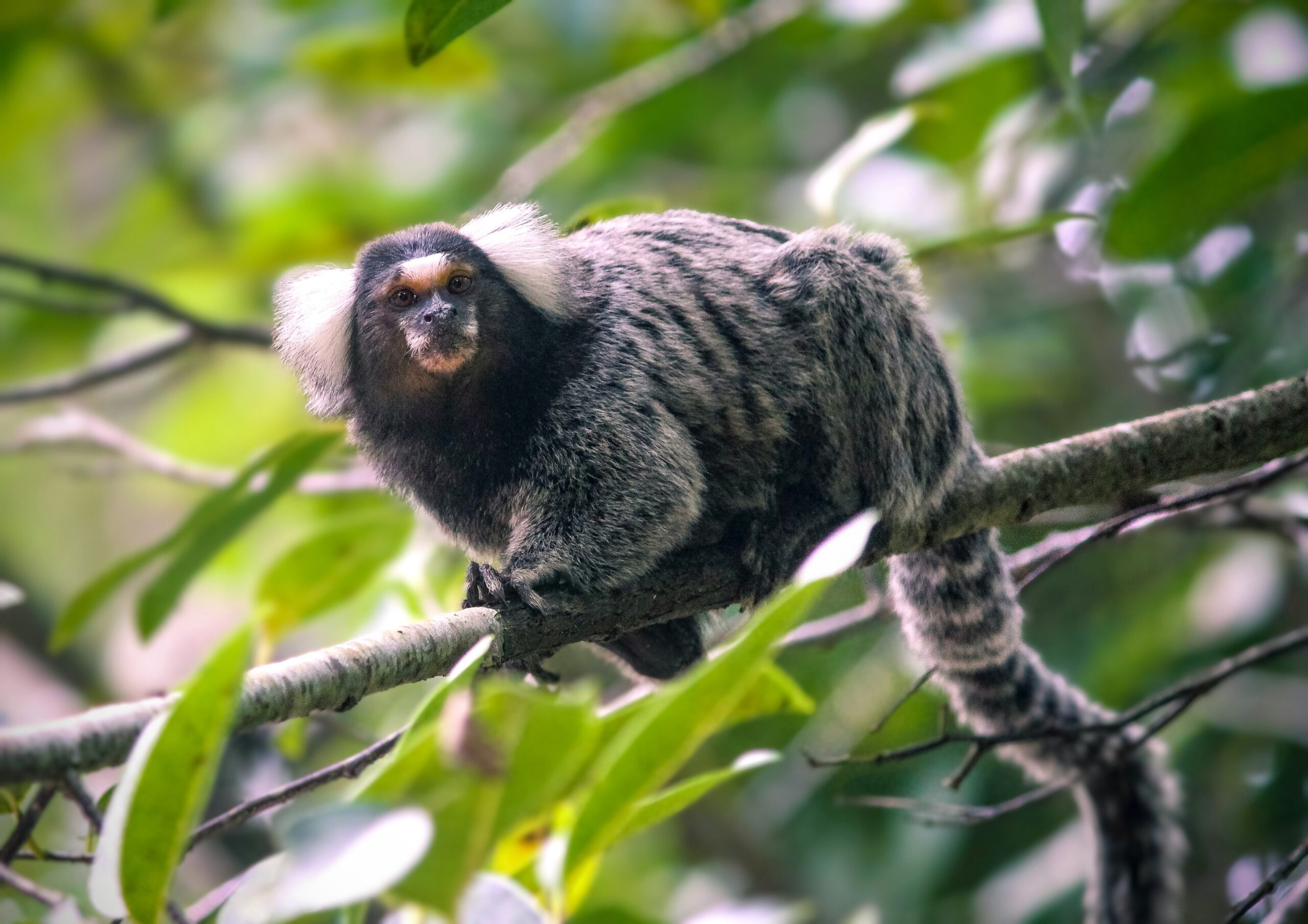
The common marmoset is a small monkey from South America.
Nani Rossetti/ Getty Images
Press Contact
Key takeaways
- The first fully complete and accurate map of the common marmoset’s DNA gives researchers a better tool to study human diseases.
- The new reference genome provides high-quality references for 76 marmoset genes known to be associated with Alzheimer’s, Parkinson’s, and related neurodegenerative diseases in humans, and found previously unseen variations across the majority of these genes.
- The team catalogued more than 500 previously unannotated genes across the genome, opening up new avenues of health research.
To study complex diseases like Alzheimer’s, scientists and clinicians analyze how genes change and malfunction in other species. Marmosets, a species of tiny monkey from South America, have become an important animal to study for understanding disease—but researchers have never had a complete baseline for understanding the primate’s DNA.
Now, the first complete genome of the common marmoset is available to the scientific community, thanks to the efforts of researchers at the University of California, Santa Cruz Genomics Institute. With this resource, researchers will be able to study marmoset genetics with high accuracy and detail, revealing unseen features and enabling future insights into disease and evolution. The results are detailed in a study published today in Cell.
UC Santa Cruz Ph.D. student Prajna Hebbar and Professor of Biomolecular Engineering Benedict Paten led this project as part of the Telomere-to-Telomere (T2T) Consortium, a collaborative, multi-institution effort to create high quality, truly complete reference genomes. The consortium made history in 2022 with the first complete human genome, and have continued to advance and drive down the costs of the technologies and methods needed to create complete genomes.
The marmoset genome is one in a package of studies released today that shows that the T2T approach is becoming routine enough to be applied not just to human genomes, but to different species. This more automated process could set the stage for “personalized genomics,” where everyone’s complete genome sequence could serve as their own unique reference for medical care, at a lower cost than ever before.
“Routine T2T genomics is making findings easier and more plausible, as we’re able to much more easily access these complex regions,” Hebbar said. “It’s great to be in an era where we’re not stuck with the technical problems—we can go into the biology and make discoveries relevant to human health.”
A better reference

Marmosets are increasingly studied by scientists because as a new world primate, they are more closely related to humans than other model species like mice, while their small size makes them easier to work with than other primates like macaques. New-world primates like marmosets experience age-related memory loss, which has made them a great model for studying these conditions.
To study the genetic makeup of a species, scientists use a standardized DNA sequence called a reference genome. By comparing individuals to this reference, they can make insights into disease, traits, and evolution.
Scientists created the first marmoset reference genome in 2014, but this version contained gaps and errors, and left several regions of the genome unresolved, making it difficult for researchers to accurately identify genetic variation.
Thanks to new algorithms for highly accurate genome assembly pioneered by the T2T consortium, the updated reference resolves these errors and provides the first record of several complex features of the marmoset genome. The researchers used the new reference to examine genetic differences across 230 marmosets, finding variation at many of the genes linked to Alzheimer’s disease in humans, and those vital to the immune system.
Alzheimer’s-associated genes
Because the marmoset is increasingly relevant as a model for studying neurodegenerative diseases, the researchers specifically searched for a shortlist of genes known to be linked to Alzheimer’s, Parkinson’s, and related neurodegenerative diseases in humans and provided high-quality references for 76 instances of matching genes in marmosets. This will enable other scientists to study the health impacts of these genes with much higher accuracy.
“We see variation in these marmosets in the same genes that we do in humans, further reinforcing the idea that the marmoset is a good model for studying Alzheimer’s disease in humans,” Hebbar said. “Now, we have this really complete, high-quality resource that people can take advantage of.”
Using their new reference along with transcriptomic data, which allows researchers to see which genes are “turned on” and “turned off,” the team identified previously undescribed forms of several genes, including the PSEN1 gene, which is the most frequent cause of early-onset familial Alzheimer’s disease. Further study will be needed to know the significance of these discoveries, but this will only be possible thanks to the T2T reference opening up new areas for researchers to explore.
Immune system genes, sex differences, and other discoveries
The Major Histocompatibility Complex (MHC) is a cluster of genes that underlies the immune system, and is known to influence many autoimmune and other diseases, including type 1 diabetes, multiple sclerosis, and rheumatoid arthritis. The researchers provided a complete record of the marmoset MHC region, annotating several complex, previously un-catalogued genes.
The complete genome also revealed that marmosets shuffle sets of ribosomal DNA (rDNA), a crucial subset of DNA that enables protein production, between chromosomes more freely than expected, gaining and losing whole arrays on individual chromosomes in ways not previously documented in primates.
“We also identified sex differences in the distribution of these genes, a pattern that has previously been reported in orangutans and gibbons, widening our understanding of these genes that are extremely important to the biosynthesis of cells,” Paten said. “While these sex differences may not have an effect on the species, now that we can do T2T sequences, we’ll find out more.”
The researchers also identified patterns in the centromeres, regions of the chromosomes vital for cell division, that will warrant further study.
For Hebbar, the most exciting aspect of this project is that so much discovery is now within reach. At UC Santa Cruz, she has the opportunity to work with many of the pioneers of the first T2T human genome sequence, and has been struck by the rate of findings that she and her collaborators have been able to make about regions of the genome that researchers worked around for decades because they were too tangled and repetitive to read.
“It’s pretty crazy that I’m doing this research in what is one of the best times to be doing your Ph.D. in genomics,” Hebbar said. “It’s cool to be part of this era where you can actually study all of these complex regions.”
UC Santa Cruz researchers involved in this effort include Associate Professor of Biomolecular Engineering Karen Miga, Hailey Loucks, Joshua Gardner, Harrison Heath, Mira Mastoras, Brandy McNulty, Julian Menendez, William Seligmann, and Ivo Violich. This research was funded by the National Institutes of Health, and collaborating institutions include the Jackson Laboratory, the University of Pittsburgh, the University of Washington, the Oregon Health & Science University, the Stowers Institute for Medical Research, and the German Primate Center.