Arts & Culture
UC Santa Cruz research trip reconnects Filipino American families across the Pacific
A four-week research trip in the Philippines this summer by an intergenerational team from UC Santa Cruz, the Tobera Project, and the Pangasinan Polytechnic College (PPC) led to reunions and unexpected discoveries.
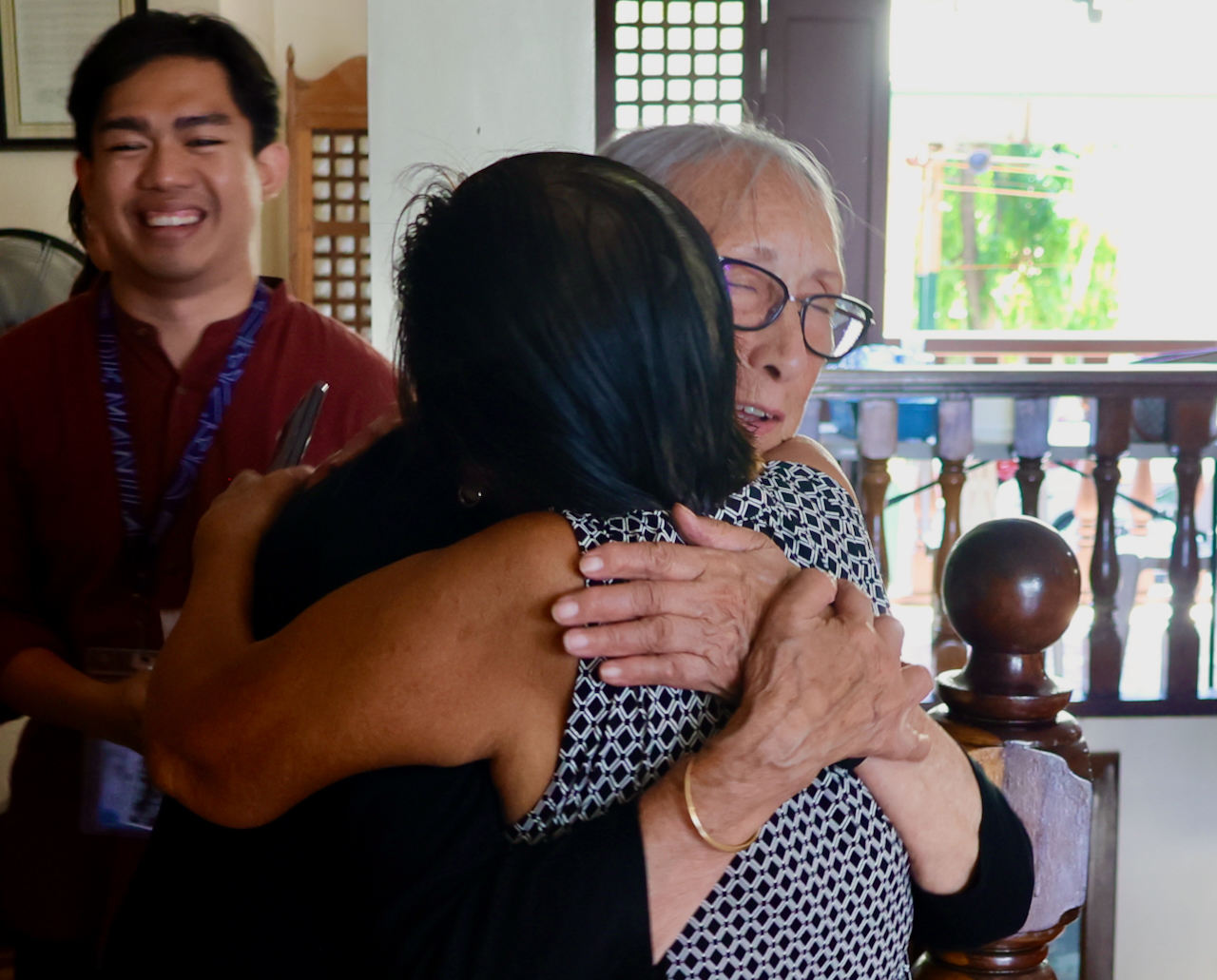
Juanita Sulay Wilson meeting her relative at a hometown visit in Licab, Nueva Ecija. Photos by Steve McKay.
As UC Santa Cruz researchers set up maps and photographs for an archive drive in Binalonan in the Philippines this summer, an older local man in a face mask slowly walked into the room holding onto the arm of a relative.
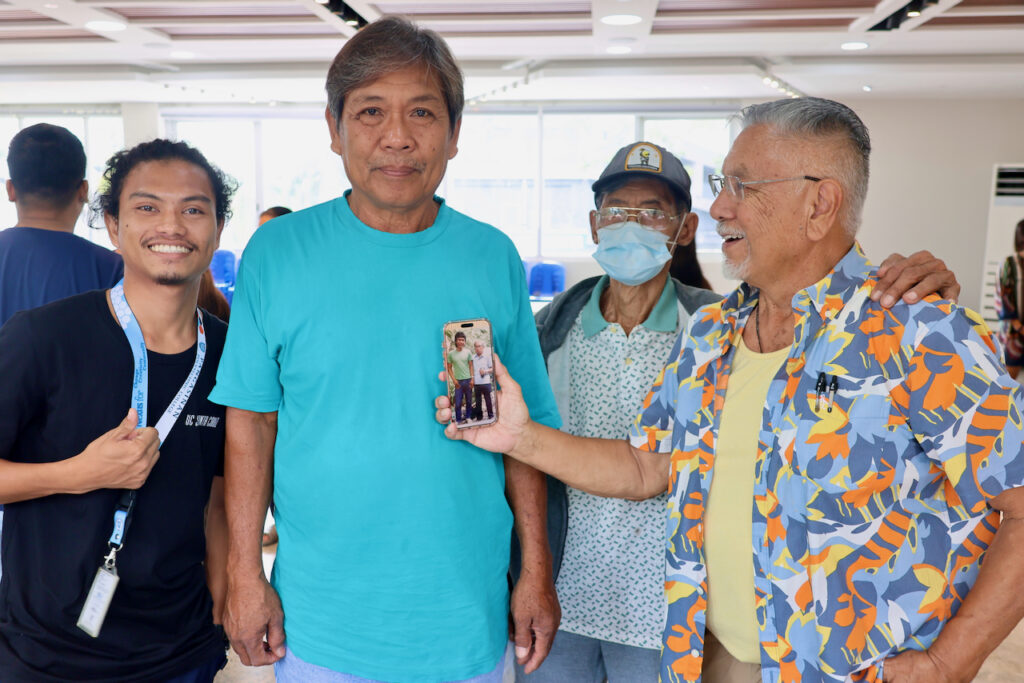
When they approached the research table, the younger relative, Dario Carillo, pointed to a photograph, looked at it closely, and then introduced the older man, Francisco Carillo, to Maurice Carrillo. “This is your cousin,” he said.
Maurice Carrillo, an 83-year-old community partner on the research team, had traveled to the Philippines from Santa Cruz for the first time since 1985. He described his first hug with his cousin after learning they were relatives. “I had the overwhelming feeling that I was suddenly surrounded by my dad’s spirit and giving both my dad and his brother a hug at the same time. It was really powerful,” Carrillo said.
Carrillo’s reunion was one of several unexpected and deeply moving discoveries during a four-week research trip in the Philippines this summer by an intergenerational team from UC Santa Cruz, the Tobera Project, and the Pangasinan Polytechnic College (PPC).
The team collected oral histories, digitized family photographs and documents, and traced the histories of migration between Pangasinan province in the northern Philippines and California’s Central Coast. The trip was part of Saritaan: Filipino and Filipino American Stories of Ilocandia and the Pajaro Valley, a community-engaged research project housed at The Humanities Institute and supported by the Henry Luce Foundation.
Saritaan is documenting stories of migration, agrarian life, and family relationships between communities in the Philippines that sent migrants to the United States and Filipino American communities in California’s Pajaro Valley. The project builds on the public history work of Watsonville is in the Heart (WIITH), a collaboration between UC Santa Cruz and the Tobera Project, a Watsonville-based grassroots organization on Filipino American history in the Pajaro Valley.
The Principal Investigators for this project, Associate Professor of History Kathleen Cruz Gutierrez, Professor of Sociology Steve McKay, and History postdoctoral fellow Meleia Simon-Reynolds, have been partnering with the PPC since 2025 to extend WIITH’s community-initiated, student-engaged work across the Pacific.
Some research days were more than 13 hours, with long bus rides, tropical heat, and torrential downpours, but the team was full of energy. “It was so incredible,” said Jamie Dy, an undergraduate 2025-2026 Humanities EXPLORE Fellow who was on the research team. “Everyone put their heart into the trip, and it really shows in how special the project is, how touched everyone was, and how connected we are with one another.”
Saritaan asks how families and communities in the Philippines remember the manong and manang generation, the first Filipino migrants to the United States, and how those memories might deepen or complicate what is known about their experiences. The project explores migration, connection, kinship, and return when communities in California and the Philippines research these histories together.
PPC Board Secretary and Saritaan Project Coordinator Nicanor Germono Jr. explained: “We know Carlos Bulosan, we know Larry Itliong, we know popular manong, but what about the others? What are their stories? Who are they and where did they come from? We don’t have those answers because we have not really invested in doing research about them or digging deeper into their histories. And Saritaan has made that possible.”
The 21-person research team this summer brought together students from UC Santa Cruz and PPC to work together in person, after months meeting via Zoom. The team also included WIITH community researchers from the Tobera Project based in Watsonville, who are descendents of Filipino migrant farmworkers that arrived in California in the 1920s and 30s.
Perhaps one of the most significant and profound aspects of the trip was the “balikbayan” or “return home,” experienced by community partners from California who traveled to the Philippines. All long-time contributors to WIITH’s California-based historical work, they joined the trip to contribute to the research and learn more about their families’ histories. Ranging between 69 and 84 years old, some had never been to the Philippines before.
Gutierrez described how the team began the trip without knowing whether they would actually be able to find the relatives of community partners from the Pajaro Valley. “We were really taking a leap of faith trying to connect our community partners with their family in Pangasinan, more so even trying to go into towns to try to find people who remember manong and manang leaving in the early 20th century,” Gutierrez said.
Research partners at PPC in the Philippines coordinated multiple hometown visits for community collaborators from California to find relatives, visit ancestral family lands, and spark conversation on the history of migrant-sending communities and the memories of migration preserved in both countries. For participants on the trip, the visits were life changing. In some cases, the Saritaan project helped family members meet for the very first time.
As Gutierrez described, “When it happens, and when that family member finally embraces that person who has been on the search, all of that journey completes a life.”
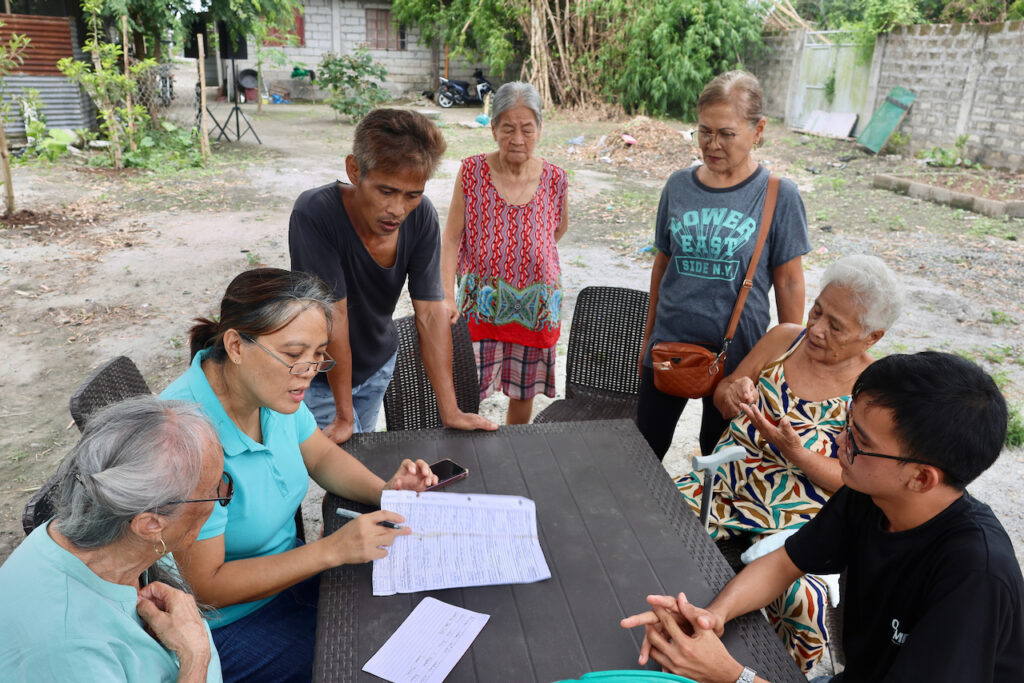
These family reunions and discoveries were part of a broader research effort across Pangasinan. The team also led archive drives in four different municipalities in the province, each attended by individuals who had relatives or who themselves migrated to the US in the 20th century. They also conducted 20 oral history interviews and scanned 55 family materials to include in WIITH’s publicly available digital archive.
The archive drives not only generated new historical materials, but also established relationships that will support future research. The team will continue to meet this academic year, and conduct a second research trip in the Philippines in July 2027.
Their first trip is already demonstrating the value of researching migration history from both sides of the Pacific. As Gutierrez shared, “Seeing how the links emerged showed to me that yes, this kind of research is possible, and here is how we can look at a story of migration from so many different angles that really enlivens how we understand things.”
For community partners, the impact of the research has been deeply personal, while contributing to a larger effort to share Filipino American histories that have too often gone untold.
“I’m so happy, because there was such hard work that went into making this happen,” said Juanita Sulay Wilson, an 84 year old community researcher from the Tobera Project. “I have been in the education world for a long time and had no history of myself. No history to look back on. And now we’ll be able to give the younger ones heroes of Filipino descent and their contributions to America. Filipinos have been giving to America for a long time, and their history was never told. It was always shoved to the back. So to be able to bring it forward is so important.”
Members of the Saritaan research team will be sharing a Community Report Back this Saturday, August 29th at 1pm at the Cabrillo College Watsonville Center. The event is free and open to the public.