Campus News
UC Santa Cruz pediatric cancer lab earns prestigious CAP accreditation
The accreditation is widely regarded as the gold standard for clinical laboratory quality, and cements the credibility of the lab’s unique analyses for pediatric cancer tumors.
Key takeaways
- The voluntary accreditation from the College of American Pathologists (CAP) is considered the gold standard for clinical laboratory quality
- The Colligan Lab team expects that the new accreditation will help them scale up their unique method of finding answers for patients that their doctors can act on
For a child with cancer, the odds of finding successful treatments are shaped long before diagnosis. Most cancer research funding flows toward adult disease, leaving the families, researchers, and physicians who face childhood cancer with only a fraction of the data they need.
The UC Santa Cruz Genomics Institute’s Treehouse Childhood Cancer Initiative was founded to close that gap, and now its clinical arm, the Colligan Clinical Diagnostic Laboratory, has been awarded accreditation by the College of American Pathologists (CAP) Accreditation Committee.
The CAP Accreditation Committee is recognized for its rigorous and robust standards, and voluntarily earning CAP accreditation is an effective way for laboratories to work towards improved patient outcomes, elevated quality, and mitigated risks. The accreditation is widely regarded as the gold standard for clinical laboratory quality, and cements the credibility of the lab’s unique analyses for pediatric cancer tumors.
Finding answers doctors can act on
Most genomic tests hunt for mutations in a tumor’s DNA, but because pediatric cancers carry far fewer mutations than adult cancers, those tests come up empty for many children. The Treehouse Comparative Analysis of RNA Expression (CARE), developed by UC Santa Cruz Professor Olena Vaske and her team, instead looks at RNA. This allows the team to produce a live readout of which genes a tumor has switched on or off. They then compare each child’s tumor against a database that the Treehouse lab has curated—one of the largest public databases of pediatric gene expression in the world—and flag genes that are behaving abnormally. These “outliers” can point toward drugs or clinical trials that no mutation test would ever catch.
The clinical team offers the CARE report as an end-to-end service built for pediatric oncology and undiagnosed genetic disease. Each report pairs high-quality RNA sequencing with a plain-language summary of findings, gene fusions, treatment or trial-matching suggestions where applicable, a consultation with the Treehouse team, and a research addendum exploring the gene-expression outliers that make the analysis distinctive.
Scaling up to help more patients find answers
The Colligan Lab is currently working closely with UCSF, but it is hoping that the CAP accreditation will facilitate getting insurance reimbursements for the test, which will greatly widen access. CAP accreditation is what allows a lab doing this kind of work to be trusted at scale. It is voluntary and sets a higher bar than the mandatory federal CLIA certification, and it places the lab among the ranks of the other genomic testing labs on UC medical campuses.
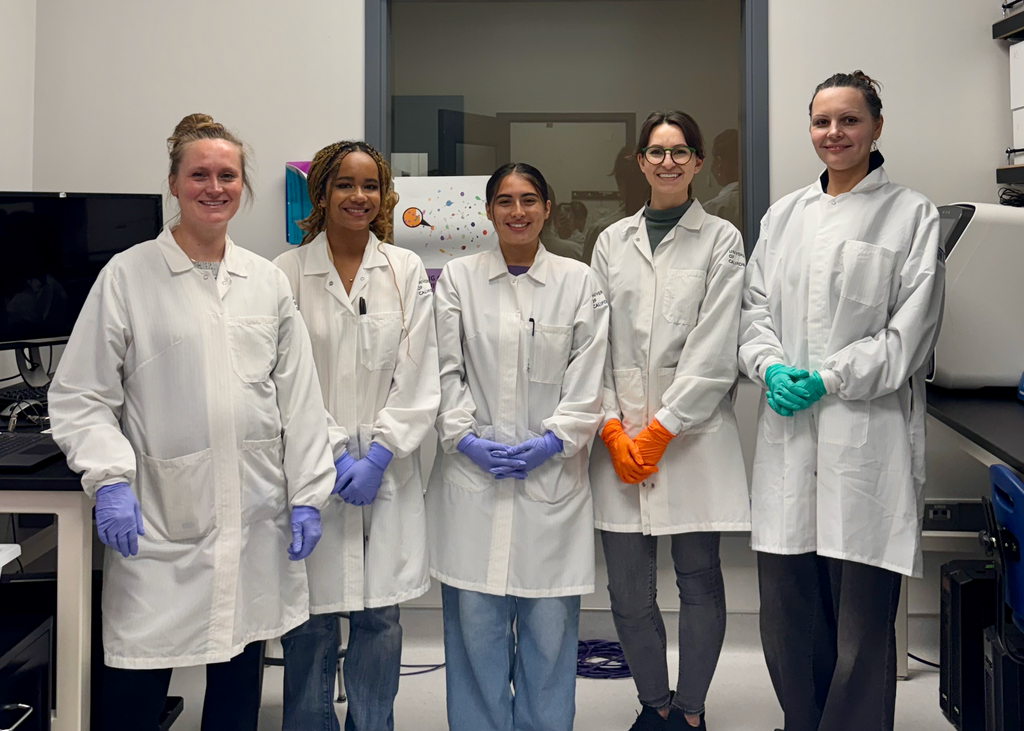
“CAP is widely recognized as the gold standard when it comes to NGS clinical testing, and by going for it we knew we were setting the bar high,” said Anouk van den Bout, the Colligan Lab’s manager who led the accreditation effort. “Our lab serves a vulnerable population, and it was extremely important to us to work with a body that specializes in this kind of testing. It’s been challenging, especially without the framework of a medical institution, but that makes the milestone extra rewarding.”
The impact could be enormous. When Vaske’s group started, there were essentially no good methods to reliably call over- and under-expressed genes for an individual patient. The team developed an outlier analysis to identify dramatically over-expressed genes, which a physician might be able to target with an existing drug. In a published study of relapsed, refractory, and rare cancers, the CARE approach turned up findings of potential clinical significance in 94% of patients.
One of the first people CARE was able to help was a young boy who had a rare relapsed pediatric cancer. His physician came to the Treehouse team when the child was out of all other options, and using Treehouse’s analysis, that physician was able to provide a treatment that kept his tumor at bay for several years.
Moving forward
With accreditation complete, the team’s next goal is to bring its outlier analysis, which they currently deliver as a research addendum, to full clinical validation as a standalone test by the end of 2026. Seeing the difference the tests could make has motivated the team through the long process of building a clinical lab from scratch, driving them to move the test from research to real patients as quickly as possible.
“This is a dream come true and represents the culmination of so many years of dedicated effort and so many personal sacrifices by the team,” said Vaske, who is the Colligan Lab’s technical supervisor. “I could not be more proud of the team than I am at this moment.”
About the College of American Pathologists
As the world’s largest organization of board-certified pathologists and leading provider of laboratory accreditation and proficiency testing programs, the College of American Pathologists (CAP) serves patients, pathologists, and the public by fostering and advocating excellence in the practice of pathology and laboratory medicine worldwide. For more information, visit the CAP Newsroom.