Arts & Culture
Associate Professor of History Caitlin Keliiaa brings Native perspectives to cinematic series on California history
“People of the West,” a 10-episode documentary series, is a cinematic journey through 500 years of California’s Indigenous history, told through Native voices. Episodes like “First Contact,” “Gold Rush”, “Genocide” and “Boarding Schools” uncover hard truths behind myths of the American West. Among the historians and cultural experts who helped bring “People of the West” to life is Caitlin Keliiaa, an associate professor of history and a scholar of Native American history.
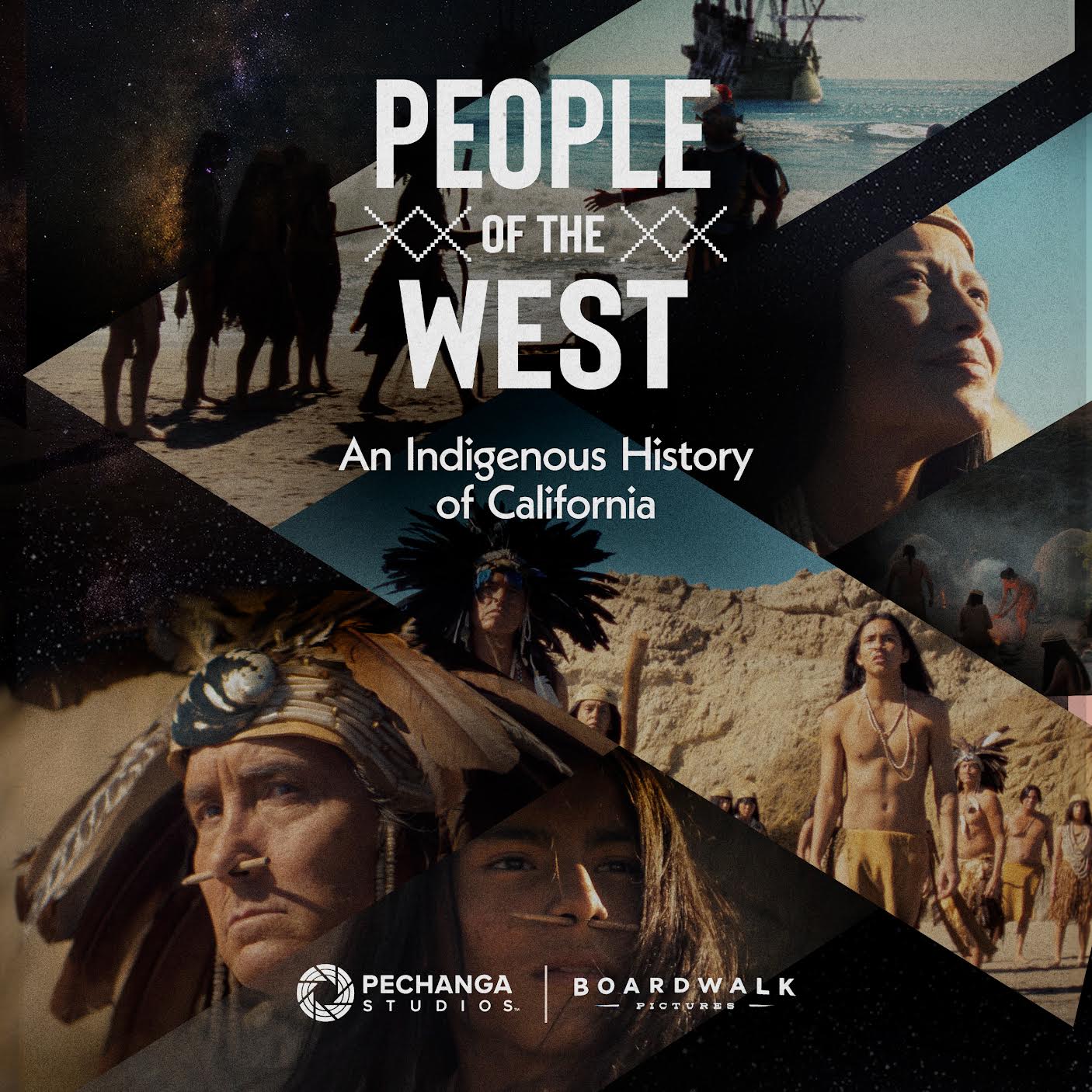
“People of the West,” a 10-episode documentary series, is a cinematic journey through 500 years of California’s Indigenous history, told through Native voices. Episodes like “First Contact,” “Gold Rush”, “Genocide” and “Boarding Schools” uncover hard truths behind myths of the American West.
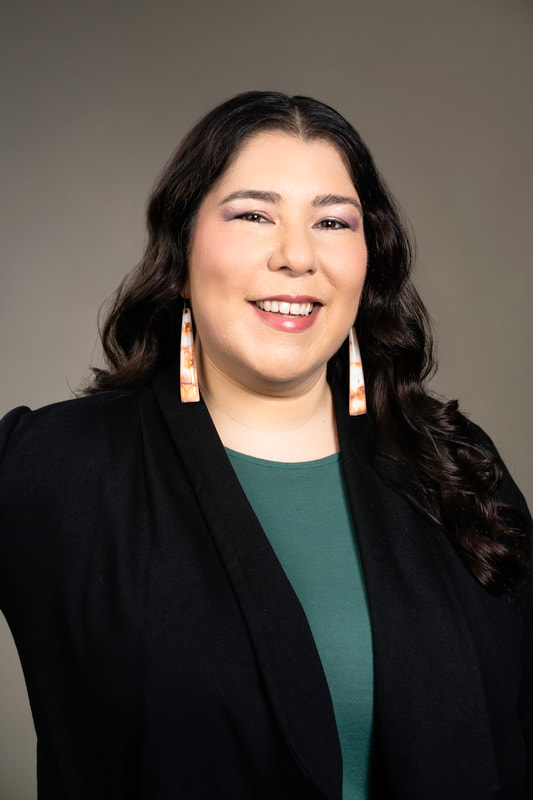
Among the historians and cultural experts who helped bring “People of the West” to life is Caitlin Keliiaa, an associate professor of history and a scholar of Native American history.
Keliiaa, who is of Yerington Paiute and Washoe heritage, is featured in six of the series’ ten episodes, bringing her scholarly perspective and Indigenous knowledge to a project whose central purpose is to correct historical omissions and distortions that have shaped popular understandings of California.
The filmmakers first reached out to Keliiaa several years ago. The production took more than six years to complete.
“They were interested in telling California history through perspectives of Native people, largely knowing that what a lot of Native people know already and perhaps even take for granted, the majority of non-Native people don’t know,” Keliiaa said. “They weren’t told it. They’re just not aware of it.”
The ambitious documentary series follows the history of Native nations before European contact through colonization, genocide, forced assimilation, political resistance, and the contemporary movement for cultural renewal and tribal sovereignty. The series is now streaming internationally for free all November on FNX.org (First Nations Experience.) Viewers can watch on their devices or download the FNX app on their smart TV, Roku, Firestick, Apple TV, and more.
“People Of The West” was created by Brad Munoa, an enrolled member of the Pechanga Band of Indians and director of Pechanga Studios. A graduate of the USC School of Cinematic Arts, Munoa developed the idea after witnessing his own children encounter distorted and incomplete versions of Native history in their classrooms.
From a school field trip that asked students to reenact mission-era adobe brickmaking to lessons about the Gold Rush that largely ignored the devastation experienced by Native communities, he saw how deeply historical misconceptions remained embedded in California education.
Those experiences inspired him to create a series that could bring Native history to a much wider audience while providing educators with a more accurate and culturally grounded resource.
Combining dramatic reenactments, archival materials, oral histories, and expert testimony, the series encompasses creation stories, the devastating consequences of the Spanish mission system, the violence and dispossession accompanying the Gold Rush, state-sanctioned genocide, the reservation era, the trauma of federal boarding schools, and the emergence of the Red Power movement.
Later episodes examine the struggle for tribal sovereignty, including the landmark legal battles surrounding Indian gaming, and the continuing efforts of Native nations to restore their cultures and protect their lands.
Keliiaa’s participation is especially significant because her scholarship examines how Native people, particularly Native women, have navigated and challenged the systems of colonial power that have shaped their lives.
She studies Native American experiences in the Western Pacific region, with research exploring the intersections of race, gender, labor, and federal Indian policy.
Her work draws on oral histories, interviews, archival research, and community-engaged scholarship, centering Native voices that have frequently been overlooked in conventional historical accounts.
That perspective speaks directly to one of the series’ central commitments: presenting history not only as a succession of political events and government policies, but as the lived experience of individuals, families, and communities.
For Keliiaa, the opportunity to share her own family’s history and tribal heritage was among the most meaningful aspects of participating in the production. Keliiaa noted that the scale of the historical violence against California’s Indigenous population is often poorly understood.
During the Gold Rush era and the decades that followed, Native communities experienced massacres and state-sanctioned killings. Keliiaa described how the Native population of California dwindled dramatically by the early 20th century. There are now 1,500 Washoe people living throughout California and Nevada, a fraction of the number before settlers arrived in the area.
“That’s the result of the massacres, these state-sanctioned murders and the militias that were going through and killing Native people because the state of California reimbursed millions of dollars for the extermination of Native people,” Keliiaa said. “It’s not a mistake that there were so few Native people left.”
Yet the story of the Washoe people, like that of Native communities throughout California, is also one of cultural survival.
Keliiaa’s own master’s degree research focused on the Washoe language, which is considered a language isolate, meaning it is not related to the languages of the surrounding tribes.
“It doesn’t share any kind of similarities with Paiute or Shoshone or other tribes close to it,” Keliiaa said. “But it is a language that so many people are working on to continue to sustain and revitalize, understanding that things like boarding school policy and English-only policies have actually attacked and eroded our ancestral language.”
The question of returning ancestral lands is equally important to Washoe people.
“Lake Tahoe was literally our territory,” she said. “It’s the center of the Washoe universe. Basically, the Washoe Tribe of California and Nevada own hardly a fraction of land in that area, and it’s a playground for a lot of wealthy individuals. This was and always is our land, whether or not we have title to it in the sort of property sense that is governed in this country.”
She pointed to the growing number of land-back initiatives across the United States as an important development for Native communities. “A lot of tribes across the United States are slowly gaining their territories back,” she said.
Returning land also means restoring Indigenous stewardship practices and responsibilities.
For Keliiaa, another important aspect of the production was the filmmakers’ commitment to involving Native people throughout the creative process—not just as historical subjects or on-camera experts, but as directors, producers, filmmakers, and members of the production crew.
“One thing I’d love to say and reiterate is that it was so cool doing this project because it was very Native-led,” she said. “Any person on that set, in any way, shape, or form, they liked to bring in actual Native directors, Native filmmakers, Native producers. I mean, there could be a Native person in the room holding a boom mic or running the camera. They were very intentional in trying to make it a very Native production as much as possible.”
She initially expected to participate in just one filming session, but the filmmakers continued inviting her back.
“It just felt like something special,” she said. “I think the love and the care was really there, and it kept me coming back because I initially thought I was only going to film for one session, and they kept calling me back and bringing me back. It was just really wonderful to be a part of it.”